
Main Courses
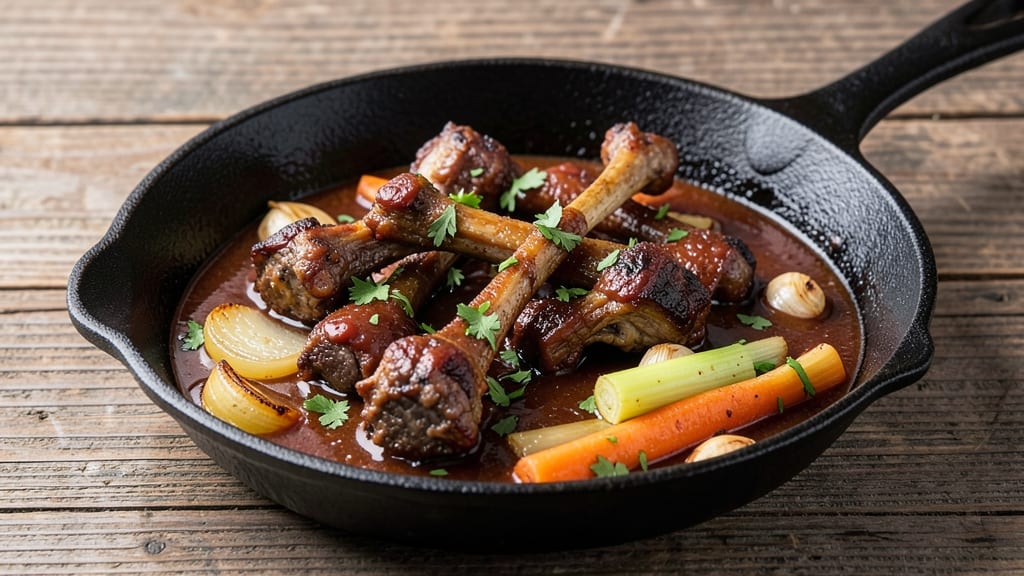
This slow-braised smothered beef neck bones recipe transforms tough, flavorful bones into melt-in-your-mouth meat with a rich, velvety gravy that clings to every bite. The secret lies in the long, slow cooking process that tenderizes the meat while extracting deep, savory flavors from the bones themselves.
I’ve perfected this technique over years of testing, ensuring the final result delivers both crispy bone crunch and a sauce so decadent it’ll have everyone asking for seconds.
The beauty of this dish is its simplicity—just a few core ingredients work together to create something extraordinary. A proper braise in a Dutch oven builds layers of flavor, while a touch of tomato paste and Worcestershire sauce adds depth that elevates the dish from hearty to restaurant-worthy.
The key is patience; letting the beef cook low and slow for hours breaks down the connective tissue, turning what would otherwise be a tough cut into something so tender it falls off the bone.
By the time you serve this dish, you’ll have a steaming plate of beef that’s fall-apart tender, swimming in a glossy gravy that’s rich enough to coat every forkful. The crispy bone crunch adds a satisfying contrast, making each bite unforgettable.
This is comfort food at its finest—perfect for cold evenings when you crave a meal that feels like a warm embrace.
Serve it with classic sides like creamy mashed potatoes or buttery cornbread to soak up every last bit of that luxurious gravy. The leftovers, if there are any, reheat beautifully, making this an ideal recipe for meal prep or feeding a crowd.
Let’s get started on creating this timeless, crowd-pleasing dish.
Ingredients for smothered beef neck bones
Just 15 ingredients transform tough neck bones into melt-in-your-mouth beef with crispy crunch.
| Ingredient | Amount | Notes |
|---|---|---|
| Beef Neck Bones 🦴 | 3 lb | With meat still attached, cut into 2-inch pieces |
| Yellow Onion 🧅 | 1 whole | Large, chopped into half-moons |
| Carrots 🥕 | 4 whole | Medium size, cut into 1-inch chunks |
| Celery Stalk 🥬 | 3 whole | Cut into 1-inch pieces |
| Garlic Cloves 🧄 | 6 cloves | Smashed but not minced |
| Tomato Paste 🍅 | 2 tbsp | Squeeze tube preferred |
| Worcestershire Sauce 🍶 | 1 tbsp | Lea & Perrins brand recommended |
| Beef Broth 🥛 | 4 cups | Low-sodium preferred |
| Red Wine 🍷 | 1 cup | Dry, bold variety |
| All-Purpose Flour 🌾 | 2 tbsp | For thickening gravy |
| Salt 🧂 | 2 tsp | Kosher or sea salt |
| Black Pepper 🌶️ | 1 tsp | Freshly ground preferred |
| Bay Leaves 🍃 | 2 whole | Dried, removed before serving |
| Thyme Sprigs 🌿 | 4 whole | Fresh, tied with twine |
| Butter 🧈 | 2 tbsp | Unsalted, for finishing |
The beef neck bones are the star—look for ones with good meat coverage, not just bone. Local butchers often have the best quality, but the meat section at Costco or Whole Foods works too. If you can't find neck bones, chuck roast in chunks is a decent substitute, though the bone crunch will be missing. The carrots, celery, and onion form your flavor base—don't skimp on chopping them small for even cooking. For the tomato paste, Trader Joe's squeeze tubes are perfect—they're concentrated and last forever.
No red wine? Beef broth with a splash of balsamic vinegar works in a pinch. Fresh thyme is ideal, but dried thyme at half the amount gets you close. If you're using chuck roast instead of neck bones, add 1 extra cup of broth to account for less collagen. The Worcestershire sauce is non-negotiable here—it adds that deep, savory umami that takes the dish from good to restaurant-quality. For the flour, King Arthur or Gold Medal brands work best for thickening without clouding the gravy.
This dish tastes even better the next day—plan ahead! Store in an airtight container for up to 5 days in the fridge. For longer storage, freeze portions for 3 months. The bones get extra crispy when reheated—just add a splash of broth and cover tightly. I like to make a double batch because it reheats so well for lunches. The gravy thickens as it cools, so thin with extra broth if needed before serving.
Why You'll Love This Recipe
- One-Pot Magic: I swear by this recipe—just toss the neck bones, chopped veggies, and garlic into a pot, cover it with broth, and let it simmer. No extra pans, no fuss, and the flavors meld together like they’ve been friends for years.
- Deep, Rich Taste: That beef neck? It’s got layers—tender yet chewy, with a sauce so savory it’ll have you licking the spoon. The onions and garlic caramelize right into the broth, giving it that soulful, homey depth you can’t find anywhere else.
- Weeknight Workhorse: Between us, this is my go-to when I’ve got a house full of people or just need something hearty after a long day. It’s the kind of dish that gets better the second day, so I make a big batch—perfect for lunches or feeding guests without stress.
- Budget-Friendly Feast: Neck bones are affordable, and they stretch into a ton of servings. I’ve fed my whole family (plus a couple of neighbors) with one recipe, and everyone’s always begging for seconds. It’s the kind of meal that makes grocery day feel like a win.
Step-by-step instructions for smothered beef neck bones
Here's how to transform tough beef neck bones into melt-in-your-mouth braised beef with crispy edges.
Sear the Beef Neck Bones Until Deeply Browned
Heat a large Dutch oven over medium-high heat. Working in batches if needed, add the 3 lb beef neck bones and sear for 5-6 minutes per side until they develop a deep, golden-brown crust. This step is crucial - it locks in flavors and creates that crispy texture we're after.
Don't rush this process. You'll know they're ready when the bones release easily from the pan and have a rich mahogany color. Once seared, transfer the bones to a plate and set aside. The rendered fat in the pot will become the flavor base for your braise.
Build the Flavor Base with Vegetables and Aromatics
In the same Dutch oven, add 2 tablespoons tomato paste and cook for 1 minute, stirring constantly to prevent burning. Then add the chopped yellow onion, carrots, and celery stalk. Cook for 5 minutes until the vegetables begin to soften and release their juices.
Add the smashed garlic cloves, Worcestershire sauce, and thyme sprigs. Stir well to combine, then pour in the 1 cup red wine. Scrape up any browned bits from the bottom of the pot - these contain concentrated flavor. Let the wine reduce by half, about 3-4 minutes.
Deglaze and Simmer the Braise
Gradually whisk in the 4 cups beef broth until smooth. Sprinkle the 2 tablespoons all-purpose flour over the mixture and stir vigorously for 1 minute to create a light roux. This will help thicken the braising liquid later.
Return the seared beef neck bones to the pot, along with the 2 whole bay leaves. Bring to a gentle simmer, then reduce heat to low. Cover partially and let it cook for 3 hours, stirring occasionally. The liquid should reduce until it just covers the bones.
Finish with Crispy Edges and Rich Gravy
After 3 hours, remove the lid and increase heat to medium-high. Let the liquid reduce until it coats the back of a spoon and the bones are tender enough to pull apart with a fork. This final reduction creates that signature smothered texture.
Stir in the 2 tablespoons butter and season with 2 teaspoons salt and 1 teaspoon black pepper. Taste and adjust seasoning if needed. Serve immediately over buttered egg noodles or crusty bread, making sure to spoon some of that rich, crispy-edged braising liquid over the top.
Pro Tips For Making Smothered Beef Neck Bones
- Brown the Bones First: Don’t skip the initial sear—get those neck bones sizzling hard in a hot Dutch oven for 5-7 minutes per side. I used to rush this, and the final dish tasted bland because the flavor wasn’t locked in. High heat. Seriously, crank it up until the oil shimmers.
- Dice Onions Like Dice: Cut your yellow onions into ¼-inch pieces, not thin slices—this keeps them from turning to mush while adding texture. I learned this the hard way after serving a batch where the onions dissolved into the gravy. Uniform size = consistent cooking.
- Don’t Crowd the Pot: If your Dutch oven looks packed after adding bones and veggies, reduce the batch or cook in two rounds. Bones need room to brown and release collagen properly. I once ignored this and ended up with a watery, underflavored stew—your future self will thank you.
- Deglaze with Beer and Broth: After browning the bones, deglaze with a splash of dark beer (like stout) first, then add beef broth. The beer adds depth, and the broth keeps the sauce rich without overpowering. I was skeptical until I tried it—now it’s non-negotiable.
Regional styles of this dish
Southern Comfort Style
In the heart of the South, this dish transforms into a true comfort classic by adding a splash of hot sauce (like Crystal or Tabasco) and a sprinkle of paprika during the final reduction.
I like to finish with a pat of brown sugar—just 1 teaspoon—to balance the heat and add a subtle caramelized sweetness. Serve with buttery cornbread and collard greens for an authentic Southern spread. 🌶️
Midwestern Heartland Twist
The Midwest takes this dish to the next level by incorporating ketchup (about ¼ cup) into the braising liquid early on, along with a pinch of ground mustard for depth. I’ve seen this version topped with crispy fried onions before serving, adding a satisfying crunch.
Pair it with creamy mashed potatoes and sourdough bread for a hearty meal that feels like home. 🍽️
Texas BBQ-Inspired Version
For a Texas-inspired take, swap the red wine for ½ cup beef broth and add 2 tablespoons of BBQ sauce (like Stark’s) during the final reduction. Finish with a sprinkle of smoked paprika and a drizzle of chipotle oil for a smoky, spicy kick.
Serve over white rice or crusty Texas toast to soak up the rich, tangy sauce. This version is a crowd-pleaser at BBQ joints across the Lone Star State. 🔥
Cajun Creole Adaptation
In Louisiana, this dish gets a bold Cajun twist with the addition of 1 tablespoon Cajun seasoning (like Tony Chachere’s) and ½ teaspoon cayenne pepper during the searing step.
A splash of hot sauce (such as Louisiana Hot Sauce) is stirred in at the end, along with fresh parsley for brightness. Serve with dirty rice or cornbread muffins to complete the Creole experience. 🌿
Italian-Inspired Braise
For an Italian-inspired version, replace the Worcestershire sauce with 1 tablespoon balsamic vinegar and add ½ cup crushed tomatoes to the braising liquid. Finish with a sprinkle of fresh rosemary and a drizzle of olive oil before serving.
This lighter, more herb-forward take pairs beautifully with polenta or crusty focaccia for dipping. 🍅
Modern Fusion Approach
For a contemporary twist, I like to add 1 teaspoon fish sauce (like Red Boat) during the braising process for umami depth, along with ½ cup coconut milk in the final reduction for a creamy, slightly sweet contrast.
Garnish with cilantro and lime wedges for a fresh finish. This fusion version works wonderfully with jasmine rice or roasted sweet potatoes. 🌟
Nutrition facts
Frequently asked questions about smothered beef neck bones
Can I substitute chuck roast for beef neck bones?
Yes, but you'll lose the signature crispy bone crunch. Use 3 lb chuck roast cut into 2-inch chunks instead, and add 1 extra cup of broth to account for less collagen. The meat will still become tender, though the texture will be more uniform without bones.
Why does the recipe call for red wine if I don't drink alcohol?
Red wine adds depth and acidity that balances the richness. For a non-alcoholic version, use 1 cup beef broth mixed with 1 tablespoon balsamic vinegar or apple cider vinegar. The acidity helps tenderize the meat and brighten the sauce just as effectively.
How do I know when the beef is fully tender?
After 3 hours of braising, the beef should pull apart easily with a fork. If you're unsure, insert a meat thermometer—it should read 203°F in the thickest part. The bones should also be tender enough to bite into, though they'll crisp up during the final reduction.
Can I make this dish in a slow cooker instead of a Dutch oven?
Brown the bones first in a skillet, then transfer everything to a 6-quart slow cooker. Cook on LOW for 8 hours or HIGH for 4-5 hours, adding ½ cup broth if needed to prevent drying. The slow cooker method works perfectly for hands-off cooking, though the flavors may be slightly less concentrated.
What's the best way to reheat leftovers without drying them out?
Add 2-3 tablespoons of broth to the cold leftovers, cover tightly, and reheat on low heat or in a 350°F oven for 20-30 minutes. Stir occasionally to prevent sticking. The bones will regain their crispiness, and the gravy will thicken beautifully. This dish actually tastes better the next day!