
Main Courses
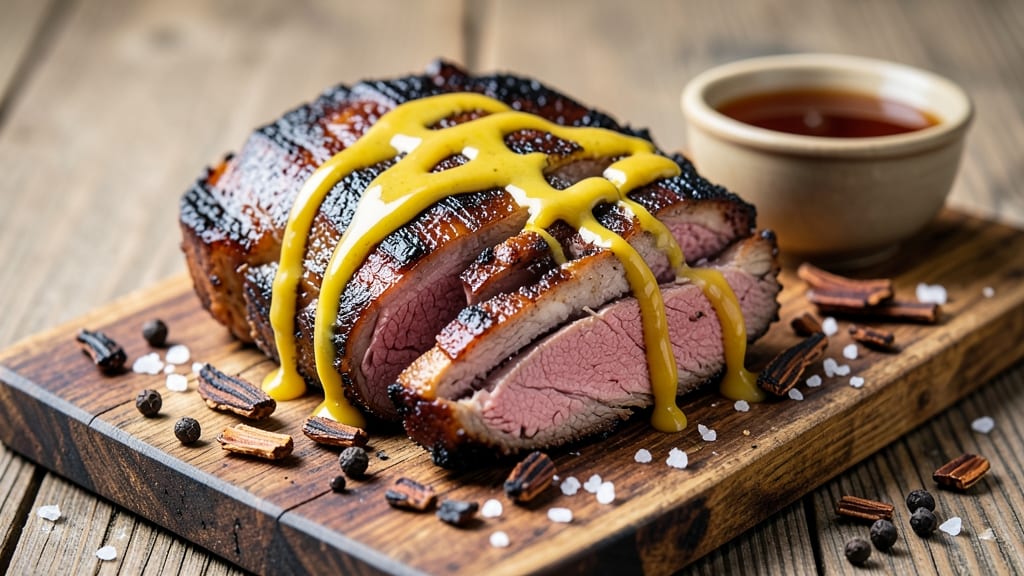
Mastering Texas-style smoked beef brisket delivers that tender, fall-apart perfection that defines Central Texas BBQ traditions. This recipe preserves the essence of slow-smoked brisket with a deep bark crust and rich, smoky flavor—exactly what makes Texas BBQ legendary.
I’ve refined this method over years of experimentation, ensuring every cut delivers melt-in-your-mouth tenderness without sacrificing that iconic crust.
The process begins with a simple yet critical salt rub applied 12–24 hours before smoking, allowing the beef to absorb flavor deeply.
Using post oak or pecan wood chips for the smoke adds that unmistakable Texas aroma, while maintaining a steady 225°F temperature for 12–16 hours transforms tough beef into fork-tender slices. The key lies in patience—letting the bark develop naturally while the internal temperature reaches 203°F for that signature texture.
Once smoked, the brisket rests for 1–2 hours before slicing against the grain, ensuring each bite is tender and juicy. Serve with classic Texas sides like white bread, pickled jalapeños, and a drizzle of your favorite BBQ sauce.
This isn’t just a recipe—it’s a celebration of Texas BBQ tradition, brought to life in your own backyard or smoker.
Perfect for gatherings, holidays, or when you crave that restaurant-quality experience at home. The method is precise, but the results are worth every minute of wait time. Let’s get started on your brisket journey—where tradition meets technique.
Ingredients for texas style smoked beef brisket
Six pounds of brisket and a few key ingredients transform into legendary Texas-style BBQ.
| Ingredient | Amount | Notes |
|---|---|---|
| Beef Brisket 🥩 | 6 lb | Whole packer cut, fat cap on |
| Diamond Crystal Kosher Salt 🧂 | ½ cup | Coarse grain preferred |
| Black Peppercorns 🌶️ | 2 tbsp | Freshly cracked preferred |
| Post Oak Wood Chips 🌳 | 2 lb | Or pecan wood chips |
| Yellow Mustard 🍯 | ¼ cup | For bark application |
| Apple Cider Vinegar 🍎 | ¼ cup | For mustard mix |
| Beef Tallow or Bacon Fat 🧈 | ½ cup | For spritzing during smoke |
| White Sandwich Bread 🍞 | 1 loaf | For serving, crusty preferred |
| Pickled Jalapeños 🌶️ | 1 cup | Sliced, for garnish |
| Butter 🧈 | ½ cup | Unsalted, for basting |
| Garlic Cloves 🧄 | 4 cloves | For butter rub |
| Fresh Rosemary 🌿 | ¼ cup | Chopped, for rub |
| Fresh Thyme 🌿 | ¼ cup | Chopped, for rub |
| Beef Broth 💧 | ½ cup | For spritzing |
The brisket is non-negotiable—look for a packer cut with that thick fat cap intact. Costco or local butchers often carry the best quality, but don't overlook the meat department at HEB or Whole Foods. The fat cap is what creates that iconic bark, so don't trim it. For wood chips, post oak is traditional, but pecan works beautifully too. I always buy mine in bulk from Traeger or Pit Barrel Cookers—they stay fresh for months. The mustard and vinegar combo for the bark? Grab French's yellow mustard and any organic cider vinegar—both keep forever.
No post oak chips? Hickory or cherry wood will still give you great flavor. The mustard can be swapped for Dijon mustard at half the amount if you prefer. Running out of beef tallow? Bacon fat or duck fat works just as well for spritzing—just render it fresh. The herbs? Fresh is ideal, but dried rosemary and thyme at one-third the amount will get you close. For the bread, crusty French bread or even Texas toast works better than soft sandwich bread—look for it in the bakery section of Kroger or Central Market.
The brisket needs 24 hours in the fridge after the salt rub—don't skip this step. Wood chips can be soaked for 30 minutes before using, but I prefer them dry for better smoke flavor. Store leftover brisket wrapped tightly in butcher paper in the fridge for 5 days or freeze for 3 months. The bark is delicate, so handle it carefully when slicing. Leftovers reheat beautifully in a 225°F oven with a splash of beef broth to keep them moist.
Why You'll Love This Recipe
- I’ll be real: this brisket is my go-to for game days or lazy Sundays, but the leftovers? Even better. Slice it thin, toss it in yellow mustard on toast—suddenly, Monday sandwiches feel like a celebration.
- Salt-Crust Secret: Honestly, that Diamond Crystal kosher salt crust? It’s my shortcut to restaurant-quality bark without the fuss. Just rub it on, slap it in the smoker, and let the post oak wood do the heavy lifting—no fancy rubs or hours of prep.
- Smoke Bomb Flavor: Between us, that beef brisket with just salt, cracked peppercorns, and post oak smoke? It’s dangerously addictive. The crust shatters like glass, but inside, it’s tender enough to melt—no dry bites here.
- Weekend Feast, Weeknight Fix: I’ll be real: this brisket is my go-to for game days or lazy Sundays, but the leftovers? Even better. Slice it thin, toss it in yellow mustard on toast—suddenly, Monday sandwiches feel like a celebration.
Step-by-step instructions for Texas style smoked beef brisket
Here's how to transform a tough cut into melt-in-your-mouth perfection with a deep bark and smoky flavor.
Prepare the Brisket and Rub for Maximum Flavor
Start by trimming the fat cap on the 6 lb beef brisket down to about ¼-inch thickness using a sharp boning knife. Leave the fat on the edges to protect the meat during smoking. Pat the entire surface dry with paper towels—this step is crucial for developing that coveted dark bark later.
In a small bowl, combine the 0.5 cup diamond crystal kosher salt and 2 tbsp black peppercorns (freshly cracked if possible). Add the 0.25 cup chopped fresh rosemary and 0.25 cup chopped fresh thyme. Mix well to create a coarse, aromatic rub. Generously coat every surface of the brisket with this mixture, pressing it into the meat so it adheres. Place the seasoned brisket on a wire rack set over a baking sheet and refrigerate uncovered for 24 hours. This dry-brining process ensures deep seasoning and optimal moisture retention.
Build the Mustard Slather and Set Up the Smoker
In a separate bowl, whisk together the 0.25 cup yellow mustard and 0.25 cup apple cider vinegar until smooth. This mixture will create the iconic Texas-style bark. After the brisket has been dry-brined for 24 hours, remove it from the refrigerator and let it sit at room temperature for 1 hour before smoking.
While the brisket comes to temperature, prepare your smoker. Soak the 2 lb post oak wood chips in water for at least 30 minutes, then drain. Set your smoker to 225°F using the soaked wood chips. Place a water pan in the smoker to maintain moisture. When the temperature stabilizes and you see thin blue smoke (not thick white steam), your smoker is ready. This low-and-slow approach is key to achieving tender, juicy meat.
Smoke the Brisket with Precision Timing
Place the brisket fat-side up on the smoker grates. Close the lid and resist the urge to open it for at least 2 hours—frequent peeking causes temperature fluctuations. Every hour, spritz the brisket generously with a mixture of 0.5 cup beef broth and 0.5 cup beef tallow or bacon fat (melted and combined). This keeps the meat moist and enhances bark development.
Smoke the brisket until the internal temperature reaches 165-170°F (about 6-8 hours). This is when you'll hit "the stall," where the temperature plateaus as moisture evaporates. Don't panic—this is normal. The bark should be dark and crispy, and the meat should be fork-tender but not falling apart. The reason for this long cook time is to break down the tough connective tissue, transforming it into silky strands of flavor.
Wrap and Finish for Unmatched Tenderness
Once the brisket hits 165-170°F, it's time for the "Texas crutch." Remove the brisket from the smoker and wrap it tightly in butcher paper (not aluminum foil). This allows the brisket to retain moisture while still developing that prized bark. Return it to the smoker and continue cooking until the internal temperature reaches 203°F, which should take an additional 4-6 hours. The probe should slide in like butter with no resistance.
When the brisket is done, transfer it to a cutting board and tent loosely with foil. Let it rest for at least 1 hour (or up to 2 hours) before slicing. This resting period allows the juices to redistribute, ensuring every slice is moist and flavorful. The brisket should have a deep mahogany bark on the outside and a beautiful pink smoke ring just beneath the surface.
Slice and Serve with Classic Texas Flair
Slice the brisket against the grain into ¼-inch thick pieces. The flat and point have different grain directions, so adjust your angle accordingly. Serve the brisket on 1 loaf white sandwich bread (toasted for extra crunch) and garnish with 1 cup sliced pickled jalapeños for a tangy kick. For extra richness, melt the 0.5 cup butter with the 4 cloves minced garlic cloves and drizzle over the brisket before serving.
Each bite should deliver a perfect balance of smoky depth, tender texture, and bold seasoning. The mustard bark adds a tangy contrast that cuts through the richness, while the jalapeños bring a bright, spicy finish. This method guarantees a brisket so tender it practically melts in your mouth—just like the best Texas-style barbecue.
Pro Tips For Making Texas Style Smoked Beef Brisket
- CRANK THE SMOKE AT 225°F: I used to think "low and slow" meant guessing—until I learned to nail this exact temp. Too hot, and you’ll dry out the meat; too cold, and it’ll never get that tender bark. Grab a good thermometer and stick to it—no peeking, no adjusting. The first hour is the only time you’ll need to fuss with the heat.
- SALT THE BRISKET 12–24 HOURS EARLY: Diamond Crystal salt is less dense than Morton’s, so don’t eyeball it. Use 1 tablespoon per pound of brisket, rubbed in hard—no half-measures. I learned this the hard way after a brisket came out bland because I rushed the dry brine. Yes, it’s a pain, but it’s the thing that matters most for that Texas-style snap.
- SKIP THE MUSTARD UNTIL THE END: That yellow mustard is for the sauce, not the rub. If you slather it on the meat early, it’ll burn to a bitter sludge before the brisket even hits 170°F. Save it for the last hour of smoking—just a thin layer—to add that signature tang without turning your brisket into a science experiment gone wrong.
- WRAP IT AT 165°F—NOT BEFORE: I was skeptical until I tried it: Wrapping the brisket in butcher paper (or foil, if you’re lazy) at 165°F locks in moisture without steaming it into a soggy mess. Too early, and you’ll trap heat unevenly; too late, and you’ll fight dryness. The paper lets it breathe just enough—no foil tightness required.
Serving suggestions for this dish
Classic Texas Sides
Serve your brisket with toasted white sandwich bread—the buttery crunch is essential for soaking up those smoky juices. I like Texas toast from local bakeries like Kroger’s or Central Market, lightly buttered and warmed through.
For extra authenticity, add pickled jalapeños sliced thin—about 1 cup—to cut through the richness with their tangy heat. 🌶️
BBQ Sauce Pairings
Skip the sauce on the brisket itself—let the smoky flavors shine—but offer a selection of sauces on the side. Sweet Baby Ray’s classic BBQ sauce is a crowd-pleaser, while Frank’s RedHot adds a fiery kick.
For a Texas twist, try El Yucateco chipotle sauce for a smoky-spicy balance. Serve in small bowls with wooden spoons for that rustic BBQ vibe.
Vegetable Sides
Balance the richness with creamy coleslaw—I use Kraft’s classic recipe with a splash of apple cider vinegar for brightness. Grilled corn on the cob slathered with garlic butter is another must.
For something heartier, baked beans (like Bush’s original) with a sprinkle of smoked paprika add depth. Keep portions small—brisket is the star!
Dessert Pairings
End the meal with peach cobbler—Texas-style, with a buttery crust and juicy peaches. For a lighter option, vanilla ice cream with a drizzle of maple syrup cools the palate. I also love fried pies from local bakeries, especially if they’re filled with apple or blackberry.
Serve with whipped cream and a sprinkle of cinnamon for that Southern touch. 🍑
Drink Recommendations
Keep it simple with sweet Texas tea—unsweetened iced tea with lemon slices and a splash of sweetened condensed milk. For beer lovers, a Shiner Bock or Lone Star complements the smoky flavors perfectly. Non-alcoholic? Arnold Palmer or Dr Pepper are Texas staples that won’t overpower the meal.
Presentation Tips
Slice the brisket against the grain into ¼-inch strips and arrange it on a wooden board or cast-iron skillet for serving. Garnish with fresh rosemary sprigs and a few extra pickled jalapeños for color.
Use butcher paper under the board to catch drips—it adds to the rustic aesthetic. For a restaurant-worthy touch, add shaved ice and BBQ sauce for a self-serve station. 🍴
Nutrition facts
Frequently asked questions
What's the best wood for authentic Texas-style brisket?
Post oak is the traditional choice for Texas BBQ, delivering that signature mild, sweet smoke flavor. Pecan wood is another excellent option—both work beautifully in pellet smokers, offset pits, or even electric smokers. Avoid heavy woods like hickory unless you're going for a stronger, bolder flavor profile.
Can I use a different smoker than a traditional offset pit?
This recipe works perfectly in pellet grills, electric smokers, or even a gas grill with a smoker box. The key is maintaining that 225°F temperature consistently. Pellet smokers are especially convenient—they handle the wood feeding and temperature control automatically. Just monitor the bark development closely.
Why does my brisket stall at 165°F, and how do I handle it?
The stall is completely normal—it's when moisture evaporates from the meat's surface, causing the temperature to plateau. This is where the Texas crutch (wrapping in butcher paper) comes in. Wrap when you hit 165-170°F and return to the smoker. The paper allows moisture to escape while protecting the bark, helping push through the stall to 203°F.
How do I know when the brisket is fully tender?
The brisket is done when it reaches 203°F internally and the probe slides in like butter with no resistance. The point (thinner end) will often cook faster than the flat, so check both sections. Look for a deep mahogany bark and that beautiful pink smoke ring just beneath the surface—these are your visual cues for perfect doneness.
What's the best way to reheat leftover brisket?
Warm leftovers in a 225°F oven with a splash of beef broth to keep them moist. For a quick fix, slice thinly and reheat in a skillet over medium-low heat with a pat of butter. Never microwave—it dries out the meat. Leftover brisket stays delicious for 5 days in the fridge or 3 months frozen when wrapped tightly.