
Main Courses
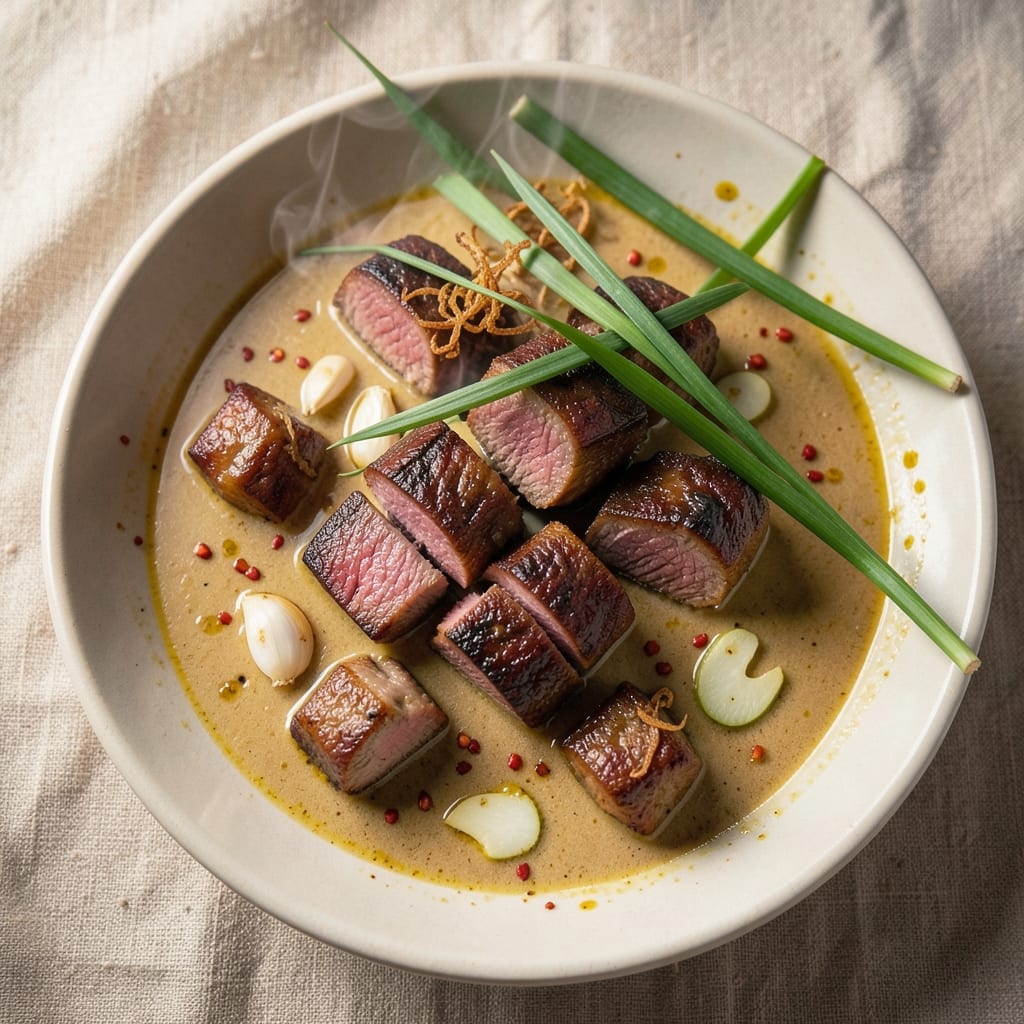
This Asian beef curry recipe delivers restaurant-quality depth with fragrant coconut and lemongrass that transforms simple beef into a complex, aromatic masterpiece. The secret lies in balancing sweet, spicy, and umami flavors through traditional techniques—stir-frying the beef for caramelized edges before simmering it in a rich, velvety sauce. I developed this recipe after years of refining the perfect balance between tender beef and a sauce that's both vibrant and deeply flavorful.
The foundation of this curry is a homemade paste combining ginger, garlic, lemongrass, and chili—essential for that authentic Asian depth. Simmering the beef in coconut milk creates a naturally thickened sauce that coats every bite, while fish sauce and tamarind add the signature umami and tang. What sets this apart is the two-step cooking method: first searing the beef for texture, then slow-simmering to develop maximum flavor without drying out the meat.
By the time you serve this curry, you'll have perfectly tender beef swimming in a sauce that's creamy yet bright, with layers of spice and aromatic herbs. The aroma alone will bring your kitchen to life, and each bite delivers that perfect harmony of sweet, spicy, and savory. This is comfort food at its finest—complex enough to impress guests but simple enough for weeknight dinners.
Serve it over jasmine rice for the full experience, or with crusty bread to soak up every last drop of that fragrant sauce. The recipe includes tips for adjusting spice levels and customizing the sauce to your taste, ensuring you can make it exactly as you like. Let's get started on creating this fragrant, flavorful masterpiece.
Ingredients for asian beef curry
Here's what you need for a fragrant, restaurant-worthy curry that's simple yet deeply flavorful.
| Ingredient | Amount | Notes |
|---|---|---|
| Beef Chuck Roast 🥩 | 1 ½ lb | Cut into 1-inch cubes |
| Coconut Milk 🥥 | 1 can | Full-fat, 13.5 oz can |
| Fresh Lemongrass 🌿 | 3 whole | Lower stems only, bruised |
| Garlic Cloves 🧄 | 6 cloves | Peeled, roughly chopped |
| Fresh Ginger 🌶️ | 2 tbsp | Grated, packed |
| Red Curry Paste 🌶️ | 2 tbsp | Store-bought or homemade |
| Fish Sauce 🍶 | 1 tbsp | Red Boat preferred |
| Tamarind Paste 🍋 | 1 tbsp | Or 1 tbsp lime juice |
| Brown Sugar 🍚 | 2 tbsp | Packed lightly |
| Thai Bird's Eye Chilies 🔥 | 2 whole | Seeds removed for less heat |
| Jasmine Rice 🌾 | 1 ½ cups | Uncooked, long-grain |
| Vegetable Oil 🫒 | 2 tbsp | For stir-frying |
| Kosher Salt 🧂 | 1 tsp | Diamond Crystal preferred |
| Black Peppercorns 🌶️ | ½ tsp | Freshly cracked |
| Fresh Cilantro 🌿 | ¼ cup | Chopped, for garnish |
The beef is where it all starts—chuck roast stays tender while developing rich flavor. Grab a 1.5 lb package from Costco or your local butcher, and cut it into 1-inch cubes yourself for even cooking. Coconut milk matters too: full-fat, no water added—the canned stuff works fine, but if you're feeling fancy, Thai Kitchen brand has the best balance of creaminess and mild sweetness. Lemongrass is non-negotiable for that authentic aroma. Asian markets usually sell it fresh, but if you can't find it, substitute 1 tbsp lemongrass paste (found in the same aisle as curry pastes).
No red curry paste? Mix 1 tbsp each of turmeric, cumin, coriander, and chili powder—it won't be identical, but it'll get you close. Fish sauce is the umami secret weapon: Red Boat is the gold standard, but any reputable brand works. Short on tamarind? Lime juice works in a pinch, though it won't have that same complex tang. The Thai chilies can be swapped for serrano or jalapeño, but adjust the amount—seeds in means more heat. For the ginger, fresh is best, but if you're using powdered, cut the amount to 1 tsp.
Prep the beef ahead and store it in the fridge for up to 2 days—it'll actually taste better the next day. The curry paste and coconut milk can be mixed 1 day ahead and kept in the fridge. This curry reheats beautifully—just add a splash of water or coconut milk to loosen the sauce. Portion into containers with rice for easy lunches all week. The sauce keeps for 5 days in the fridge, or 3 months frozen if you make a big batch.
Why You'll Love This Recipe
- One-Pot Magic: I swear by this recipe—just dump everything in one pot, and the beef practically melts into tender perfection. Between us, the chuck roast is forgiving (no need to sear it to death), and the coconut milk smooths out any rough edges.
- Lemongrass Lift: That bright, citrusy lemongrass punch cuts through the richness of the beef and coconut milk like a knife. Honestly, I’ll often add an extra stalk just to make sure it shines—it’s the secret weapon that turns "good" into "oh my god."
- Meal Prep MVP: This curry tastes even better the next day, which is perfect because I make a double batch every Sunday. The flavors meld overnight, and reheating it is a breeze—just stir it gently, and it’s ready to feed the family for days.
- Budget-Friendly Feast: A chuck roast stretches far, and coconut milk adds luxury without breaking the bank. I’ll be real: this is the kind of dish that makes me feel like I’m ordering takeout, but for half the price and way more flavor.
Step-by-step instructions for Asian beef curry with coconut and lemongrass
Let's build this aromatic curry from scratch—layering flavors that'll have your kitchen smelling like a Thai street market.
Prepare the Beef and Aromatics
Cut the 1.5 lb beef chuck roast into 1-inch cubes—this size ensures even cooking without drying out. Pat them dry with paper towels, then season generously with 1 tsp kosher salt and 0.5 tsp freshly cracked black peppercorns. Set aside.
For the aromatics, use only the lower stems of the 3 whole fresh lemongrass—discard the tough upper parts. Bruise them by firmly pounding with the flat side of a knife or rolling them over a cutting board. This releases their essential oils, which are the heart of the curry's fragrance. Peel and roughly chop the 6 garlic cloves and grate the 2 tbsp fresh ginger—pack it tightly into the measuring spoon to get the full 2 tablespoons.
Build the Curry Base in the Pot
Heat the 2 tbsp vegetable oil in a large, heavy-bottomed pot over medium heat. Add the seasoned beef and sear in batches for 3-4 minutes per side until deeply browned. Remove the beef and set aside—this step develops the rich, caramelized foundation for your curry.
In the same pot, add the 2 tbsp red curry paste and stir for 30 seconds until fragrant. Add the bruised lemongrass, garlic, and ginger, cooking for 1-2 minutes until the raw aroma disappears and the paste turns a deeper red. This is where the magic happens—the spices toast and meld together, creating the complex flavor profile.
Simmer the Curry with Coconut Milk
Pour in the 1 can coconut milk, scraping up any browned bits from the bottom of the pot. Add the 1 tbsp fish sauce, 1 tbsp tamarind paste, and 2 tbsp packed brown sugar. Stir well to combine, then return the beef to the pot. Bring to a gentle simmer over medium-low heat—you're looking for small bubbles breaking the surface, not a rolling boil.
Cover the pot and let the curry simmer for 1 to 1.5 hours, stirring occasionally. The beef should become fork-tender and easily pull apart. If the curry reduces too much and becomes too thick, add 2-3 tablespoons of water to maintain the right consistency. The tamarind paste will give it that signature tangy depth, while the coconut milk keeps everything rich and velvety.
Finish and Serve with Jasmine Rice
Once the beef is tender, remove the lemongrass stems. Taste the curry and adjust the seasoning if needed—add a bit more fish sauce for saltiness or brown sugar for sweetness. Stir in the 0.25 cup chopped fresh cilantro just before serving to brighten the dish with freshness.
Cook the 1.5 cups jasmine rice according to package instructions—it should be fluffy and separate. Serve the curry hot over the rice, garnished with additional cilantro if desired. The curry should be aromatic, with a balance of spicy, sweet, tangy, and umami flavors that coat every bite. The beef should be meltingly tender, soaking up all the fragrant coconut and lemongrass essence.
Pro Tips For Making Asian Beef Curry
- BLANCH THE LEMONGRASS FIRST: I learned this the hard way—skipping the quick blanch (30 seconds in boiling water, then ice bath) makes the lemongrass release bitter oils instead of fragrant ones. For this curry, smash the blanched stalks with the flat side of your knife before adding them to the pot—it’ll infuse the coconut milk with brightness instead of just floating there like a decorative stick.
- SEAR THE BEEF IN BATCHES: Chuck roast loves a good crust, but don’t crowd the pan or you’ll steam it. Cut the roast into 1.5-inch chunks and work in two batches over medium-high heat with 1 tablespoon oil each—this guarantees a deep brown sear every time. The Maillard reaction here is what carries through the slow simmer, so don’t rush it (yes, even if you’re impatient like me).
- SIMMER LOW AND LONG: After adding the coconut milk, drop the heat to a bare simmer—think tiny bubbles at the edges, not a rolling boil. I used to crank it up thinking it’d cook faster, but that just breaks the milk into greasy curds. Let it bubble gently for 2.5–3 hours, partially covered, and the beef will fall apart like it’s been braised. Skimp on time and you’ll end up with chewy chunks.
- SAVE TIME WITH GINGER-GARLIC PASTE: Peeling and mincing fresh ginger and garlic mid-recipe is a hassle, but making a quick paste (just blend with a splash of water) cuts prep by half. For this curry, use about 3 tablespoons of the paste—it’s more concentrated than chopped, so add it early with the aromatics. I was skeptical until I tried it; the texture’s identical, but my hands stay clean.
Regional styles of this dish
Thai Red Curry
This is the classic version you'll find at Bangkok street stalls, where the beef is slow-cooked until tender in a sauce that balances red curry paste, coconut milk, and fish sauce. The key is using Thai Bird's Eye chilies for heat (remove seeds for mild spice) and tamarind paste for that signature tang. I like to add a pinch of white pepper at the end for a subtle, aromatic kick that Thai curries often have. 🌶️
For authenticity, use Maesri brand red curry paste—it's the gold standard for home cooks. If you can't find it, Thai Kitchen brand works well too. The sauce should be rich but not overly thick—adjust with 1-2 tablespoons of water if needed while simmering. Serve with Thai basil (holy basil) instead of cilantro for a more traditional touch.
Indian Butter Chicken Style
Transform this curry into an Indian-inspired version by swapping the red curry paste for 2 tbsp garam masala and adding ½ cup tomato paste to the base. Use 1 cup heavy cream instead of coconut milk for a richer texture, and finish with 1 tbsp butter for that signature Indian richness. The beef becomes more tender and absorbs the creamy, spiced sauce beautifully. 🥛
For garnish, top with toasted cashews and a sprinkle of fresh cilantro. This version pairs perfectly with naan bread or basmati rice. The key difference is the tomato base and cream, which create a sweeter, more velvety sauce compared to the coconut-forward Thai version.
Vietnamese Caramelized Beef
Vietnamese beef curry, or Bò Kho, takes a different approach by caramelizing the beef first and then simmering it in a sweet-savory sauce. Start by searing the beef in 2 tbsp vegetable oil until deeply browned, then remove and set aside. In the same pot, add 1 tbsp fish sauce, 1 tbsp soy sauce, and 2 tbsp brown sugar, letting it caramelize for 3-4 minutes before adding the beef back in. 🍯
Pour in 1 can coconut milk and add 1 tbsp grated ginger, 3 minced garlic cloves, and 1 tbsp lemongrass paste. Simmer for 1.5 hours until the sauce thickens into a glossy, caramelized glaze. This version is sweeter and less spicy, with a deeper umami flavor from the caramelization.
Japanese Curry Roux Style
Japanese curry, or kare raisu, uses a pre-made roux for its signature thick, chunky texture. For this adaptation, replace the coconut milk with 1 cup Japanese curry roux (like S&B Golden Curry) and add 1 cup water to thin it out. The beef should be pre-cooked and shredded for the best texture. Stir in 1 tbsp soy sauce and 1 tsp honey to balance the flavors. 🍜
This version is sweeter and less aromatic than the Thai or Indian styles but has a unique, comforting depth. Serve it with steamed rice and pickled vegetables for a complete Japanese meal. The roux gives it a thicker, almost paste-like consistency that's a hallmark of Japanese curry.
Malaysian Sambal Beef Curry
Malaysian curries often incorporate sambal oelek for a fiery kick. Start by stir-frying 3 minced garlic cloves, 1 tbsp grated ginger, and 1 tbsp sambal oelek in 2 tbsp oil until fragrant. Add the beef and sear, then deglaze with 1 can coconut milk and 1 tbsp fish sauce. Simmer for 1 hour until the beef is tender. 🔥
Finish with 1 tbsp tamarind paste and 1 tsp turmeric for color. This version is spicier and slightly smokier than the Thai style, with a deeper, more complex flavor profile. Garnish with fresh Thai basil and serve with steamed jasmine rice or roti canai for dipping.
Nutrition facts
Frequently asked questions
Can I use a different cut of beef for this curry?
While chuck roast is ideal for its rich flavor and tenderness, you can substitute with brisket, stew beef, or even chuck steak cut into cubes. For leaner cuts like sirloin, marinate the beef for 1-2 hours in a mix of 1 tbsp soy sauce, 1 tbsp brown sugar, and 1 tsp ginger to prevent drying out. Avoid tough cuts like flank steak—they won't tenderize enough during the 1-1.5 hour simmer.
How can I make this curry less spicy?
Adjust the heat by removing seeds from the Thai Bird's Eye chilies before adding them to the pot. For a milder sauce, reduce the curry paste to 1 tbsp instead of 2 tbsp and skip the fresh chilies entirely. If you've already cooked it, stir in 1-2 tbsp coconut milk or 1 tsp brown sugar to balance the spice. For a creamier, less fiery option, add ½ cup plain yogurt at the end.
What's the best way to store leftovers?
Let the curry cool to room temperature, then transfer it to an airtight container and refrigerate for up to 5 days. The sauce will thicken slightly—loosen it with 1-2 tbsp water or coconut milk before reheating. For longer storage, freeze portions in single-serving containers for up to 3 months. Thaw overnight in the fridge and reheat gently on the stove with a splash of water to restore the sauce's consistency.
Can I make this curry in an Instant Pot?
Yes! Sear the beef in batches using the Sauté function, then add all ingredients except the cilantro. Cook on High Pressure for 25 minutes, then quick-release the pressure. The beef will be tender, but the sauce may be thinner—simmer uncovered for 5-10 minutes to thicken. For extra depth, add 1 tbsp fish sauce after pressure cooking. The Instant Pot version cooks 40% faster but requires less simmering time.
What vegetables pair well with this curry?
Traditional sides include steamed bok choy, Thai eggplant, or green beans sautéed with garlic. For a heartier meal, stir-fry bell peppers and onions in the same oil used for searing the beef before adding the curry paste. Serve with cucumber salad (sliced cucumbers, lime juice, chili flakes) to cut through the richness. The acidity from lime wedges or pickled onions also balances the dish beautifully.