
Main Courses
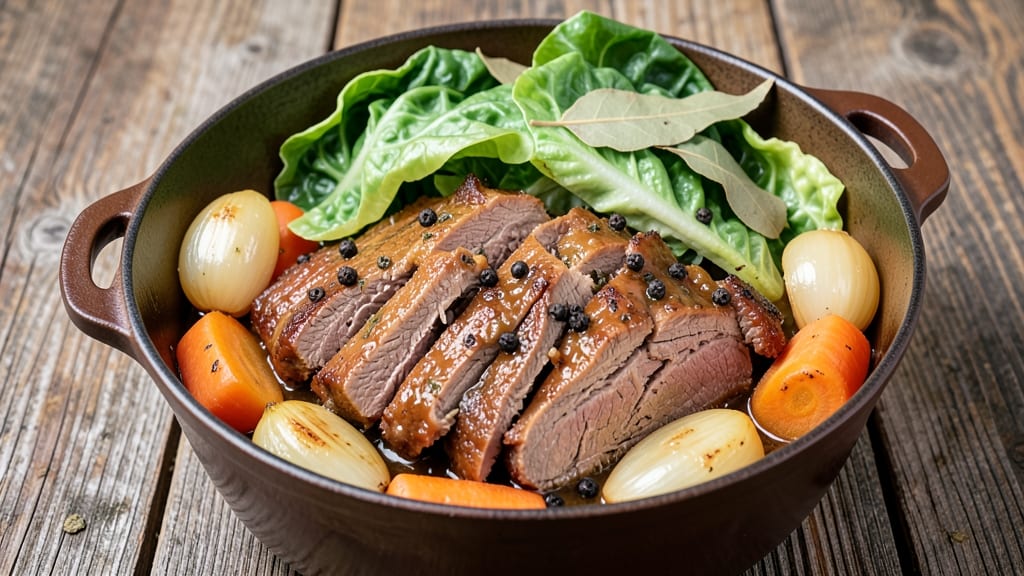
This authentic Irish corned beef and cabbage recipe delivers the rich, savory flavors of a traditional Irish pub dinner, slow-simmered to perfection. The secret lies in properly preparing the corned beef—soaking it overnight to balance the salt—before transforming it into tender, flavorful slices that practically melt in your mouth.
I've perfected this method over years of testing, ensuring every bite carries that deep, smoky aroma and tender texture that defines Irish comfort food.
The cabbage plays just as crucial a role, wilted down into sweet, caramelized perfection alongside the beef. What makes this recipe truly authentic is the slow simmering process, which infuses the cabbage with the beef's rich juices while keeping it tender rather than mushy.
This isn't just dinner—it's a celebration of Irish tradition, brought to your kitchen with professional results that taste like home.
By the time you serve this dish, you'll have a pot of golden, aromatic corned beef swimming in its own juices, paired with cabbage that's sweetened just enough to complement the saltiness. The flavors deepen as it rests, making every slice more flavorful than the last.
This is the kind of meal that warms the soul and fills the house with the comforting scent of a true Irish feast.
Serve with buttered potatoes or carrots for the full experience, and don't forget a dollop of mustard or a slice of soda bread on the side. The leftovers taste even better the next day—proof that this recipe delivers restaurant-quality results at home. Let's get cooking!
Ingredients for authentic irish corned beef and cabbage
Six core ingredients transform into a traditional Irish pub-style feast.
| Ingredient | Amount | Notes |
|---|---|---|
| Corned Beef Brisket 🥩 | 4 lb | Pre-cured, not salt-cured |
| Green Cabbage 🥬 | 1 whole | Green, firm, outer leaves removed |
| Yellow Onions 🧅 | 2 whole | Medium, peeled, quartered |
| Carrots 🥕 | 4 whole | Medium, peeled, halved lengthwise |
| Bay Leaves 🍃 | 4 whole | Dried, standard size |
| Black Peppercorns 🌶️ | 1 tbsp | Whole, lightly crushed |
| Garlic Cloves 🧄 | 6 cloves | Fresh, peeled, smashed |
| Water 💧 | 8 cups | Cold, tap or filtered |
| Dijon Mustard 🍯 | 1 tbsp | High-quality, smooth |
| Apple Cider Vinegar 🍏 | ¼ cup | Unfiltered preferred |
| Salt 🧂 | 2 tbsp | Kosher or sea salt |
| Brown Sugar 🍚 | ½ cup | Packed, light brown |
| Fresh Parsley 🌿 | ¼ cup | Chopped, for garnish |
| Butter 🧈 | 2 tbsp | Unsalted, for serving |
The corned beef brisket is the centerpiece—look for pre-cured brisket (not salt-cured) at specialty butchers or Irish markets like Murphy's or Doyle's. A 4-pound brisket feeds six generously, with leftovers perfect for sandwiches. If your brisket has a thick fat cap, leave it on for flavor and texture. For the cabbage, green cabbage holds up best to slow cooking—avoid red, which can bleed color. Whole Foods or Trader Joe's carry firm, compact heads ideal for this dish. The onions and carrots should be fresh and crisp—older produce turns mushy during the long simmer.
No pre-cured corned beef? Start with a 4-pound salt-cured brisket and soak it overnight in cold water (change water twice) to reduce saltiness. Swap Dijon mustard for 1 tbsp yellow mustard if needed, but the depth of flavor is worth the hunt. Apple cider vinegar adds authenticity—white vinegar works in a pinch, but the fruity notes elevate the dish. For the vegetables, baby carrots or pre-cut cabbage save time, though whole roots and leaves caramelize better. Fresh parsley brightens the final dish, but dried parsley at one-third the amount suffices if fresh isn't available. The brown sugar balances saltiness, so don't skip it—white sugar works but lacks depth.
This dish tastes best the next day, as flavors meld during overnight resting. Store in the cooking liquid in a sealed container for up to 5 days in the fridge. For longer storage, portion into airtight containers and freeze for up to 3 months. The cabbage and beef can be reheated separately—microwave the beef with a splash of liquid to keep it moist, while the cabbage reheats beautifully in a skillet with 1 tbsp butter. Garnish with fresh parsley and a drizzle of butter before serving for restaurant-quality presentation.
Why You'll Love This Recipe
- One-Pot Magic: I swear by this recipe because it’s all in one pot—no fussing with multiple pans or cleanup. Just toss in the brisket, cabbage, onions, and carrots with the bay leaves, add water, and let it simmer. That’s it. The cabbage softens perfectly while the beef stays tender, and honestly? I’ve never had a dish this simple that tastes so satisfying.
- Tender & Tangy: The corned beef brisket here isn’t just salty—it’s ridiculously flavorful, thanks to the cure already in the meat. The cabbage absorbs that deep, savory punch while the onions and carrots caramelize just enough to add sweetness. Between us, the first bite always makes me wonder why I don’t make this more often.
- Budget-Friendly Crowd-Pleaser: You’re getting a whole brisket for not much—way more than a single serving. The cabbage, onions, and carrots stretch the meat into a full meal without breaking the bank. Plus, it’s the kind of dish that makes people happy—whether it’s for St. Patrick’s Day, a lazy Sunday, or just because you need comfort food. My wallet and my family both approve.
Step-by-step instructions for authentic Irish corned beef and cabbage
Here's the traditional method that delivers tender corned beef with perfectly braised cabbage and vegetables.
Prepare the Corned Beef Brisket
Rinse the 4 lb corned beef brisket under cold water to remove any surface curing salt, then pat it completely dry with paper towels. This step is crucial—excess moisture prevents proper browning and can dilute the flavors. Place the brisket in a large Dutch oven or heavy pot that's deep enough to accommodate all the vegetables.
Add the 2 tbsp salt, 0.5 cup packed brown sugar, 1 tbsp Dijon mustard, 0.25 cup apple cider vinegar, 1 tbsp lightly crushed black peppercorns, 6 smashed garlic cloves, and 4 bay leaves to the pot with the brisket. The vinegar and mustard create that signature tangy depth while the sugar helps caramelize the meat. Stir everything together to ensure the spices coat the meat evenly.
Add Vegetables and Liquid
Core the 1 whole green cabbage by removing the tough outer leaves and cutting out the stem, then quarter it lengthwise. Peel and halve the 4 whole carrots lengthwise, and peel and quarter the 2 whole yellow onions. Add these to the pot with the brisket, arranging them around the meat so they'll cook evenly.
Pour in the 8 cups cold water, making sure the brisket is completely submerged. The water should cover the meat by at least 1 inch. Bring to a boil over high heat, then immediately reduce to a gentle simmer. The key here is maintaining a steady, low bubble—this prevents tough meat and ensures the cabbage stays tender rather than mushy.
Simmer Until Tender
Cover the pot and simmer for 3 to 3.5 hours, checking occasionally to ensure the water level remains adequate. If it reduces too much, add hot water as needed. The brisket is done when it's fork-tender and easily pulls apart at the thickest part. The cabbage should be soft but still hold its shape, and the carrots should be tender with a slight bite.
About 30 minutes before the brisket is ready, skim any excess fat from the surface. This helps create a cleaner sauce and prevents the final dish from being overly greasy. The aroma at this stage should be rich and complex—smoky from the peppercorns, sweet from the caramelized sugar, and tangy from the vinegar.
Rest and Serve
Once the brisket reaches the proper tenderness, remove it from the pot and let it rest on a cutting board for 15 minutes. This resting period allows the juices to redistribute, ensuring each slice remains moist. Meanwhile, keep the vegetables and cooking liquid warm over low heat.
Slice the brisket against the grain into ¼-inch thick pieces. To serve, arrange the sliced corned beef on a platter surrounded by the braised cabbage, carrots, and onions. Ladle the cooking liquid over everything and garnish with the 0.25 cup chopped fresh parsley. For extra richness, serve with the 2 tbsp unsalted butter melted on top or alongside.
Pro Tips For Making Authentic Irish Corned Beef And Cabbage
- CRANK THE HEAT FIRST: Start your pot on medium-high until it’s screaming hot—this sears the brisket’s surface and locks in flavor before the water even hits. I used to simmer it gently from the start, and the meat always tasted bland by comparison.
- SALT THE CABBAGE LIKE POTATOES: Toss the cabbage wedges with a teaspoon of salt and let them sit for 10 minutes before cooking. This softens them faster and keeps them from turning mushy—my grandmother swore by it, and she was right.
- DON’T SKIP THE BAY LEAF: Tuck those dried bay leaves into the meat’s fatty pockets or wrap them in cheesecloth to keep them whole. Whole leaves add depth; crushed ones just make the broth bitter—trust me, I’ve ruined batches both ways.
- SHRED THE MEAT WHILE WARM: Pull the brisket out of the pot and let it rest for 5 minutes, then shred it with two forks while it’s still warm. Cold meat fights back, and you’ll end up with pulled strands instead of clean, tender pieces—your future self will thank you.
Make-ahead tips for leftovers
Prep Ahead Strategy
Start by prepping the corned beef brisket the night before: rinse and pat dry the 4 lb pre-cured brisket, then place it in a bowl with 2 tbsp salt, 0.5 cup packed brown sugar, and 1 tbsp Dijon mustard.
Cover and refrigerate overnight. This jump-starts the flavor infusion, ensuring deeper taste penetration by cook day. I always use a glass baking dish for easy handling. 💡
Vegetable Prep Shortcuts
Core and quarter the cabbage, peel and halve the carrots, and quarter the onions the day before cooking. Store them in separate airtight containers in the fridge. This saves 20-30 minutes of prep time on cook day while keeping the vegetables crisp.
For extra efficiency, soak the cabbage quarters in cold water with 1 tbsp apple cider vinegar to maintain freshness. ✨
Slow Cooker Adaptation
Transform this into a hands-off meal by using a 6-quart slow cooker on low for 8-10 hours. Follow the same prep steps for the brisket and vegetables, then combine everything in the slow cooker with 8 cups water.
The low-and-slow method mimics traditional simmering while letting you set it and forget it. Just add 2 tbsp butter at serving for richness. 🌡️
Make-Ahead Leftovers
This dish actually tastes better the next day as flavors meld. Store leftovers in their cooking liquid in a sealed container for up to 5 days. For reheating, microwave the beef and vegetables together with 2 tbsp water for 2-3 minutes until heated through.
The cabbage reheats beautifully in a skillet with 1 tbsp butter for 3-4 minutes to restore crispness. 💪
Freezer-Friendly Components
Freeze the cooked corned beef separately from the vegetables in airtight containers for up to 3 months. Thaw overnight in the fridge, then reheat the beef in its juices with 1 tbsp apple cider vinegar added to restore tang.
The vegetables can be frozen raw (prepped as directed) and cooked fresh from frozen—just add 10-15 extra minutes to the simmering time. 🧊
Sauce Prep Ahead
Strain the cooking liquid through a fine-mesh sieve into a clean container, discarding solids. This creates a rich, flavorful gravy that can be stored in the fridge for 5 days or frozen for 3 months.
Use it to deglaze pans or drizzle over reheated corned beef slices. For extra depth, whisk in 1 tbsp Dijon mustard before serving. 🍲
Nutrition facts
Frequently asked questions
Why does authentic Irish corned beef need to soak overnight?
Traditional Irish recipes use pre-cured corned beef that still carries curing salt on the surface. Soaking removes excess salt for better flavor balance and ensures the meat absorbs the simmering spices evenly. This step also prevents the cabbage from tasting overly salty. For salt-cured brisket, soak for 12-24 hours with water changes to reduce sodium content safely.
Can I use regular beef instead of corned beef?
No—corned beef's signature flavor comes from its curing process with salt, spices, and vinegar. For a similar dish, try a 4 lb salt-cured brisket soaked overnight, but the taste won't be identical. Authentic Irish versions rely on the pre-cured product for that deep, tangy profile. If you must substitute, add 1 tbsp apple cider vinegar and 1 tsp mustard to regular beef to mimic some of the flavor.
How do I keep the cabbage from turning mushy?
The secret is simmering at a gentle bubble (not a rolling boil) and cooking just until tender—about 2.5-3 hours total. Green cabbage should be soft but still hold its shape. If yours gets too soft, reduce simmering time by 15-20 minutes next time. Adding 1 carrot slice to each cabbage wedge helps maintain structure by absorbing excess moisture.
What's the best way to serve this for St. Patrick's Day?
Pair with buttered potatoes or soda bread for a classic Irish spread. Garnish the corned beef with chopped parsley and a drizzle of melted butter. For extra flair, serve with creamy horseradish sauce or Dijon mustard on the side. A cold dry Irish stout (like Guinness) complements the rich, salty flavors perfectly.
Can I make this in an Instant Pot?
Yes! Use the sauté function to brown the brisket, then cook on high pressure for 60 minutes with all ingredients. Release pressure naturally, then shred or slice the beef. The cabbage may break down faster, so add it only 15 minutes before the end. For best results, finish with a 5-minute simmer on the stovetop to restore texture.