
Soups & Stews
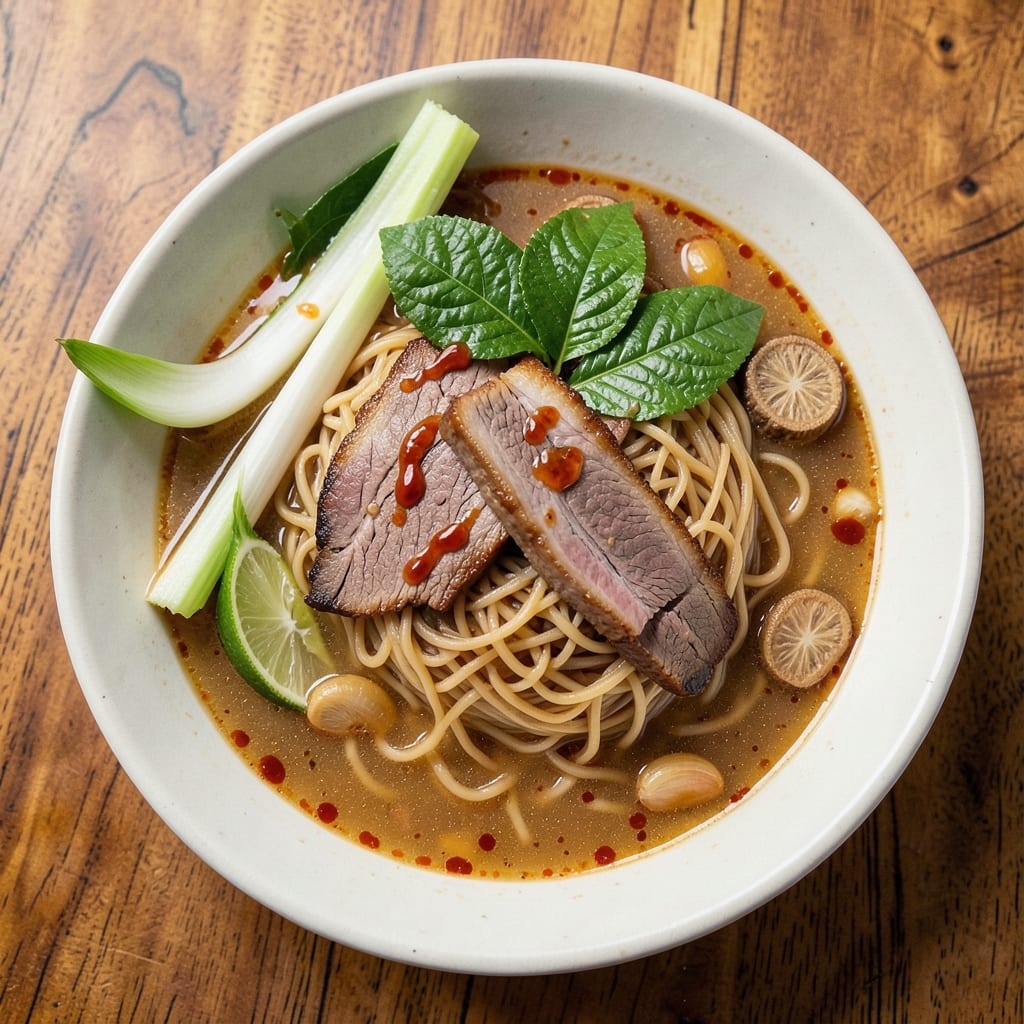
This authentic Thai beef noodle soup recipe brings the bold, aromatic flavors of Bangkok street food to your kitchen—where fragrant lemongrass and kaffir lime leaves create a broth so complex, it’ll transport you halfway across the world. The key to authenticity lies in balancing sour, spicy, and umami notes, just like the vendors in Thailand do, while keeping the preparation approachable for home cooks. I’ve perfected this version after years of testing, ensuring every sip delivers that perfect harmony of heat, tang, and richness.
The secret begins with the broth, where lemongrass stalks, galangal, and kaffir lime leaves infuse the water with layers of citrusy, peppery depth. Tender beef slices simmer until fork-tender, absorbing the aromatic flavors without falling apart, while rice noodles cook just until al dente—never mushy. This isn’t just a soup; it’s a full sensory experience, where each ingredient plays its part in creating something greater than the sum of its parts.
What makes this recipe truly special is the flexibility—whether you prefer the bright, tangy profile of Tom Yum or the creamy richness of Tom Kha, the foundation remains the same. The beef is braised to perfection, the broth reduces to concentrate its flavors, and the finishing touches of fresh herbs and chili flakes elevate every bowl. It’s the kind of dish that tastes even better the next day, as the flavors meld and deepen.
Serve it steaming hot in wide bowls, garnished with bean sprouts, Thai basil, and a squeeze of lime for that final bright note. This is the recipe I turn to when I want to recreate the magic of a bustling Thai market—right in my own kitchen. Let’s get cooking.
Ingredients for authentic thai beef noodle soup
Fragrant herbs, tender beef, and aromatic broth—this is your Bangkok street food fix.
| Ingredient | Amount | Notes |
|---|---|---|
| Thinly Sliced Beef Tenderloin 🥩 | 1 ½ lb | Cut into 1-inch slices, discard fat |
| Fresh Lemongrass Stalks 🌿 | 4 whole | Bruised, bottom 3 inches only |
| Galangal Root 🍃 | 1 piece | About 3 oz, sliced thin |
| Kaffir Lime Leaves 🍋 | 4 whole | Torn into quarters |
| Shallots 🧅 | 6 whole | Peeled, sliced thin |
| Garlic Cloves 🧄 | 6 cloves | Peeled, smashed |
| Fish Sauce 🍶 | 2 tbsp | Red Boat preferred |
| Thai Chili Paste 🌶️ | 1 tbsp | Adjust for heat preference |
| Palm Sugar 🍯 | 1 tbsp | Or brown sugar in pinch |
| Rice Noodles 🍜 | 8 oz | Flat or round, medium width |
| Fresh Thai Basil Leaves 🌿 | ½ cup | Packed, stems removed |
| Bean Sprouts 🌱 | 1 cup | Fresh, rinsed well |
| Lime Wedges 🍋 | 2 whole | For serving |
| Vegetable Oil 🫒 | 2 tbsp | High smoke point |
| Water 💧 | 6 cups | Filtered preferred |
The aromatic trio—lemongrass, galangal, and kaffir lime leaves—makes or breaks this soup. Thai markets carry fresh galangal (it looks like ginger but smells like citrus), but if you can't find it, ginger at half the amount works in a pinch. For lemongrass, grab the whole stalks—they're more flavorful than pre-packaged. Red Boat fish sauce is the gold standard, but any good brand will do. The beef should be thinly sliced against the grain for tenderness. If you can't find beef tenderloin, sirloin works too—just slice it paper-thin.
No Thai chili paste? Sriracha or sambal oelek in a 1:1 swap gets you close. Palm sugar unavailable? Brown sugar or coconut sugar are perfect substitutes. The rice noodles should be the right width for your bowl—medium-width is ideal for this recipe. Fresh Thai basil is a game-changer, but if you can't find it, regular basil or cilantro adds a different but still bright note. Bean sprouts add crunch—frozen works if fresh isn't available, just rinse well before using.
This soup tastes even better the next day as flavors meld. Store leftovers in an airtight container for up to 4 days in the fridge. For freezing, portion into containers with broth—3 months max. The broth alone makes a great base for other dishes, so I always make extra. Garnish with lime wedges right before serving—they brighten everything up instantly.
Why You'll Love This Recipe
- I swear by this method: just slice the beef paper-thin (or buy it pre-sliced), crush the shallots with a mortar, and toss in the lemongrass and galangal—no peeling required. That’s it. The hardest part’s the galangal, but even that’s just a few rough chops.
- No-Fuss Prep: I swear by this method: just slice the beef paper-thin (or buy it pre-sliced), crush the shallots with a mortar, and toss in the lemongrass and galangal—no peeling required. That’s it. The hardest part’s the galangal, but even that’s just a few rough chops.
- Umami Bomb: The moment the beef hits the simmering broth with those bruised shallots and kaffir lime leaves? Chef’s kiss. That deep, herbal punch from the galangal and lemongrass ties everything together—like a warm hug in a bowl.
- Weeknight to Party: Same soup, endless occasions. Too tired for a full meal? Slurp it straight from the pot. Hosting friends? Add a splash of fish sauce and extra lime for brightness. My roommates call it my “I don’t care” dish—because it works for everything.
Step-by-step instructions for authentic Thai beef noodle soup
Let's create a rich, aromatic broth that captures the essence of Thai street food.
Prepare the Aromatic Base
Heat the 2 tablespoons vegetable oil in a large pot over medium heat. Add the 6 whole shallots and 6 cloves garlic cloves, cooking for 2-3 minutes until the shallots turn translucent and the garlic releases its fragrance. Here's the thing—don't let them brown or they'll turn bitter.
Next, add the bottom 3 inches of 4 whole fresh lemongrass stalks (bruised by banging them on a cutting board), 1 piece galangal root (sliced thin), and 4 whole kaffir lime leaves (torn into quarters). Stir gently to combine. The galangal will add a peppery depth that's essential for authentic flavor. Cook for 3 minutes until everything is fragrant and lightly perfumed.
Sear the Beef and Build the Broth
Push the aromatics to one side of the pot and add the 1.5 lb thinly sliced beef tenderloin in a single layer. Let it sear undisturbed for 2-3 minutes until it develops a golden crust. This step is crucial—it locks in juices and creates depth of flavor. Once browned, stir the beef and pour in the 6 cups water. Bring to a gentle boil.
Reduce heat to medium-low and let the broth simmer for 15 minutes. Skim off any foam that rises to the surface—this ensures a clear, clean broth. The beef should be just beginning to tenderize. Here's where the magic happens: add 1 tablespoon palm sugar and 1 tablespoon Thai chili paste, stirring to dissolve. Taste the broth—it should be sweet, spicy, and deeply aromatic.
Season and Finish the Broth
Add 2 tablespoons fish sauce and adjust the seasoning. The broth should be balanced—sweet, salty, and spicy with a hint of sourness from the kaffir lime leaves. If it needs more depth, add a splash of water to thin it slightly. Simmer for another 10 minutes until the beef is tender but not falling apart.
Remove the pot from heat and let the broth rest for 5 minutes. This allows the flavors to meld and the beef to absorb the aromatics. Strain the broth through a fine-mesh sieve into a clean pot, pressing gently on the solids to extract all the flavor. Discard the aromatics and any remaining galangal or lemongrass.
Assemble the Noodle Soup
While the broth rests, bring a pot of water to a boil and cook the 8 oz rice noodles according to package instructions—usually 3-5 minutes until al dente. Drain and rinse briefly under cold water to stop the cooking process. Divide the noodles among bowls.
Ladle the hot broth over the noodles, then top with 1 cup bean sprouts and 0.5 cup fresh Thai basil leaves. The basil should be added last to preserve its vibrant color and fresh flavor. Serve immediately with 2 whole lime wedges on the side—each spoonful should deliver a perfect balance of rich broth, tender beef, and bright, fresh herbs.
Pro Tips For Making Authentic Thai Beef Noodle Soup
- Char the Shallots First: I learned this the hard way—raw shallots just melt into the broth without adding depth. Heat them in 1 tablespoon of oil over medium-high until they’re dark golden, almost black in spots (about 5-7 minutes), then add the rest of the aromatics. That smoky, caramelized edge is what makes the broth taste like a proper street stall, not a textbook recipe.
- Pound the Galangal: Skip the knife and use the flat side of your cleaver or a rolling pin to smash the galangal into a paste right in the pot—no peeling needed. This releases more oils and flavor than chopping, and you’ll avoid the bitter outer skin entirely. (Yes, it looks like you’re about to make a smoothie, but trust the process.)
- Blanch the Lemongrass: Drop the lemongrass stalks into boiling water for 30 seconds before adding them to the broth. This softens the tough fibers so they infuse flavor instead of turning the soup into a chewy mess. Strain them out after 10 minutes of simmering—you don’t want chunks, just the essence.
- Salt the Beef Twice: First, season the raw beef slices generously with salt and let them sit for 10 minutes while you prep the broth. Then, add another pinch just before searing—this guarantees they stay tender and absorb the broth’s flavors, not just sit there like flavorless straws. (Your future self will notice the difference.)
Essential equipment for perfect results
Wok or Pot
A wide, deep wok with a flat bottom is ideal for this recipe—it gives you plenty of surface area to sear beef evenly while allowing the broth to bubble freely. If you don’t have a wok, a heavy-bottomed Dutch oven (like Le Creuset) works perfectly, though you may need to adjust heat levels slightly. The key is choosing a pot that can handle medium-high heat without warping. I’ve made this soup in a 5-quart stainless steel pot with great results, too. 🔥
Fine-Mesh Sieve
Straining the broth is where the magic happens—you want to remove the aromatics while keeping all their flavorful juices. A fine-mesh sieve (like OXO Good Grips) is a must for this step. The tighter the weave, the clearer and more refined your broth will be. If you’re in a pinch, a cheesecloth-lined colander works, but it’ll take longer to strain. Press the solids gently but firmly to extract every last drop of flavor. This is non-negotiable for that authentic Thai depth.
Knife and Cutting Board
You’ll need a sharp chef’s knife (I recommend Wüsthof or Mercer) for slicing the beef against the grain—this ensures tender bites every time. A rock-hard cutting board (like Teakhaus) prevents slipping and dulling your blade. For the aromatics, a cleaver works well for galangal and lemongrass. Pro tip: Bang the lemongrass stalks on the board to bruise them before adding to the pot—this releases their oils and intensifies the flavor. ✨
Measuring Spoons
Precision matters when balancing Thai flavors—too much fish sauce and it’s overpowering; too little and the dish lacks depth. Invest in a set of stainless steel measuring spoons (like OXO Stainless Steel) for accurate measurements of fish sauce, chili paste, and palm sugar. A digital scale (for ingredients like galangal or beef) is a game-changer if you’re new to Thai cooking. I always double-check my measurements, especially with the fish sauce, because it’s salty and potent.
Immersion Blender (Optional)
If you want an ultra-smooth broth without straining, an immersion blender (like Ninja Foodi) lets you blend the aromatics directly in the pot. Pulse for 10-15 seconds to emulsify the flavors while keeping some texture. This shortcut works well if you’re short on time, but straining gives you a cleaner, more refined result. Just be careful not to over-blend—you don’t want a paste! 💫
Serving Tools
Serve this soup in wide, shallow bowls (like Thai-style ceramic bowls) to showcase the layers of ingredients. A tongs makes it easy to portion noodles and beef, while a small ladle helps pour the broth without overfilling. Don’t forget lime wedges—a small citrus server keeps them fresh and ready to squeeze. For extra authenticity, garnish with a sprinkle of crushed peanuts (if you’re making a Tom Yum-inspired version) or a drizzle of chili oil for heat. 🍋
Nutrition facts
Frequently asked questions
What's the difference between this recipe and regular beef noodle soup?
This recipe captures the authentic Thai flavors that set it apart from Western beef noodle soups. The key lies in the aromatic base of lemongrass, galangal, and kaffir lime leaves, which create a complex citrusy-peppery depth. Traditional Thai versions also balance sweet, sour, spicy, and umami flavors using fish sauce, palm sugar, and chili paste—something you won't find in standard beef noodle soups.
Can I make this soup without galangal or kaffir lime leaves?
For galangal, use ginger at half the amount—it won't be identical but adds warmth. Kaffir lime leaves can be replaced with lime zest + a splash of lime juice (about 1 tablespoon zest and 2 tablespoons juice). The dish will still taste amazing, though the authentic Thai complexity will be slightly different.
How do I adjust the spice level for kids or sensitive eaters?
For milder heat, reduce the Thai chili paste to ½ tablespoon or omit it entirely. Add chili flakes only after serving so everyone can customize their bowl. For extra richness without heat, stir in ½ cup coconut milk at the end (this works well for a Tom Kha-inspired version). Always taste the broth before serving!
Why does my beef turn out tough instead of tender?
Tough beef usually means it wasn't sliced thin enough or cooked long enough. Always cut against the grain into paper-thin slices and simmer gently for the full 25 minutes (15 minutes in broth + 10 minutes finishing). Avoid boiling vigorously, which can make the beef rubbery. A meat thermometer should read 145°F when done.
Can I make this soup ahead of time?
Yes! The broth and beef can be made 2 days ahead and stored in an airtight container. Reheat gently on the stove, then add fresh noodles and garnishes when serving. For best results, cook the noodles fresh—adding them to cold soup makes them mushy. The flavors actually improve overnight as they meld!