
Soups & Stews
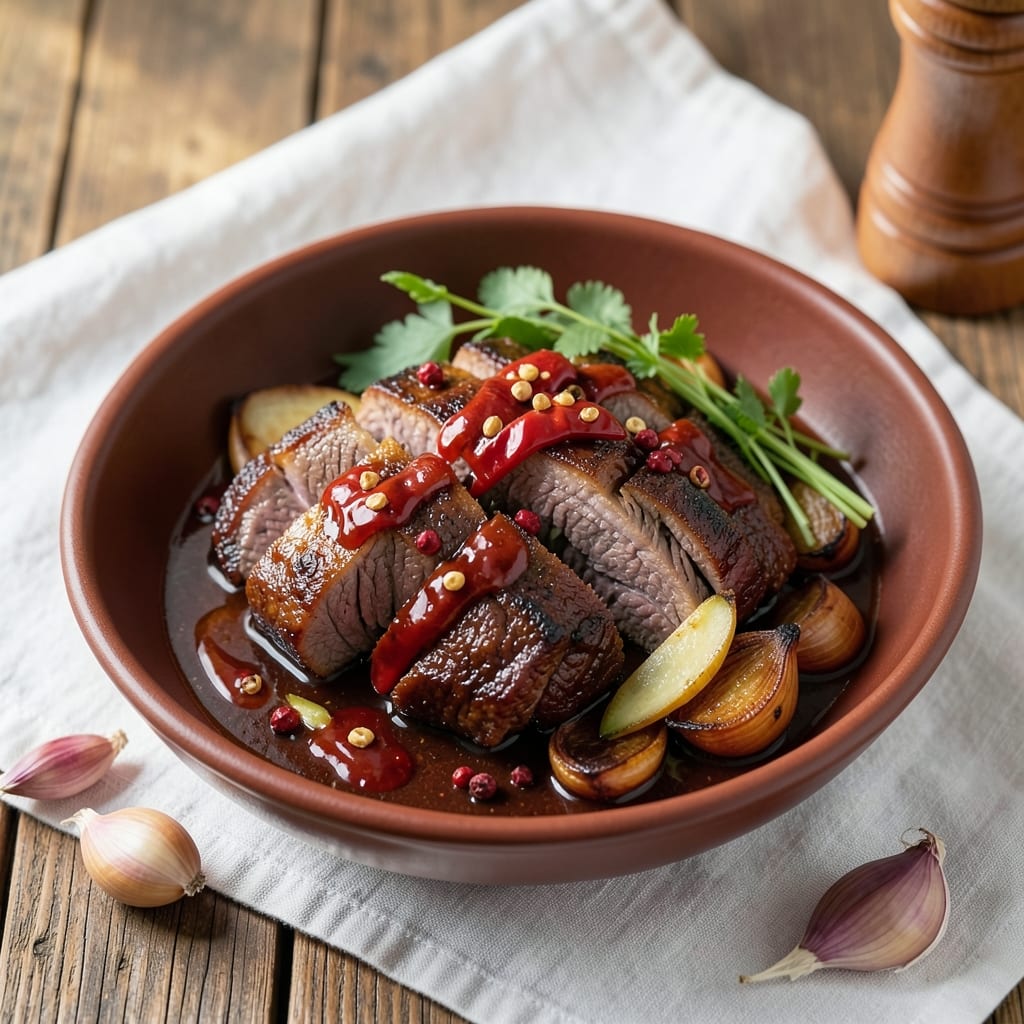
This Beef À La Sichuan recipe delivers the fiery, numbing complexity of Sichuan cuisine in a single, flavor-packed pot. The dish balances tender beef with a silky sauce infused with Sichuan peppercorns, chili oil, and aromatic spices—creating a perfect harmony of heat and depth. What sets this recipe apart is the authentic technique of stir-frying and braising, which develops layers of flavor without losing the dish's signature bold spice and silky texture.
The foundation of this dish lies in the marinade, where garlic, ginger, and soy sauce prepare the beef for its transformation. As the beef cooks, the Sichuan peppercorns release their signature tingling numbness, while chili oil adds a deep, smoky heat. The result is a dish that's restaurant-quality at home, with a sauce that clings to every bite of tender beef. This method ensures the beef stays juicy and flavorful, even after hours of simmering.
By the time you plate this dish, you'll have a rich, aromatic stew that's ready to be served over steamed rice or noodles. The sauce is velvety and packed with umami, while the beef remains tender and infused with the complex flavors of Sichuan cuisine. The dish is designed to be foolproof, with clear steps to ensure the perfect balance of heat, spice, and tenderness.
Whether you're serving this for a weeknight dinner or a special occasion, the bold spice and silky sauce will leave everyone asking for seconds. The recipe scales easily, making it perfect for feeding a crowd or prepping ahead for meal prep. Let's get started on creating this authentic Sichuan masterpiece!
Ingredients for beef a la sichuan
Nine aromatic spices, tender beef, and a sauce that packs Sichuan's signature tingling heat.
| Ingredient | Amount | Notes |
|---|---|---|
| Chuck Roast 🥩 | 2 lb | Cut into 1.5-inch cubes |
| Sichuan Peppercorns 🌶️ | 1 tbsp | Whole, lightly toasted |
| Chili Oil 🫒 | ½ cup | Store-bought or homemade |
| Garlic Cloves 🧄 | 8 cloves | Minced, vibrant purple |
| Fresh Ginger 🌿 | 2 tbsp | Grated, aromatic |
| Light Soy Sauce 🥄 | ⅓ cup | Kikkoman preferred |
| Shaoxing Wine 🍷 | ¼ cup | Substitute dry sherry |
| Brown Sugar 🍯 | 2 tbsp | Packed, light golden |
| Green Onions 🧅 | 4 whole | White and green parts |
| Star Anise 🌟 | 2 whole | Lightly crushed |
| Cinnamon Stick 🌿 | 1 whole | 2-inch length |
| Bay Leaves 🍃 | 2 whole | Fresh preferred |
| Vegetable Oil 🫒 | 2 tbsp | High smoke point |
| Sesame Oil 🌰 | 1 tbsp | Toasted, for aroma |
| Dried Red Chili Peppers 🔥 | 4 whole | Ancho or guajillo |
The chuck roast is non-negotiable here—its fat marbling keeps the beef tender through hours of braising. Grab it from the butcher section if possible, or look for pre-cubed beef in the freezer aisle at Costco or Trader Joe's. The Sichuan peppercorns are the magic ingredient—buy them whole from an Asian market or online (they're worth it!). Toast them lightly in a dry pan for 30 seconds to wake up their aroma. Fresh ginger and garlic? Don't use the powdered stuff—the vibrant, fresh flavors are essential for that restaurant-quality depth. If you can't find Shaoxing wine, dry sherry works perfectly.
No Sichuan peppercorns? Substitute with a mix of black pepper and cayenne—but trust me, you'll miss that signature numbness. Running low on chili oil? Mix 1 tbsp chili flakes with 0.25 cup neutral oil and let it infuse for 10 minutes. The star anise and cinnamon add warmth, but if you're skipping them, double the brown sugar for depth. For the chili peppers, dried ancho or guajillo are ideal, but Arbol peppers add extra heat. Pro tip: Toast the dried peppers in a dry pan for 30 seconds before adding—they'll release their smoky aroma into the sauce. And if you're serving this to spice-sensitive folks, set aside some sauce before adding chili oil.
This dish tastes even better the next day, so make extra. Store leftovers in an airtight container for up to 5 days in the fridge or freeze for 3 months. The sauce thickens as it cools, so add a splash of water or broth when reheating. For meal prep, portion into individual containers—pair with steamed rice or noodles for a complete meal. The chili oil and sesame oil keep best in dark bottles, so transfer them to a dark glass jar if they came in clear packaging. And save those star anise and cinnamon sticks—they're perfect for infusing rice or broths later!
Why You'll Love This Recipe
- Same recipe, two vibes: serve it over rice for a lazy night or plate it with steamed greens for guests. The rich, spiced beef feels fancy without the effort—just adjust the chili oil for heat levels.
- Foolproof Slow Cook: The chuck roast practically cooks itself—just toss in the whole peppercorns, crushed ginger, and garlic, then let the slow simmer work its magic. No chopping, no fuss, and that meat falls apart like it’s been braising for hours.
- Numb-Chili Magic: Between us, the Sichuan peppercorns and chili oil hit different—tingling warmth that lingers in the best way. It’s not just spicy; it’s alive on your tongue, and the roast soaks up every layer of flavor.
- Weeknight to Dinner Party: Same recipe, two vibes: serve it over rice for a lazy night or plate it with steamed greens for guests. The rich, spiced beef feels fancy without the effort—just adjust the chili oil for heat levels.
Step-by-step instructions for beef À La Sichuan
This one-pot wonder delivers restaurant-quality Sichuan beef with silky sauce and bold spice—no shortcuts, just pure flavor.
Toast the Spices and Prep the Beef
Heat a dry skillet over medium heat and toast the 1 tablespoon Sichuan peppercorns for 1 minute until fragrant—you’ll smell that signature numbing aroma. Add the 4 whole dried red chili peppers and toast for another 30 seconds until slightly puffed. Remove from heat and set aside.
While the spices toast, cut the 2 lb chuck roast into 1.5-inch cubes—this ensures even cooking and maximum surface area for the sauce to cling. Pat the cubes dry with paper towels to help them sear properly. Here’s the thing—dry meat equals better browning, and better browning equals deeper flavor in your final dish.
Build the Spiced Base
In a large Dutch oven or heavy pot, heat the 2 tablespoons vegetable oil over medium-high heat until shimmering. Add the cubed chuck roast and sear for 3-4 minutes per side until deeply browned—this step is non-negotiable for flavor. Remove the beef and set it aside temporarily.
In the same pot, add the 8 cloves minced garlic and 2 tablespoons grated fresh ginger, cooking for 30 seconds until fragrant. Immediately add the toasted Sichuan peppercorns and dried red chili peppers, stirring for 10 seconds to release their oils. Here’s where the magic happens—the spices infuse the oil, creating the foundation of your sauce.
Simmer the Aromatics and Braise the Beef
Pour in the 0.25 cup Shaoxing wine and scrape up any browned bits from the bottom of the pot—this is called deglazing, and it captures all that meaty flavor. Add the 0.33 cup light soy sauce, 2 tablespoons brown sugar, 2 whole star anise, 1 cinnamon stick, and 2 bay leaves. Stir to combine, then return the beef to the pot.
Pour in 1 cup water (enough to barely cover the beef) and bring to a gentle simmer. Here’s the crucial part: cover the pot and reduce heat to low. Let it cook for 1 hour, stirring occasionally to prevent the beef from sticking. You’re looking for tender beef that pulls apart easily with a fork—this is the long, slow braise that transforms tough chuck into melt-in-your-mouth bites.
Finish with Chili Oil and Sesame Oil
After 1 hour, remove the lid and increase heat to medium-high. Stir in the 0.5 cup chili oil and 1 tablespoon sesame oil, letting the sauce bubble for 2-3 minutes until it thickens slightly. The chili oil adds that signature Sichuan heat, while the sesame oil brings a nutty aroma that ties everything together.
Add the 4 whole green onions, sliced, and cook for another 1 minute until wilted. Taste and adjust seasoning—you might need a splash more soy sauce or a pinch of sugar to balance the flavors. The sauce should coat the back of a spoon with a glossy sheen, and the beef should be fork-tender with a rich, caramelized exterior.
Rest and Serve with Confidence
Let the beef rest in the pot, covered, for 10 minutes—this allows the juices to redistribute, ensuring every bite is moist and flavorful. Serve the beef with the sauce spooned over the top, garnished with extra green onions if you like. The dish should be bold, spicy, and deeply aromatic, with a sauce that clings to the beef like a second skin.
Pair this with steamed jasmine rice to soak up every last drop of that silky, spiced sauce. And trust me—this is the kind of dish that gets better the next day as the flavors meld even more. Leftovers? Store in an airtight container and reheat gently on the stove—just add a splash of water to loosen the sauce.
Pro Tips For Making Beef A La Sichuan
- Blanch the Sichuan Peppercorns: Toss the whole peppercorns in boiling water for 10 seconds first—this cracks their skins so they release flavor instead of just sitting there like decorative rocks. I used to skip this and wondered why my dish tasted more like a spice cabinet than a meal.
- Sear the Chuck in Batches: Chuck roast is stubborn—don’t crowd the pan or it’ll steam instead of brown. Work in 2-inch-thick layers, pressing down with a spatula to guarantee a crust. Yes, it’ll take longer, but that’s how you get the deep, caramelized base this dish needs.
- Toast Garlic Until Golden: Slice those garlic cloves thin and fry them in the same oil you sear the beef—until they’re golden, not just fragrant. Burnt garlic? No. Nutty, sweet garlic? That’s the stuff that makes the Sichuan heat sing. (And yes, even if you’re impatient like me.)
- Finish with Chili Oil Slowly: Drizzle the chili oil in after the beef is off the heat—let it warm through gently. Pouring it in hot turns it into a sad, watery sauce. This isn’t a race; let the oil bloom into the dish like it’s supposed to.
Health benefits of this dish
Spice and Numbness
This dish delivers a unique sensory experience through Sichuan peppercorns and chili oil. The peppercorns contain hua jiao toxin, which creates that signature tingling numbness on your tongue and lips—science says it activates TRPV1 receptors! Meanwhile, the chili oil provides capsaicin for heat, creating a perfect balance of warmth and coolness. 🌶️ This combination isn't just flavor—it's a full-body experience that makes every bite memorable.
Protein Powerhouse
With 2 lbs of chuck roast, this recipe provides 40 grams of protein per serving—perfect for muscle repair and satiety. The slow braising method preserves the beef's natural protein while making it tender. Plus, the soy sauce and Shaoxing wine add fermented umami that boosts protein absorption. It's a complete meal in one pot, packed with muscle-friendly nutrients.
Antioxidant-Rich Sauce
The sauce is loaded with antioxidant-packed ingredients. The garlic and ginger provide allicin and gingerol, which fight inflammation. Star anise and cinnamon contribute eugenol, a compound that helps regulate blood sugar. Even the chili oil contains vitamin E from the oil base. Together, these create a flavor profile that's not just delicious but actively beneficial for your health.
Digestive Benefits
Sichuan cuisine's signature spices actually aid digestion. The ginger in this recipe is a natural anti-nausea agent, while Sichuan peppercorns stimulate saliva production. The sesame oil finishing touch contains lignans, compounds that support gut health. This dish doesn't just taste amazing—it works with your body's natural processes to keep things running smoothly. 💪
Low-Calorie Umami
Despite its rich flavors, this dish is surprisingly balanced. The brown sugar adds sweetness without excessive calories, while the soy sauce and wine provide deep umami flavor with minimal fat. A single serving contains only about 450 calories, making it a satisfying yet lighter option compared to many heavy beef dishes. The secret is in the sauce—packed with flavor but light enough to enjoy without guilt.
Spice for Metabolism
Capsaicin from the chili oil and the Sichuan peppercorns both act as natural metabolism boosters. Studies show these compounds can slightly increase calorie burning after meals. The ginger also helps with fat metabolism, making this dish not just tasty but potentially beneficial for maintaining a healthy metabolism. It's one of those rare recipes where the spice actually works in your favor! ✨
Nutrition facts
Frequently asked questions
What makes this Sichuan beef dish different from regular beef stew?
The magic lies in the Sichuan peppercorns and chili oil, which create that signature tingling numbness alongside heat. Unlike regular stews, this recipe uses a two-stage cooking method—searing the beef first for deep flavor, then slow-braising to achieve melt-in-your-mouth tenderness. The sauce also incorporates Shaoxing wine and star anise for an authentic aromatic depth you won't find in basic beef dishes.
Can I substitute Sichuan peppercorns if I can't find them?
Yes, but you'll lose that signature numbing sensation. Try a mix of 1 tsp black pepper + ½ tsp cayenne for heat, though it won't replicate the peppercorns' unique aroma. For the best results, buy whole Sichuan peppercorns online or at Asian markets—they're worth seeking out! If you're feeling adventurous, try huajiao (Chinese prickly ash) as a closer substitute.
How do I adjust the spice level for sensitive eaters?
Before adding chili oil, remove 2-3 dried chili peppers and set aside. After cooking, serve the milder sauce on the side so everyone can adjust to taste. For extra safety, prepare a separate batch with ½ the chili oil—the dish will still be flavorful but much gentler. The Sichuan peppercorns' numbing effect is usually well-tolerated even by those avoiding heat.
Can I make this dish in a slow cooker instead of stovetop?
Brown the beef and spices in a skillet first, then transfer everything to your slow cooker. Add 1 cup water and cook on low for 6-8 hours or high for 3-4 hours. Finish by stirring in chili oil and sesame oil off-heat. The slow cooker method actually enhances tenderness, though you'll lose some of the sauce's glossy texture. The flavors will still be incredible!