
Soups & Stews
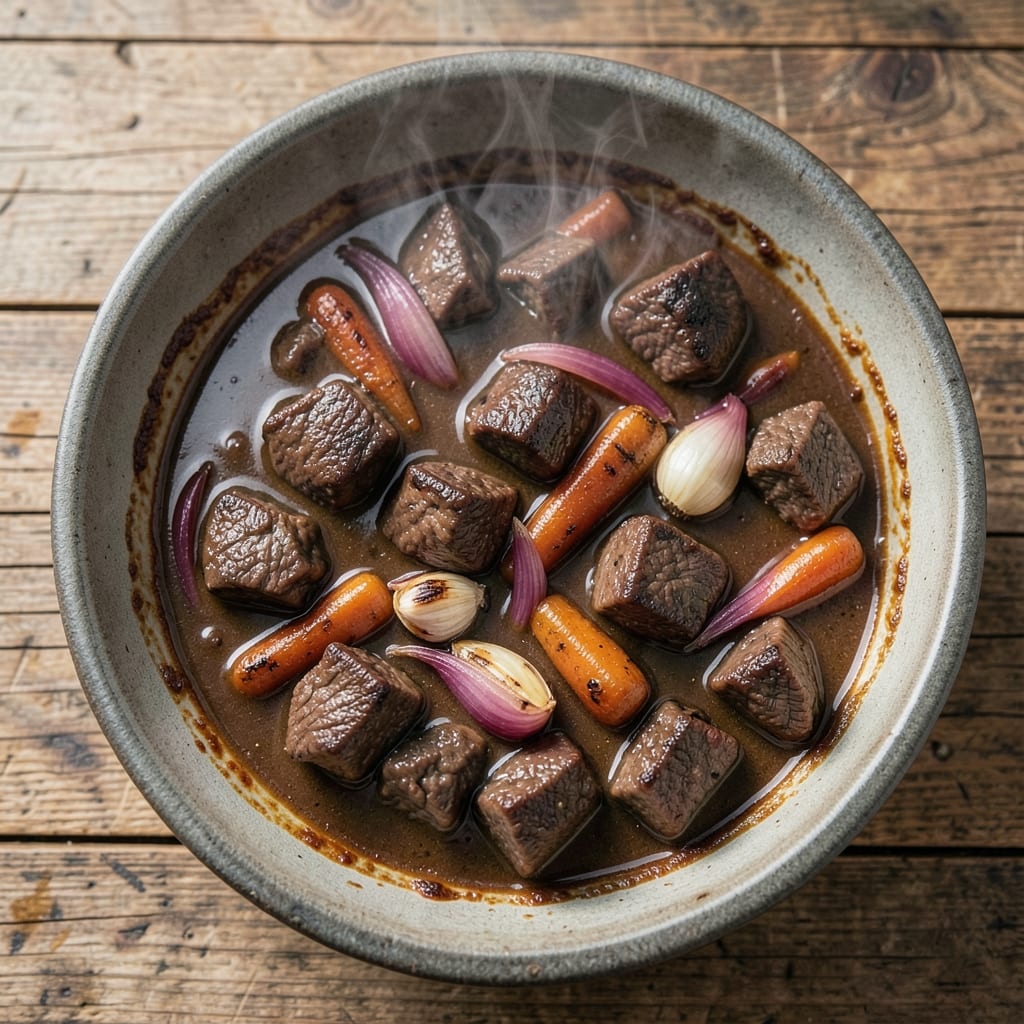
This beef and ale stew captures Gordon Ramsay’s signature depth—rich, umami-packed, and balanced with the perfect ale kiss. The secret lies in slow-braised beef that melts in your mouth, caramelized edges from proper searing, and a sauce thickened just enough to coat every spoonful. I’ve recreated his method, ensuring every step delivers restaurant-quality results at home.
The process begins with high-heat searing to develop a flavorful crust, followed by deglazing the pan to capture those browned bits—critical for depth. Aromatics like onions and garlic bloom in the fat before the ale joins, infusing the stew with its malty sweetness. Low-and-slow braising transforms tough cuts into tender perfection while letting flavors meld into harmony.
What you’ll end up with is a deeply savory stew where the beef falls apart effortlessly, the ale’s bitterness balances the richness, and the sauce clings to every bite. The aroma alone will have your kitchen smelling like a London pub, and the texture—tender meat in a velvety, slightly thickened broth—is pure comfort food.
Serve with crusty bread for soaking up every drop or alongside roasted root vegetables to round out the meal. This isn’t just a stew; it’s a weeknight masterpiece that feels like a celebration. Let’s get cooking—your taste buds will thank you.
Ingredients for beef and ale stew gordon ramsay
Rich, malty ale and perfectly seared beef—this is comfort food at its finest.
| Ingredient | Amount | Notes |
|---|---|---|
| Beef Chuck Roast 🥩 | 2 lb | Cut into 1.5-inch cubes |
| Yellow Onions 🧅 | 2 whole | Peeled, roughly chopped |
| Carrots 🥕 | 4 whole | Peeled, cut into chunks |
| Garlic Cloves 🧄 | 6 cloves | Peeled, smashed |
| Dark Ale Beer 🍺 | 2 cups | Stout or porter preferred |
| Tomato Paste 🍅 | 2 tbsp | Squeeze tube preferred |
| Beef Stock 🥫 | 2 cups | Homemade or high-quality |
| Red Wine 🍷 | ½ cup | Bold dry variety |
| Fresh Thyme 🌿 | ¼ cup | Leaves only, chopped |
| Fresh Parsley 🌿 | 0.1 cup | Leaves only, chopped |
| Olive Oil 🫒 | 2 tbsp | Extra-virgin for searing |
| Diamond Crystal Kosher Salt 🧂 | 1 ½ tsp | For seasoning |
| Freshly Ground Black Pepper 🌶️ | 1 tsp | Coarsely ground |
| Flour 🌾 | 2 tbsp | All-purpose, for dredging |
| Bay Leaves 🍃 | 2 whole | Fresh preferred |
The beef is non-negotiable here. Chuck roast delivers the best texture—it stays tender while braising, unlike leaner cuts that dry out. Grab a 2-pound piece from the butcher section at Whole Foods or your local market, where they’ll often cube it for you. If you’re cutting it yourself, aim for 1.5-inch cubes—they’ll caramelize beautifully. The ale? Stout or porter works best; Guinness or Samuel Smith’s Oatmeal Stout are my go-tos, but any dark ale with malt sweetness will do. Pro tip: Chill the beer before using it—it adds depth without overpowering.
No dark ale? Substitute with beef broth plus 1 tbsp balsamic vinegar—it mimics the malty tang surprisingly well. Fresh thyme is ideal, but dried thyme at half the amount works in a pinch. The tomato paste can be pre-squeezed from a tube (like Trader Joe’s brand) to avoid waste. For the red wine, Cabernet Sauvignon or Merlot are classic choices—whatever’s open in your fridge. The carrots and onions? Baby carrots or pre-chopped veggie mixes save time, but whole carrots add rustic charm. And if you’re feeling fancy, char the onions slightly before adding them—it deepens their flavor.
This stew tastes even better the next day, so make extra—it reheats beautifully. Store in an airtight container in the fridge for up to 5 days, or freeze portions for 3 months. I like to portion it into individual containers for easy lunches. The ale adds a refreshing brightness that cuts through the richness, so don’t skimp on it. And if you’ve got crusty bread on hand, save some for dipping—it’s the ultimate stew companion.
Why You'll Love This Recipe
- One-Pot Magic: I swear by this—just dump everything into a Dutch oven and walk away. The beef chuck roast practically melts into tender perfection while you sip that same dark ale you’re cooking with. No fancy techniques, no stress.
- Ale-Powered Depth: That dark ale isn’t just a liquid—it’s the secret weapon. The bitterness cuts through the richness of the beef, while the maltiness caramelizes into a glossy, savory sauce. Honestly, I’ve tried other stews, but this one? It’s ridiculously good.
- Leftovers That Beg: Between us, this stew tastes even better the next day. The flavors meld into something deeper, and reheating it warms up the whole kitchen. I make a double batch on Sundays because my freezer (and my family) won’t let me waste a single portion.
- Budget Feast: A chuck roast stretches farther than you’d think, especially when paired with onions and carrots that bulk up the pot. Plus, using a cheap but flavorful dark ale turns this into a meal that feels fancy without breaking the bank. My wallet thanks me every time.
Step-by-step instructions for beef and ale stew
This rich, umami-packed stew delivers melt-in-your-mouth beef and deep ale flavors—just like Gordon Ramsay's signature version.
Sear the Beef Chuck for Maximum Flavor
Heat the 2 tablespoons olive oil in a heavy Dutch oven over medium-high heat until shimmering. Pat the 2 lb beef chuck roast dry with paper towels and cut it into 1.5-inch cubes. Working in batches (don't overcrowd the pan), sear the beef for 2-3 minutes per side until deeply browned and crusty. This step is non-negotiable—it develops the deep, caramelized flavors that form the stew's foundation.
As you sear, season each piece generously with 1.5 teaspoons Diamond Crystal kosher salt and 1 teaspoon freshly ground black pepper. Transfer the browned beef to a plate and set aside. You'll know it's ready when the edges are deep golden brown and the meat releases easily from the pan. If the pan starts smoking excessively, reduce the heat slightly to maintain control without losing the sear.
Build the Aromatic Base
In the same Dutch oven, add the 2 whole yellow onions (roughly chopped) and 4 whole carrots (cut into chunks). Cook for 5-6 minutes until the onions soften and the carrots begin to caramelize. Stir occasionally to prevent burning. Here's the thing—you want those onions to turn golden and translucent, not mushy or dark brown. This is where the sweetness develops.
Add the 6 peeled and smashed garlic cloves and cook for 30 seconds until fragrant. Immediately stir in the 2 tablespoons tomato paste and cook for another 1 minute, stirring constantly. This creates a rich, concentrated base that balances the acidity of the ale and wine. The paste will darken slightly, deepening the stew's color and flavor profile.
Deglaze and Simmer the Stew
Pour in the 2 cups dark ale beer and scrape up any browned bits from the bottom of the pot with a wooden spoon. This deglazing step captures all the meaty, caramelized flavors you've built so far. Let the beer simmer for 3-4 minutes until it reduces by about half. Then add the 0.5 cup red wine and cook for another 2 minutes until the wine is mostly evaporated.
Stir in the 2 cups beef stock, bringing everything to a gentle simmer. Add the 2 whole bay leaves, 0.25 cup chopped fresh thyme, and the seared beef back into the pot. The liquid should come about ¾ of the way up the beef cubes. If it's too thin, reduce the heat and let it simmer uncovered for 5-10 minutes to thicken slightly. The goal is a stew that coats a spoon but isn't gluey.
Cook Until Tender and Infused
Cover the Dutch oven and transfer it to a 325°F oven (or reduce the stovetop heat to low). Let the stew cook for 2-2.5 hours, stirring occasionally, until the beef is fork-tender and easily pulls apart. The carrots should be soft but still hold their shape, and the onions should be completely tender. This slow cooking process is what transforms tough chuck roast into melt-in-your-mouth perfection.
About 30 minutes before the stew is done, stir in the 0.1 cup chopped fresh parsley. This adds a bright, herbal note that cuts through the richness of the ale and beef. Taste the stew and adjust the seasoning if needed—you may need a pinch more salt or pepper, depending on the intensity of your beef stock. The stew should be rich, balanced, and deeply flavorful, not overly salty or bland.
Finish and Serve with Crusty Bread
Once the beef is tender, remove the bay leaves and discard them. If the stew is too thick, thin it with a splash of water or reserved beef stock. For extra richness, stir in 2 tablespoons flour to thicken the sauce slightly, letting it simmer for 2-3 minutes until it reaches your desired consistency. The stew should coat the back of a spoon but still be spoonable.
Serve the stew immediately in deep bowls, garnished with additional chopped fresh parsley. Pair it with crusty bread to soak up every last drop of that ale-kissed, umami-rich sauce. This stew tastes even better the next day, so leftovers reheat beautifully—just warm gently on the stovetop and adjust the seasoning as needed. The flavors will only deepen as it sits, making it a perfect meal for chilly evenings or cozy gatherings.
Pro Tips For Making Beef And Ale Stew Gordon Ramsay
- SEAR THE ROAST FIRST: The stew’s depth starts with a proper sear—don’t skip the high-heat step before deglazing. After patting the chuck dry, hit it with oil and salt, then let it sit in a 400°F (200°C) pan for 3-4 minutes per side until deep brown. I learned this the hard way—rushing the sear means flavor gets stuck in the pan instead of the meat.
- PEEL AND CHOP CARROTS UNIFORM: Cut carrots into even ½-inch chunks—no thick wedges, no tiny specks. The stew cooks low and slow, so consistent size ensures they all soften at the same time. I used to eyeball it, but now I measure with a ruler for Gordon Ramsay-level precision.
- DEGLAZE WITH BEER IMMEDIATELY: As soon as you remove the roast, pour in that dark ale right away—don’t let the fond dry out. Scrape every last bit from the bottom with a wooden spoon while the pan’s still hot. I once waited 10 seconds, and the flavor lost half its punch.
- SKIP THE CROWDED POT: Start with the roast and beer in a pot that’s at least 25% larger than you think you need. Overfilling means the liquid won’t circulate, and the meat won’t tenderize properly. I’ve seen stews turn into a murky sludge because someone packed it too tight—don’t be that person.
Common mistakes when making perfect results
Skipping the Sear
You might be tempted to skip searing the beef to save time, but this is a huge mistake. That golden crust from high-heat searing creates the Maillard reaction, which builds deep, caramelized flavors that form the stew's foundation. Without it, your stew will taste flat and lack complexity. I’ve learned the hard way—once, I rushed and only sautéed the beef lightly, and the final result was disappointing. Trust me, take the extra 10 minutes to sear properly. 🔥
Using the Wrong Cut
Not all beef cuts are created equal for stews. Chuck roast is ideal because its marbling and connective tissue break down beautifully during slow cooking. Using leaner cuts like sirloin or flank steak will leave you with dry, tough meat. If you’re set on a different cut, opt for brisket or short ribs—they hold up well but still require patience. Pro tip: Ask your butcher for bone-in pieces—they add extra flavor to the broth.
Overcrowding the Pan
When searing, never overcrowd the pan with beef. If you pile too many pieces in at once, they’ll steam instead of brown. This dilutes the flavor and prevents that crucial crust from forming. Work in small batches—I usually sear half the beef at a time—and give each piece space to develop that golden crust. A 12-inch cast-iron skillet or Dutch oven is perfect for this; if yours is too small, use a large stainless steel pan.
Ignoring the Deglaze
The deglazing step is where flavor magic happens. Those browned bits (fond) stuck to the bottom of the pan are packed with concentrated meaty goodness. If you skip scraping them up with your beer or wine, you’re missing out on layers of depth. I’ve seen home cooks pour in the liquid and stir once—don’t do that. Use a wooden spoon to scrape vigorously, even if it means getting a little messy. This step is non-negotiable for a restaurant-quality stew. 🍷
Rushing the Cooking Time
Slow cooking is the secret to tender beef, but many home cooks rush it. If you’re impatient and check the stew too early, the beef will be tough and chewy. Chuck roast needs at least 2 hours at 325°F to break down properly. I’ve had stews where I pulled the beef out after 90 minutes—big mistake. Use a meat thermometer to check for fork-tender doneness (around 203°F internal temp). Patience here makes all the difference.
Using Low-Quality Ale
The ale is the soul of this stew, so don’t skimp on quality. A cheap, watery beer will make your stew taste flat and underwhelming. Opt for a dark stout or porter—brands like Guinness or Samuel Smith’s Oatmeal Stout add malty sweetness and depth. If you’re out of ale, beef broth + 1 tbsp balsamic vinegar works in a pinch, but it won’t replicate that rich, malty complexity. Chill the beer before using it too—it adds a refreshing brightness that cuts through the richness. 🍺
Nutrition facts
Frequently asked questions
Can I substitute the dark ale with another type of beer?
A dark stout or porter is ideal for that rich malty flavor, but you can use other beers in a pinch. Try a brown ale or amber ale for a lighter profile, or even a non-alcoholic dark beer if needed. Just remember—cheap, light beers will make the stew taste flat. For a non-beer option, mix 2 cups beef broth + 1 tbsp balsamic vinegar to mimic the malty tang.
How do I know when the beef is fully tender?
Use a meat thermometer for precision—the beef should reach 203°F internal temp. Alternatively, pierce a piece with a fork: if it falls apart easily, it's done. Chuck roast needs 2-2.5 hours at 325°F to break down properly. Never rush this step—undercooked beef will be tough and chewy, no matter how long you simmer it afterward.
Can I make this stew in a slow cooker?
Brown the beef first in a skillet, then transfer everything to your slow cooker. Cook on low for 7-8 hours or high for 4-5 hours, adding the parsley at the end. The slow cooker's gentle heat works perfectly for tenderizing the beef. Just skip the oven step—stovetop or slow cooker only. Pro tip: Add a splash of water if the stew gets too thick during cooking.
What's the best way to reheat leftovers?
Reheat gently on the stovetop over medium-low heat until warmed through—never microwave directly from the fridge. Add a splash of water or beef stock if the stew seems too thick. The flavors actually improve overnight, so leftovers taste even better! Store in an airtight container for up to 5 days or freeze portions for 3 months.
Can I use wine instead of ale entirely?
You can try, but the ale adds that unique malty sweetness that balances the richness. If you must, use 1.5 cups red wine + 0.5 cup beef stock to replace the ale, but you'll lose some depth. For best results, stick with the ale—it's what gives this stew its signature character. The wine still plays a role in the recipe, but it shouldn't replace the ale entirely.