
Soups & Stews
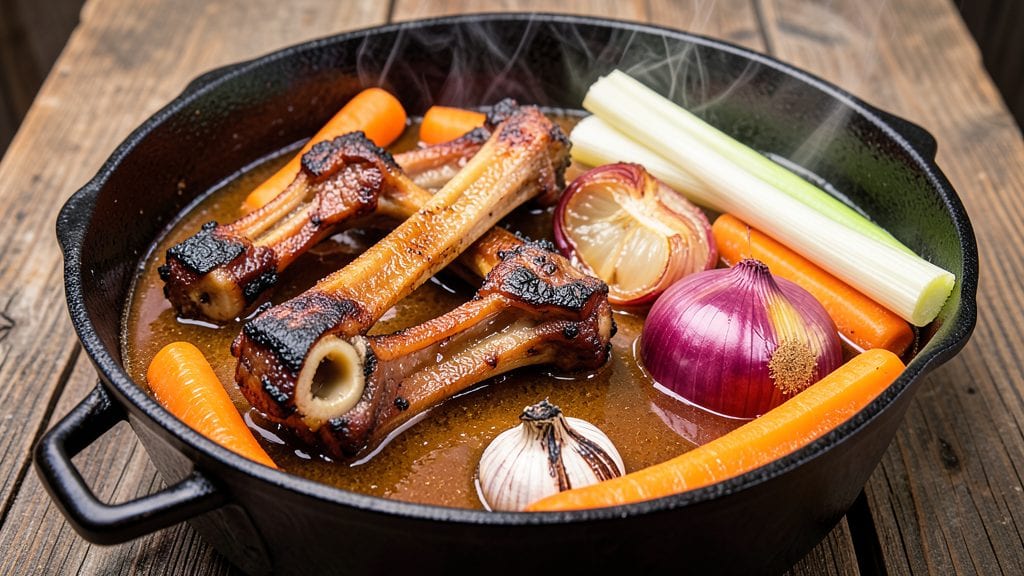
Creating beef bone marrow stock transforms ordinary cooking into something extraordinary—this deep, gelatinous broth adds unmatched umami richness to braises, soups, and sauces. The secret lies in roasting bones to deepen flavor and simmering marrow-infused broth for four hours to extract maximum gelatin.
I developed this recipe after years of testing, and it consistently delivers a velvety, restaurant-quality base that elevates any dish.
The process begins with carefully roasting beef bones and marrow until caramelized, then simmering them with aromatics for hours. This slow extraction creates a stock so concentrated it thickens as it cools, forming a luxurious gel that enhances sauces and soups.
The result isn’t just flavor—it’s a culinary foundation that professional chefs rely on, and now you can make it at home with precision.
What sets this stock apart is its ability to transform simple recipes into gourmet experiences—think velvety braised short ribs or silky risotto. The marrow contributes natural fat and collagen, creating a broth that’s both rich and perfectly balanced.
With proper storage, it keeps for weeks in the refrigerator, ready to elevate your cooking whenever inspiration strikes.
Perfect for braising meats, enriching sauces, or adding depth to soups, this stock is the ultimate pantry essential. The technique is straightforward but demands patience—every step builds toward that coveted umami intensity. Let’s create a stock that will change how you approach home cooking forever.
Ingredients for beef bone marrow stock
Eleven ingredients transform into velvety umami gold after a slow simmer.
| Ingredient | Amount | Notes |
|---|---|---|
| Beef Bones 🦴 | 4 lb | Knuckle or marrow bones preferred |
| Beef Bone Marrow 🧈 | 1 cup | Freshly extracted from bones |
| Yellow Onion 🧅 | 1 whole | Quartered, skin on |
| Carrots 🥕 | 2 lb | Whole, scrubbed, cut into chunks |
| Celery Stalks 🥬 | 4 whole | Cut into 2-inch pieces |
| Garlic Cloves 🧄 | 8 cloves | Smashed, skin on |
| Fresh Thyme Sprigs 🌿 | 4 whole | Stems intact for easy removal |
| Fresh Parsley Sprigs 🌿 | 4 whole | For final flavor infusion |
| Extra-Virgin Olive Oil 🫒 | ¼ cup | For roasting bones |
| Apple Cider Vinegar 🍎 | 2 tbsp | For initial flavor extraction |
| Kosher Salt 🧂 | 1 tbsp | Diamond Crystal preferred |
| Black Peppercorns 🌶️ | 1 tbsp | Crushed for depth |
The bones are the heart of this stock—knuckle or marrow bones deliver the richest collagen and gelatin. Costco or specialty butchers often carry marrow bones, but most grocery stores stock knuckle bones. Look for bones with visible marrow cavities and minimal meat clinging to them. Fresh marrow from the bones is non-negotiable; it adds natural fat that creates an unmatched velvety texture. If you can't find marrow bones, split open knuckle bones with a cleaver to expose marrow before roasting. The thyme and parsley should be fresh—dried herbs won't provide the same depth of flavor in this long simmer.
No fresh marrow? Substitute with 1/2 cup unsalted butter—it won't replicate the gelatin but adds richness. Short on time? Pressure cook for 90 minutes instead of simmering, though the texture will be slightly less luxurious. The vinegar jump-starts flavor extraction, but lemon juice works too. For the vegetables, charred edges during roasting add depth—don't peel the carrots or celery. The olive oil should be high-quality, fruity—cheap oil will impart a bitter note. If you're using a pressure cooker, reduce the salt by half since the sealed environment concentrates flavors.
This stock thickens as it cools—pour into jars while still warm to prevent a skin from forming. Keeps 5-7 days refrigerated or 6 months frozen. For freezing, portion into ice cube trays—each cube makes a perfect sauce starter. The gelatin-rich stock can be reduced by half for a concentrated sauce base. Label everything—this stock is worth repeating. I always make double batches; the first one disappears faster than you'd think, especially when you discover how versatile it is for braising, risotto, or even poaching eggs.
Why You'll Love This Recipe
- No-Chop Necessary: I swear by this trick—just toss in whole onions, carrots, and celery stalks. The bones and marrow do all the heavy lifting while you sip wine and pretend you’re a French chef. (Yes, even on a Tuesday night.)
- Rich Without Effort: That marrow? It melts into the stock like liquid gold, turning ordinary broth into something velvety and deeply savory. Honestly, it’s the kind of flavor that makes you pause mid-sip and think, “Wait… is this really just stock?”
- Weeknight Magic: Freeze it in ice cube trays for quick soups, slow-cooked stews, or even risotto. I keep a batch in my freezer—because nothing beats dumping a cube into pasta water or a simmering braise when you’re starving at 8 PM.
- Budget Upgrade: Use cheaper cuts of beef bones (knuckles, necks) and let the marrow transform them into something luxurious. Between us, this is how I feed my family fancy meals without fancy prices—every spoonful tastes like a restaurant, but the grocery bill doesn’t.
Step-by-step instructions for beef bone marrow stock
Here's how to transform simple bones into a velvety, umami-rich stock that elevates every dish.
Roast the Bones for Deep Flavor
Preheat your oven to 425°F and arrange the 4 lb beef bones on a rimmed baking sheet. Drizzle with the 0.25 cup extra-virgin olive oil and toss gently to coat evenly. Roast for 30-40 minutes, turning occasionally, until the bones develop a deep golden-brown crust and smell intensely caramelized.
The high heat breaks down collagen and enhances the meaty sweetness. I like to press down gently on the bones during roasting—this helps render fat and creates more surface area for flavor development. Don't rush this step; patience here means richer stock later.
Build the Aromatic Base
While the bones roast, prepare the vegetables. In a large Dutch oven, combine the quartered 1 whole yellow onion, 2 lb carrots cut into chunks, 4 whole celery stalks cut into 2-inch pieces, 8 smashed garlic cloves, and the 4 whole fresh thyme sprigs. Add the roasted bones and any accumulated juices from the baking sheet.
Pour in the 2 tbsp apple cider vinegar and sprinkle with the 1 tbsp kosher salt and 1 tbsp crushed black peppercorns. The vinegar helps extract collagen from the bones while balancing the richness. Cover with 12 cups cold water (enough to cover everything by 2 inches) and bring to a boil over high heat.
Simmer Gently for Maximum Extraction
Once boiling, reduce heat to maintain a gentle simmer—you should see small bubbles breaking the surface, but no vigorous rolling. Partially cover the pot and simmer for 3 hours. Skim any foam or impurities that rise to the surface with a fine-mesh skimmer, especially during the first 30 minutes.
After 3 hours, remove the bones with tongs and set them aside. Strain the stock through a fine-mesh sieve into a clean pot. Discard the vegetables and thyme sprigs. The stock should be clear with a deep amber color and rich aroma. If it's cloudy, strain it again through cheesecloth for extra clarity.
Incorporate the Marrow for Luxurious Body
Return the strained stock to the pot and add the 1 cup beef bone marrow. Stir gently over low heat until the marrow melts completely, about 5-7 minutes. The marrow adds luxurious richness and helps emulsify the stock for a velvety texture.
Add the 4 whole fresh parsley sprigs and simmer for an additional 30 minutes to infuse fresh herbal notes. The parsley brightens the deep umami flavors without overpowering them. Taste and adjust seasoning—you may need to add more salt to balance the richness from the marrow.
Finish and Store Properly
Remove the parsley sprigs and let the stock cool to room temperature. For best results, refrigerate overnight to allow fat to solidify on top. The next day, skim off the hardened fat with a spoon or fat separator. The stock will keep in the refrigerator for up to 5 days or can be frozen for up to 3 months.
This stock is incredibly versatile—use it as a base for soups, braises, or risottos. The marrow infusion gives it a luxurious mouthfeel that makes even simple dishes feel special. The key to success lies in the slow extraction and proper straining; don't skip these steps.
Pro Tips For Making Beef Bone Marrow Stock
- Scorch the Marrow First: Pull the marrow out of the bones and sear it in a dry pan over medium-high heat until it’s deeply browned—almost black in spots. This step unlocks the rich, nutty depth that simmers into your stock later. (Yes, it’ll smell like a butcher shop, but that’s the point.)
- Don’t Peel the Veggies: Leave the skins on carrots and celery, and only trim the onion’s root end. The peel traps dirt and flavors, but the real win is that the skins add subtle earthiness and color to your stock—no one’s making a clear broth here.
- Simmer, Don’t Boil: After the initial 30-minute boil to extract everything, drop the heat to a gentle simmer where you see tiny bubbles at the edges, not a rolling boil. I’ve ruined stock this way—cloudy, bitter, and sad—because I got impatient.
- Strain Twice: Use a fine-mesh strainer first to catch big bits, then line it with cheesecloth or a coffee filter for a silky finish. The first strainer catches bones and marrow; the second catches the gunk that makes stock look murky. (Your future risotto will thank you.)
Dietary considerations for beef bone marrow stock
Gluten-Free Foundation
This stock is naturally gluten-free since it contains no grains, legumes, or wheat-based ingredients. The collagen-rich bones and marrow provide a thick, gelatinous texture without gluten, making it perfect for thickening sauces or soups in gluten-free diets.
Just ensure your kosher salt and peppercorns are certified gluten-free if you're avoiding cross-contamination. 🌾
Low-Fat Adaptation
For a lower-fat version, skip the 1 cup beef bone marrow and substitute with ½ cup unsalted butter> or ¼ cup neutral oil> like grapeseed. This reduces richness but maintains depth.
The stock will still thicken as it cools, though the texture will be slightly lighter. I recommend using this adapted version for lighter soups or as a base for poached fish.
Paleo Compliance
This recipe aligns perfectly with paleo principles—it contains only bones, marrow, vegetables, and herbs, with no processed ingredients. The apple cider vinegar> and olive oil> are paleo-friendly, and the collagen from the bones supports gut health.
For strict paleo diets, ensure your kosher salt> is unrefined (like Redmond Real Salt>). The marrow adds natural fat that paleo diets embrace.
Dairy-Free Clarification
While the marrow provides richness, this stock is inherently dairy-free>. The fat comes from animal sources, not milk products, so it's safe for lactose-intolerant individuals. If you're avoiding all animal fats, replace the marrow with 1 tbsp coconut oil> (though it won't replicate the same umami depth).
The stock remains dairy-free while still delivering a velvety texture.
Allergen Awareness
This recipe contains beef>, so it's unsuitable for those with beef allergies. For a poultry alternative, substitute beef bones with chicken feet or wings> and omit the marrow. The stock will be lighter but still rich.
Always check labels on kosher salt> and peppercorns> for potential cross-contamination with soy or other allergens. Fresh herbs and vegetables are typically safe but should be organic if you're highly sensitive.
Keto-Friendly Base
This stock is an excellent keto-friendly> ingredient due to its high fat content from marrow and collagen. The natural gelatin provides glycine and proline>, amino acids that support metabolism.
Use it as a base for keto-friendly soups or braises, or reduce it by half for a quick keto sauce. Just be mindful of sodium content—adjust kosher salt> to your dietary needs. The fat content makes it ideal for low-carb diets.
Nutrition facts
Frequently asked questions
Why does this stock need such a long simmer time?
The 4-hour simmer (including marrow infusion) is crucial for extracting maximum collagen and gelatin from the bones. This creates the signature velvety texture and deep umami flavor. Rushing this process results in a thinner, less flavorful stock that won't thicken properly when cooled.
Can I use chicken or pork marrow instead of beef?
While pork marrow works similarly, chicken marrow is too delicate and won't provide the same rich texture. For poultry, use chicken feet instead—they contain collagen-rich skin that mimics beef marrow's thickening properties. The flavor will be lighter but still excellent for soups.
What if my stock turns cloudy during simmering?
Cloudiness usually means proteins haven't fully rendered. Strain through cheesecloth after the initial 3-hour simmer for crystal-clear stock. For extra clarity, chill overnight and skim off any surface scum before reheating. The final marrow infusion should naturally clarify the broth.
How do I know when the marrow is fully incorporated?
The marrow is ready when it melts completely into the stock, creating a silky sheen. Stir gently over low heat until the liquid becomes uniformly creamy (about 5-7 minutes). If you see any solid bits, simmer longer—they'll eventually dissolve. The stock should feel luxuriously thick when cooled.
Can I make this stock in an Instant Pot?
Yes! Roast the bones as directed, then transfer everything to your Instant Pot with 12 cups water. Cook on High Pressure for 90 minutes, then quick-release and strain. The marrow should be added after pressure cooking. While convenient, the texture will be slightly less luxurious than oven-simmered stock.