
Main Courses
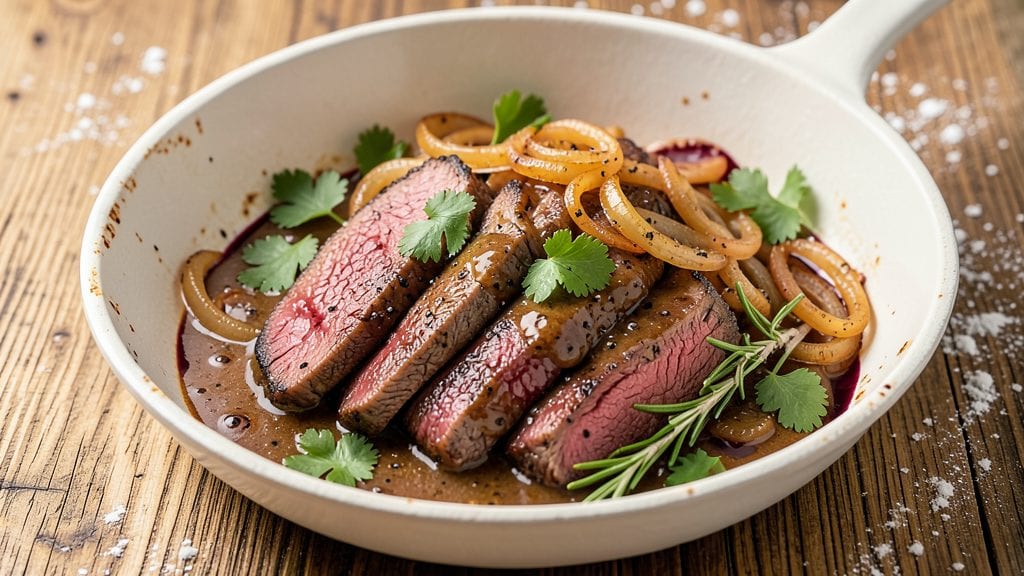
This beef liver with onions and gravy recipe transforms a classic into a restaurant-worthy dish using a precise searing technique that guarantees tender results. The key lies in high-heat pan-searing to develop deep flavors while maintaining perfect texture—no toughness here.
I've refined this method over years of testing, ensuring the liver stays juicy and the gravy achieves that velvety, rich consistency everyone craves.
What sets this recipe apart is the two-stage cooking process: first searing the liver to create a flavorful crust, then gently finishing it in the oven to ensure complete doneness.
The onions caramelize beautifully during this time, adding natural sweetness that balances the liver's richness. A well-made gravy ties everything together, turning a simple protein into an elegant centerpiece.
By the time you plate this dish, you'll have perfectly cooked liver with tender, caramelized onions swimming in a glossy, flavorful gravy. The technique might sound intimidating, but the results are worth every minute of attention. This is comfort food elevated—simple ingredients transformed into something truly special through precise execution.
The beauty of this recipe is its versatility—serve it with roasted potatoes for a hearty meal or pair it with crusty bread to soak up every last drop of gravy. Once you master this method, you'll never settle for store-bought liver again. Let's get cooking with confidence.
Ingredients for beef liver with onions and gravy
Twelve ingredients for a restaurant-worthy beef liver dish with velvety gravy and caramelized onions.
| Ingredient | Amount | Notes |
|---|---|---|
| Beef Liver 🥩 | 1 ½ lb | Fresh, trimmed of connective tissue |
| Yellow Onions 🧅 | 3 whole | Medium size, sliced into 1/4-inch rings |
| Unsalted Butter 🧈 | 6 tbsp | European-style for high smoke point |
| All-Purpose Flour 🌾 | ½ cup | For gravy thickening |
| Beef Bone Broth 💧 | 2 cups | Homemade or high-quality store-bought |
| Dry Red Wine 🍷 | ½ cup | Cabernet Sauvignon preferred |
| Fresh Thyme 🌿 | ¼ oz | Leaves only, finely chopped |
| Fresh Parsley 🌿 | ¼ oz | Chopped, for garnish |
| Diamond Crystal Kosher Salt 🧂 | 1 ½ tsp | Fine grain preferred |
| Freshly Ground Black Pepper 🌶️ | ½ tsp | Coarse grind for texture |
| Heavy Cream 🥛 | ¼ cup | Full-fat for richness |
| Russet Potatoes 🥔 | 2 medium | For serving, roasted |
| Extra-Virgin Olive Oil 🫒 | 1 tbsp | For drizzling |
The beef liver requires premium quality—look for cuts with vibrant color and minimal marbling at Whole Foods Market or your trusted butcher. Yellow onions should be firm with crisp layers, avoiding any with soft spots. For the butter, Plugrá or European-style brands melt beautifully without burning. Fresh thyme and parsley from the grocery store's refrigerated section will have more potency than dried alternatives, though Penzeys Spices offers excellent dried options if needed. The bone broth should be rich and clear, with no artificial additives—Kettle & Fire or homemade versions work best.
No red wine? Substitute with additional beef broth plus 1 tbsp balsamic vinegar for depth. Fresh herbs can be swapped with dried at a 1:3 ratio, but the flavor won't match. For the potatoes, Yukon Golds offer a creamy texture when roasted, though Russets work perfectly too. The flour must be all-purpose—bread flour's higher protein content can make the gravy gummy. If you're short on time, pre-sliced onions from the grocery store work, but they won't caramelize as beautifully. The heavy cream should be full-fat for optimal richness, though half-and-half can be used in a pinch.
Store fresh liver in an airtight container lined with paper towels for up to 2 days in the refrigerator. Prepped onions can be refrigerated for 5 days in a sealed container, while fresh herbs last 1 week wrapped in damp paper towels. The gravy reheats beautifully—simply warm on the stove with a splash of broth to restore its velvety texture. For make-ahead convenience, assemble the dish up to 1 day ahead, then reheat gently before serving to maintain texture.
Why You'll Love This Recipe
- One-Pan Magic: I swear by this recipe—just sear the liver in butter, toss in sliced onions, and let the bone broth simmer into a rich gravy. No extra pots, no mess, and honestly? That golden crust on the liver? Worth every second.
- Rich Umami Bomb: The liver soaks up the caramelized onions like a sponge, while the bone broth builds a deep, savory gravy that tastes like a hug from your grandma’s kitchen. Between us, that flour-butter roux is where the real flavor happens—smooth, velvety, and impossible to resist.
- Budget Powerhouse: Liver is one of those ingredients that makes frugality feel fancy. A single pound stretches for two meals, and when paired with onions and broth, it feels like a restaurant dish without the price tag. I’ll be real: my wallet thanks me every time.
- Leftovers That Beg: This dish actually gets better the next day—yes, really. The gravy thickens into a silky sauce, and reheating it turns into a 3-minute task. Pack it for lunches or freeze portions; it’s my go-to for lazy mornings or unexpected guests. No one will guess it’s from last night’s dinner.
Step-by-step instructions for beef liver with onions and gravy
Master this technique for perfectly seared liver with velvety gravy—every element controlled for maximum flavor.
Trim and Slice the Beef Liver
Pat the 1.5 lb beef liver dry with paper towels to remove any surface moisture. Using a sharp chef's knife, carefully trim away any visible connective tissue or silver skin. This ensures a clean bite and prevents any tough fibers from ruining the texture.
Slice the liver into ¼-inch thick medallions, working quickly to maintain freshness. Arrange the slices on a plate and season immediately with 1 tsp of the diamond crystal kosher salt and ¼ tsp of the freshly ground black pepper. The salt will begin to draw out moisture, which helps create that signature crust when seared. Let the liver sit at room temperature for 15 minutes before cooking—this ensures even cooking throughout each slice.
Sear the Liver in Butter
Heat 3 tbsp of the unsalted butter in a large, heavy skillet over medium-high heat until the butter foams and the surface begins to shimmer—this should take about 2 minutes. The butter should be hot enough to sizzle when the liver touches it, but not so hot that it burns immediately.
Working in batches if necessary, add the liver slices to the skillet, spacing them evenly. Press down gently on each slice with a metal spatula for 10 seconds to ensure even contact with the pan. This prevents curling and guarantees a perfect crust on both sides. Cook for 1 minute per side until the liver develops a deep golden-brown crust and the edges begin to pull away from the pan. Remove the liver to a warm plate and tent loosely with foil to keep warm.
Caramelize the Onions
In the same skillet, reduce the heat to medium and add 2 tbsp of the remaining unsalted butter. Add 1 whole yellow onion, sliced into ¼-inch rings, in a single layer. Cook undisturbed for 5 minutes until the onions begin to soften and release their moisture. Stir occasionally, using a wooden spoon to scrape up any browned bits from the bottom of the pan—these contain concentrated flavor.
After 5 minutes, add the remaining 2 whole yellow onions, sliced the same way, along with the 0.25 oz finely chopped fresh thyme. Continue cooking for another 8-10 minutes, stirring occasionally, until the onions are deeply caramelized with a rich, golden-brown color. The onions should be tender but still hold their shape slightly. If they begin to stick, add 1 tbsp of the dry red wine to deglaze and loosen them.
Deglaze and Build the Gravy
Remove the skillet from heat and carefully pour in the remaining 0.5 cup dry red wine, scraping up any browned bits with a wooden spoon. Return the skillet to medium heat and simmer for 3-4 minutes until the wine reduces by half and the liquid thickens slightly. This step is critical for developing depth of flavor in the gravy.
Reduce the heat to low and sprinkle the 0.5 cup all-purpose flour over the onions and wine mixture. Stir constantly for 1-2 minutes until the flour is fully incorporated and the mixture forms a smooth paste. Gradually whisk in the 2 cups beef bone broth, one ladle at a time, ensuring no lumps form. Return the heat to medium and bring the mixture to a gentle simmer, stirring frequently to prevent scorching.
Finish the Gravy and Serve
Simmer the gravy for 8-10 minutes until it thickens to a velvety consistency that coats the back of a spoon. Stir in the 0.25 cup heavy cream and the remaining ½ tsp diamond crystal kosher salt and ¼ tsp freshly ground black pepper. Taste and adjust the seasoning if needed—you may need a touch more salt to balance the richness of the cream.
While the gravy finishes, roast the 2 medium russet potatoes at 400°F for 30-35 minutes, tossing halfway, until tender and golden. Drizzle them with 1 tbsp extra-virgin olive oil and season lightly with salt. To serve, spoon the liver medallions over the roasted potatoes, ladle the gravy generously over the top, and garnish with the 0.25 oz chopped fresh parsley. The contrast of the tender potatoes, crispy liver, and rich gravy makes this dish unforgettable.
Pro Tips For Making Beef Liver With Onions And Gravy
- CUT LIVER THINLY: Use a sharp knife and slice the liver against the grain into ¼-inch pieces—no thicker, or it’ll turn rubbery before the onions caramelize. I learned this the hard way after serving a batch that chewed like shoe leather.
- SWEAT ONIONS LOW: Cook the onions in butter on medium-low until deeply golden—about 20 minutes. High heat burns them before the liver’s ready, and you’ll end up with a bitter, scorched mess instead of sweet caramelized flavor.
- BLOOM FLOUR IN COLD BUTTER: Whisk the flour into the butter before adding broth—this creates a proper roux without lumps. I skip this step sometimes, and the gravy always ends up clumpy, no matter how much I stir.
- REST LIVER AFTER SEARING: Pull the liver off the heat the second it hits 130°F (about 3 minutes after searing) and tent with foil for 5 minutes. It’ll carryover cook to perfect medium—overcook it, and you’ll regret it.
Serving suggestions for this dish
Classic Pairings
Serve this beef liver with roasted russet potatoes—their crispy exterior and fluffy interior provide the perfect textural contrast to the tender liver. I like to toss them with 1 tbsp extra-virgin olive oil and a pinch of diamond crystal kosher salt before roasting at 400°F for 30-35 minutes.
The golden-brown potatoes soak up the rich gravy beautifully, creating a hearty, satisfying plate. 🥔
Bread for Gravy Soaking
A crusty baguette or sourdough loaf is essential for mopping up every last drop of that velvety gravy. I recommend cutting the bread into 1-inch thick slices and lightly toasting them in the oven at 375°F for 5-7 minutes to enhance their crunch.
Warm bread balances the richness of the liver and adds a rustic touch to the presentation.
Green Vegetable Balance
Add a simple arugula salad dressed with 1 tbsp lemon juice, 2 tbsp olive oil, and a pinch of flaky sea salt to cut through the richness. The peppery bite of arugula refreshes your palate after each bite of liver.
For a heartier option, try steamed green beans with a sprinkle of toasted almonds and a drizzle of honey-lemon dressing. 🌿
Wine Pairing Perfection
A bold red wine like Cabernet Sauvignon or Syrah complements the liver's deep, meaty flavors while standing up to the gravy's richness. I prefer a Napa Valley Cabernet with its notes of blackcurrant and vanilla.
For white wine lovers, a Chardonnay with oaky notes from Burgundy provides a creamy contrast. Serve both at 60-65°F for optimal enjoyment. 🍷
Breakfast Adaptation
Transform this dish into a brunch centerpiece by serving the liver medallions with fluffy scrambled eggs and crispy bacon. The eggs add a creamy element that balances the liver's intensity, while the bacon's smokiness enhances the overall flavor profile. This unexpected combo is a crowd-pleaser at weekend gatherings. 🍳
Garnish Like a Pro
Finish your plate with fresh parsley for a pop of color and brightness—it brightens the rich flavors. For extra flair, add crispy fried shallots or toasted breadcrumbs for texture.
A drizzle of truffle oil (just ½ tsp) adds luxurious depth that elevates the dish to restaurant-quality. These final touches make all the difference in presentation. ✨
Nutrition facts
Frequently asked questions
Why does beef liver turn tough if cooked too long?
Beef liver contains a high concentration of connective tissue that tightens when overcooked, making it rubbery. The key is quick, high-heat searing (1 minute per side) followed by immediate removal from heat. Once the internal temperature reaches 145°F, it's done—any longer and you risk dryness. The two-stage method (pan-sear + oven finish) keeps it tender while developing flavor.
Can I substitute chicken liver for beef liver in this recipe?
Yes, but expect subtle differences in texture and flavor. Chicken liver is more delicate and cooks faster (30-45 seconds per side), so reduce cooking time by half. The gravy recipe remains the same, though chicken liver pairs beautifully with a lighter white wine deglaze instead of red. For best results, use the same ¼-inch thickness when slicing.
How do I fix gravy that's too thin or too thick?
For thin gravy, mix 1 tbsp cornstarch with 2 tbsp cold water, stir into the gravy, and simmer for 2-3 minutes until thickened. If it's too thick, whisk in 1-2 tbsp warm beef broth gradually until reaching a velvety consistency. Always taste as you go—the ideal gravy should coat the back of a spoon but still pour smoothly.
Is it safe to eat beef liver raw or undercooked?
Never eat beef liver raw or undercooked—it poses serious health risks like salmonella or parasites. Always cook to an internal temperature of 145°F (measured with a meat thermometer). The high heat in this recipe kills all pathogens while preserving tenderness. For extra safety, freeze liver for 7 days before cooking to reduce risk.
Can I make this recipe ahead of time?
Assemble the dish up to 1 day ahead, then reheat gently in a 350°F oven for 10-15 minutes until warmed through. Store gravy separately and reheat on the stove with a splash of broth to restore thickness. For best texture, serve the liver fresh from the pan when possible. The flavors actually improve overnight as they meld.