
Sauces & Condiments
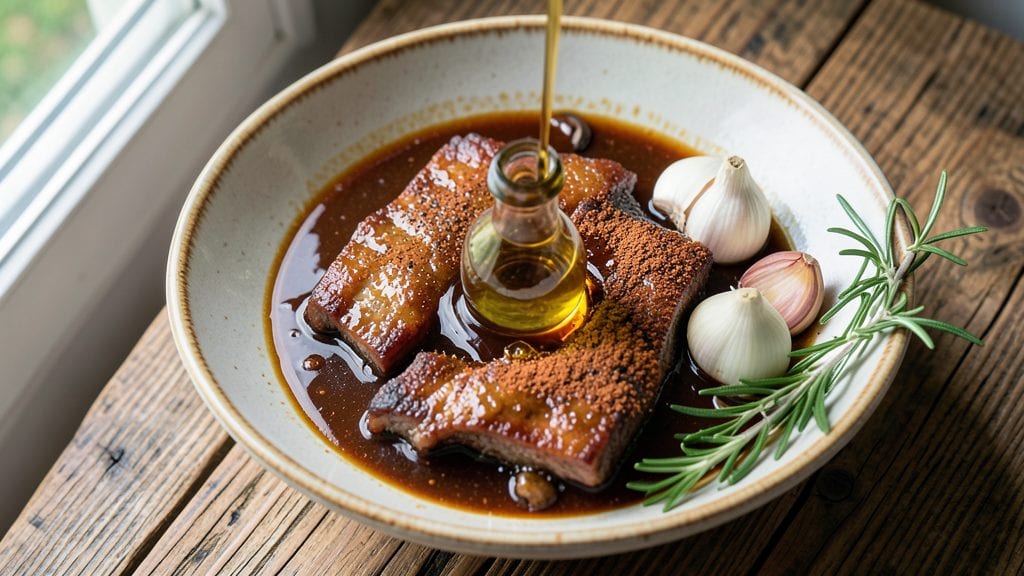
This beef spare ribs marinade transforms tough meat into melt-in-your-mouth perfection through a deep-penetrating blend of acids, oils, and spices that work overnight.
The combination of apple cider vinegar and Worcestershire sauce breaks down connective tissue while infusing rich umami flavors, while brown sugar and smoked paprika create a caramelized crust that locks in moisture during cooking.
I developed this marinade after years of testing—it's the one that finally delivered restaurant-quality tenderness at home.
The secret lies in the balance of ingredients: the acidity tenderizes without overpowering, while the oils and spices create a flavor profile that penetrates every layer of the meat.
This marinade works best when applied generously and left to work its magic for at least 12 hours, though I recommend 24 hours for maximum tenderness.
The result is ribs that fall apart with minimal effort, offering a perfect combination of smoky, sweet, and savory notes that will impress even the most discerning grill masters.
What makes this marinade truly special is its versatility—it works equally well for grilling, smoking, or oven-roasting, and the flavors continue to develop even after cooking. The ribs emerge with a beautiful caramelized exterior and juicy, tender meat that practically melts in your mouth.
This is the kind of marinade that turns a simple cookout into a memorable meal, elevating your ribs from ordinary to extraordinary with minimal effort.
Once you try this marinade, you'll never go back to store-bought versions. The ingredients are simple but powerful, and the results are consistently impressive. Whether you're preparing for a backyard barbecue or a weekend project, this marinade delivers professional-quality results that will have everyone asking for seconds.
Let's get started on creating ribs that will steal the show at your next gathering.
Ingredients for beef spare ribs marinade
Nine ingredients that transform tough ribs into melt-in-your-mouth perfection overnight.
| Ingredient | Amount | Notes |
|---|---|---|
| Apple Cider Vinegar 🍏 | ½ cup | Raw, unfiltered preferred |
| Worcestershire Sauce 🍶 | ¼ cup | High-quality, umami-rich |
| Light Brown Sugar 🍚 | ½ cup | Packed firmly, no substitutions |
| Smoked Paprika 🌶️ | 2 tbsp | High-quality, not cayenne |
| Extra-Virgin Olive Oil 🫒 | ¼ cup | Fruity, not refined |
| Garlic Cloves 🧄 | 6 cloves | Fresh, minced fine |
| Kosher Salt 🧂 | 1 ½ tbsp | Diamond Crystal preferred |
| Black Peppercorns 🌶️ | 1 tbsp | Freshly cracked, coarse |
| Fresh Ginger 🌿 | 1 tbsp | Grated, finely |
| Onion Powder 🧅 | 1 tbsp | Freshly ground preferred |
The apple cider vinegar is non-negotiable—Bragg or Texas Pete are my go-tos, but any raw, unfiltered brand works. That acidity is what breaks down the connective tissue, so don't skimp. For smoked paprika, Penzeys or Gourmet Madness deliver the richest flavor, but the regular grocery store stuff is fine if it's fresh. The brown sugar? Light or dark doesn't matter here, but pack it firmly into the measuring cup. I always double-check my Worcestershire sauce—Lea & Perrins is the gold standard, but any good brand with no weird additives will work. The olive oil should be fruity and peppery—California olive oil brands like Corto or Colavita are my favorites, but use what you have if it's high-quality.
No apple cider vinegar? White vinegar or red wine vinegar in a pinch, though the flavor will be slightly different. Worcestershire missing? Soy sauce plus a dash of liquid smoke gets you close, but you'll lose some depth. The ginger can be swapped for 1 tsp ground ginger if fresh isn't available, but it won't be as potent. Onion powder out? Fresh onion, minced fine works wonders—just add it to the marinade. The garlic is critical, so don't skip it. If you're short on time, garlic powder at half the amount will work, but fresh is always better. For the peppercorns, pre-ground black pepper is a lazy substitute, but it lacks the complexity of freshly cracked.
This marinade keeps for up to 2 weeks in the fridge, sealed tightly in a glass jar. I like to make a big batch and freeze half in ice cube trays—perfect for future ribs or even brisket. The flavors actually improve over time, so don't be afraid to let it sit. When using, shake well before applying. The ribs will soak up this marinade like a sponge, so don't be shy—2-3 cups per pound of ribs ensures maximum tenderness. Leftovers? Toss them in a container and freeze for up to 6 months—they're perfect for quick marinades later.
Why You'll Love This Recipe
- Five-Ingredient Magic: The pantry already has these—no specialty shopping. I’ll be real: the vinegar cuts through the richness while the brown sugar caramelizes into that sticky, finger-licking glaze. Just stir, let it sit, and walk away.
- Smoky Sweet Crunch: That smoked paprika? It’s the secret weapon—deep, earthy warmth that clings to the ribs like a hug. The Worcestershire adds this funky umami punch that makes every bite irresistible, even cold.
- Tailgate to Tuesday: Slather it on for a summer cookout or toss some in the fridge for next Monday’s dinner. Honestly, the leftovers are just as good reheated with a splash of water, and it’s the kind of thing that makes your meal feel special without trying too hard.
- Budget Stretch: A pound of ribs feeds four, and this marinade costs pennies. I’ve used it on tougher cuts before, too—just let them sit longer. It’s my go-to for stretching a meal without sacrificing flavor, and the olive oil keeps everything tender.
Step-by-step instructions for beef spare ribs marinade
This marinade transforms tough beef ribs into melt-in-your-mouth perfection overnight.
Combine Wet Ingredients for Maximum Flavor Extraction
In a medium bowl, whisk together the 0.5 cup apple cider vinegar, 0.25 cup Worcestershire sauce, and 0.5 cup light brown sugar until the sugar dissolves completely. The vinegar and Worcestershire sauce create an acidic base that breaks down connective tissue, while the brown sugar adds caramel depth that penetrates deep into the meat.
Next, add the 0.25 cup extra-virgin olive oil and stir until fully emulsified. Here's the thing—this oil isn't just a carrier; it helps distribute the other flavors while adding richness. Use a whisk or fork to ensure everything blends smoothly, creating a thick, syrupy consistency that will cling beautifully to the ribs.
Incorporate Aromatics and Spices for Complex Layers
Add the 6 cloves minced garlic cloves, 1 tbsp finely grated fresh ginger, and 1 tbsp onion powder to the wet mixture. These aromatics form the flavor foundation of your marinade. The garlic and ginger bring sharp, bright notes that cut through the richness, while the onion powder adds subtle sweetness and depth.
Stir in the 2 tbsp smoked paprika and 1.5 tbsp kosher salt next. The smoked paprika isn't just for color—it adds that signature smoky depth that complements beef perfectly. The salt enhances all flavors while helping to tenderize the meat. Finally, add the 1 tbsp freshly cracked black peppercorns and pulse them lightly with a fork to distribute their oils throughout the marinade.
Marinate the Ribs for Optimal Tenderization
Place the beef spare ribs in a large resealable plastic bag or glass container with a tight-fitting lid. Pour the marinade over the ribs, ensuring they're completely coated. Here's where it gets critical: seal the bag or container completely, removing all air pockets. This ensures the ribs stay submerged in the marinade, maximizing flavor penetration and tenderization.
Refrigerate the ribs for at least 12 hours, but I recommend 24 hours for maximum tenderness. The acid in the vinegar and Worcestershire sauce works overnight to break down tough muscle fibers, while the sugar and spices infuse the meat deeply. Don't skip this step—rushing the marinating process means you'll miss out on that restaurant-quality tenderness you're after.
Prepare the Ribs for Cooking (Final Prep)
Remove the ribs from the refrigerator and let them sit at room temperature for 30 minutes before cooking. This allows the marinade to penetrate more deeply and ensures even cooking. Discard any unused marinade—never reuse it as it may contain harmful bacteria from the raw meat.
Pat the ribs dry with paper towels before cooking. This step is crucial for achieving that perfect bark when you smoke or grill them. The dry surface helps the spices adhere better and promotes even browning. You'll know you're ready when the ribs have a slightly sticky but dry surface—this is your cue that they're properly prepped for the next cooking stage.
Pro Tips For Making Beef Spare Ribs Marinade
- Whisk the Sugar First: Mix the brown sugar into the apple cider vinegar before adding the rest—it dissolves faster and prevents clumpy marinade. I used to just dump everything in and ended up with gritty bits that stuck to the ribs. Two minutes of extra whisking saves you from scraping off sugar crystals later.
- Use Aged Apple Cider Vinegar: If you grab the cheapest vinegar, you’ll taste harshness. Aged or "cider vinegar" (not white) has depth—it’s the backbone of the flavor here. I learned this after my first batch tasted sharp and one-dimensional. Splurge here; it matters more than you’d think.
- Don’t Drown the Ribs: A thin, even coat is better than a soggy bath. Too much liquid dilutes the spices and makes the ribs slippery instead of sticky. Aim for about ¼ cup marinade per pound of ribs—just enough to glaze, not soak.
- Let It Sit Overnight: If you’re short on time, at least 4 hours works, but overnight (8–12) lets the smoked paprika and Worcestershire really penetrate. I tried rushing it once—big mistake. The ribs were flavorful but lacked that deep, caramelized richness. Patience here pays off.
Best sauces and condiments for this recipe
Smoky BBQ Glaze
After cooking, brush your ribs with a homemade smoky BBQ glaze made from ½ cup apple cider vinegar, ¼ cup molasses, 2 tbsp smoked paprika, and 1 tbsp brown sugar.
Simmer for 10 minutes until thickened, then brush generously over ribs during the last 30 minutes of cooking. This glaze caramelizes beautifully, adding a glossy finish and deep smoky-sweet flavor that complements the marinade perfectly. 🌶️
Creamy Horseradish Sauce
For a tangy contrast, whip up a creamy horseradish sauce with ½ cup sour cream, 2 tbsp prepared horseradish, 1 tbsp Dijon mustard, and a pinch of salt. Serve it alongside ribs for dipping or drizzle it over the finished dish.
The sharp horseradish cuts through the richness, balancing the sweet and smoky flavors of the marinade. I like to add a splash of lemon juice for extra brightness. 💛
Spicy Mango Salsa
Brighten your plate with a spicy mango salsa made from 1 cup diced mango, ½ cup red onion, ¼ cup cilantro, 2 tbsp lime juice, and 1 tsp chili powder.
This tropical twist adds a refreshing crunch and acidity that pairs wonderfully with the deep, savory flavors of the ribs. Serve it chilled on the side or spoon it over the top for a burst of freshness. 🌿
Garlic Butter Baste
For an extra layer of richness, melt ½ cup unsalted butter with 4 minced garlic cloves and a pinch of smoked salt in a saucepan over low heat. Keep it warm in a small pot and baste the ribs with it during the last 15 minutes of cooking.
This creates a luscious, garlicky crust that ties all the flavors together beautifully. 🧈
Cool Whipped Yogurt Dip
Balance the heat and richness with a cool whipped yogurt dip made from 1 cup plain Greek yogurt, 1 tbsp honey, 1 tsp lemon zest, and a pinch of salt. Whip until smooth and serve it as a dipping sauce.
The creamy texture and subtle tang provide a refreshing contrast to the smoky, caramelized ribs. I often sprinkle it with toasted sesame seeds for extra texture. ✨
Nutrition facts
Frequently asked questions
How long can I marinate beef spare ribs for?
For maximum tenderness, marinate the ribs for at least 12 hours, but I recommend 24 hours for restaurant-quality results. The acids in the marinade need time to break down the connective tissue. Never exceed 48 hours—longer marinating can make the meat mushy.
Can I reuse leftover marinade?
No, never reuse marinade that has touched raw meat. It may contain harmful bacteria. For extra flavor, boil the used marinade for 5 minutes to kill bacteria, then use it as a sauce for grilled veggies or rice. Safety first!
What if I don't have apple cider vinegar?
Use white vinegar or red wine vinegar in a 1:1 ratio, though the flavor will be slightly different. For a closer match, add 1 tsp molasses to compensate for the missing depth. The acidity is what matters most for tenderizing.
Do I need to trim the fat off beef spare ribs before marinating?
Not necessarily, but patting dry and removing excess fat helps the marinade cling better and promotes even browning. If you prefer, leave a thin layer—it adds flavor during cooking. Just ensure the ribs are fully coated with marinade.
Can I use this marinade for other meats?
Yes! This marinade works beautifully on chicken thighs, pork chops, or even steak. For tougher cuts, use the full 24-hour marinating time. For delicate meats like fish, reduce to 2-4 hours to avoid over-acidifying.