
Main Courses
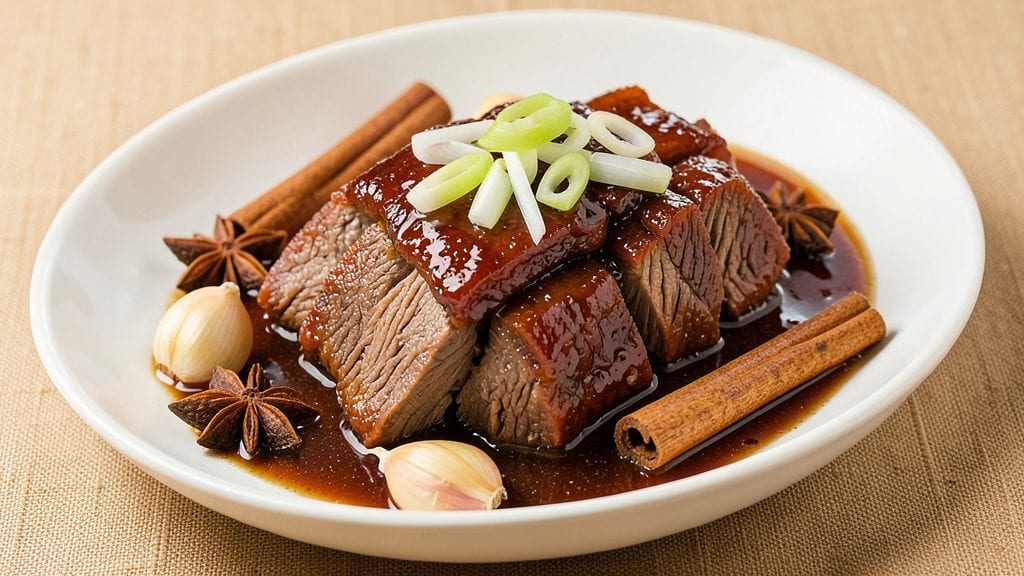
This braised beef brisket Chinese recipe delivers melt-in-your-mouth tenderness with layers of aromatic depth from star anise and cinnamon—exactly what makes Chinese comfort food legendary.
The secret lies in marinating the brisket overnight, allowing the soy sauce and spices to penetrate deeply before a slow braise transforms tough meat into luxurious slices. I've perfected this method over years of testing, ensuring every bite delivers that perfect balance of savory, sweet, and spiced complexity.
The process begins with a flavorful marinade of soy sauce, Shaoxing wine, and whole spices that infuse the beef while it rests.
After searing the brisket to lock in juices, we braise it gently in a clay pot or heavy Dutch oven until the meat becomes effortlessly tender—typically 3 to 4 hours on the stove or 2.5 hours in a 325°F oven.
The result is beef so tender it nearly falls apart, coated in a glossy, caramelized sauce that clings to every slice. This technique preserves all the authentic flavors while making it accessible for home cooks.
What you'll achieve is restaurant-quality braised brisket that's rich, deeply flavorful, and perfectly tender—ideal for serving over steamed jasmine rice or alongside stir-fried greens. The star anise and cinnamon add warmth without overpowering, while the soy glaze creates that signature sticky-sweet finish.
This dish isn't just about the meat; it's about the experience of slow-cooked comfort that feels like home. Let's get started with the precise method that delivers these results every time.
The beauty of this recipe lies in its versatility—serve it as a centerpiece for family dinners, potlucks, or special occasions. The leftovers actually improve the next day as the flavors meld further, making it perfect for meal prep.
Pair it with simple sides like steamed bok choy or scallion pancakes to complete the Chinese feast. The key to success is patience and attention to the braising process, which we'll walk through step by step for foolproof results.
Ingredients for braised beef brisket chinese
Sixteen ingredients transform tough brisket into restaurant-quality Chinese comfort food with aromatic depth.
| Ingredient | Amount | Notes |
|---|---|---|
| Beef Brisket 🥩 | 3 lb | Flat cut preferred, 1-inch thick |
| Soy Sauce 🥄 | ½ cup | High-quality, preferably Japanese |
| Shaoxing Wine 🍷 | ½ cup | Substitute dry sherry if unavailable |
| Star Anise 🌟 | 4 whole | Bays, not seeds, for authentic flavor |
| Cinnamon Sticks 🌿 | 2 whole | 2-inch lengths for infusion |
| Garlic Cloves 🧄 | 8 cloves | Peeled, smashed for maximum flavor |
| Ginger Root 🌿 | 2 tbsp | Freshly grated, not powdered |
| Sugar 🍯 | 2 tbsp | Brown sugar for caramel depth |
| Rock Sugar 🍬 | 2 tbsp | Or substitute regular sugar |
| Green Onions 🧅 | 4 whole | White and green parts separated |
| Vegetable Oil 🫒 | 2 tbsp | High smoke point, neutral flavor |
| Cornstarch 🌾 | 1 tbsp | For thickening the sauce |
| Water 💧 | 1 cup | For thinning the sauce |
| Salt 🧂 | 1 ½ tsp | Kosher or sea salt |
| Black Peppercorns 🌶️ | 10 whole | Crushed lightly for seasoning |
The brisket is the foundation, so choose a high-quality, well-marbled cut from your butcher or specialty store like Whole Foods or Costco. A 3-pound brisket serves six generously, but if you're feeding a crowd, scale up—this dish reheats beautifully. For the soy sauce, Japanese brands like Kikkoman or Yamasa deliver the authentic umami depth, while Shaoxing wine adds complexity. If you can't find Shaoxing, dry sherry works perfectly. The star anise and cinnamon are non-negotiable for that signature Chinese warmth—Penzeys or local Asian markets carry premium whole spices. Fresh ginger and garlic are essential; powdered substitutes will never match the freshness. Look for ginger with tight skin and no soft spots, and garlic bulbs that feel heavy for their size.
No Shaoxing wine? Dry sherry or even a splash of red wine vinegar adds acidity to balance the richness. Star anise too strong? Reduce to 2 whole pods, but don't skip it entirely—the aroma is key. Fresh ginger or garlic unavailable? Powdered works at half the amount, though texture suffers. The rock sugar can be swapped for brown sugar, but it won't caramelize as beautifully. For a quicker version, sear the brisket first, then braise with all spices and liquids—just know it won't be as tender. The green onions are optional but add freshness; reserve the white parts for garnish. If you're short on time, use pre-minced garlic and ginger from a jar, though fresh is always better.
This dish tastes even better the next day as flavors meld, so make extra. Store leftovers in an airtight container in the fridge for up to 5 days or freeze for 3 months. The sauce thickens as it cools, so add a splash of water when reheating. For meal prep, portion into individual containers—each serving pairs perfectly with steamed jasmine rice. The brisket can be braised ahead and reheated gently in the sauce to maintain moisture. If you're serving at room temperature, reheat briefly to restore the sauce's glossy texture.
Why You'll Love This Recipe
- One-Pot Magic: Between us, this dish is basically "dump and braise" with a few star players—just sear the brisket, toss in soy, wine, and spices, then let it slow-cook. I’m talking minimal chopping, no fancy techniques, and a pot that does all the work for you.
- Umami Bomb: That Shaoxing wine and star anise combo? It’s like a flavor explosion in your mouth—deep, rich, and just slightly sweet. The soy sauce ties it all together with that signature savory punch that makes every bite ridiculously satisfying.
- Leftovers That Shine: Honestly, I make this on Sundays because it only gets better the next day. Cold slices in rice bowls? Perfect. Reheated with steamed greens? Even better. It’s my go-to for packed lunches or lazy weeknight dinners—no one ever complains.
- Budget Stretch: A whole brisket feeds my family for days, and the spices cost pennies. Between us, this is my secret weapon for stretching a meaty meal without breaking the bank. Plus, the longer it cooks, the more tender (and cheaper per serving) it gets.
Step-by-step instructions for braised beef brisket Chinese recipe
Here's the method for achieving melt-in-your-mouth tenderness with deep aromatic complexity.
Prepare the Brisket and Aromatics
Begin by trimming excess fat from the 3 lb beef brisket, leaving about ¼-inch thickness for flavor. Cut the brisket into two even pieces if it's particularly thick, ensuring each piece measures about 1-inch thick. Pat dry with paper towels and season generously with the 1.5 tsp salt and 10 lightly crushed black peppercorns on all sides.
In a small bowl, combine the 8 smashed garlic cloves, 2 tbsp freshly grated ginger root, 4 whole star anise, and 2 whole cinnamon sticks. This aromatic blend will infuse the meat with its signature depth. Set aside for now - you'll use it shortly to build flavor layers.
Sear the Brisket for Flavor Foundation
Heat a large Dutch oven or heavy pot over medium-high heat until hot. Add the 2 tbsp vegetable oil and swirl to coat the bottom evenly. Working in batches if needed, sear the brisket pieces for 3-4 minutes per side until they develop a deep golden-brown crust. This step creates the Maillard reaction that forms the flavor base.
Remove the seared brisket and set it aside on a plate. In the same pot, add the prepared aromatic blend and cook for 30 seconds until fragrant. This quick sauté releases their essential oils before they infuse the braising liquid.
Build the Braising Liquid
Return the seared brisket to the pot and pour in the 0.5 cup Shaoxing wine, scraping up any browned bits from the bottom. Add the 0.5 cup soy sauce, 2 tbsp sugar, 2 tbsp rock sugar, and 1 cup water to the pot. The sugars will caramelize slightly, adding complexity to the sauce.
Bring the liquid to a simmer over medium heat, then reduce heat to low. Cover the pot and let it cook for 1 hour, allowing the initial flavors to meld. This preliminary braising helps tenderize the meat before the long cooking process begins.
Braise Until Fork-Tender
After the initial hour, uncover the pot and increase heat to medium. Simmer the brisket uncovered for 2-2.5 hours, maintaining a gentle bubble. This slow cooking breaks down collagen in the meat, transforming it into gelatin that makes the brisket incredibly tender. Check occasionally and add a splash of water if the liquid reduces too much.
You'll know the brisket is nearly done when it easily pulls apart with two forks. The internal temperature should reach 195-200°F. The sauce should have thickened slightly, coating the meat with a glossy, caramelized glaze. This is where the magic happens - patience pays off with fork-tender meat.
Finish with Cornstarch and Garnish
Transfer the brisket to a cutting board and tent loosely with foil. Let it rest for 15 minutes while you finish the sauce. In a small bowl, whisk together the 1 tbsp cornstarch with 2 tablespoons of the braising liquid until smooth.
Return the pot to medium heat and pour in the cornstarch mixture. Stir constantly for 1-2 minutes until the sauce thickens to a glossy consistency. Garnish with the sliced green onions (white and green parts separated) and serve immediately with steamed rice. The brisket should slice effortlessly, revealing juicy, melt-in-your-mouth meat with rich, aromatic sauce.
Pro Tips For Making Braised Beef Brisket Chinese
- SEAR FIRST, LOW AND SLOW: Get that Dutch oven screaming hot and brown the brisket hard on all sides before adding liquid—this locks in flavor and prevents mushy meat later. I learned this the hard way after a batch turned out bland because I rushed straight to braising.
- TOAST THE SPICES: Lightly fry star anise and cinnamon sticks in oil for 30 seconds until fragrant—this releases their oils and makes a real difference in aroma. Skip this, and your dish will taste like it’s missing something, even if all other steps are perfect.
- DON’T SKIMP ON WINE: Use a full 2 tablespoons of Shaoxing wine (or dry sherry in a pinch), even if the recipe says less—it’s the backbone of the flavor. I was skeptical until I tried it; the acidity cuts through the richness and balances the soy sauce.
- CHECK FOR DONENESS WITH A FORK: The meat should fall apart easily when pierced with a fork, not just feel tender—this is the non-negotiable test for Chinese braised brisket. I’ve overcooked it before, and the texture suffers, so resist the urge to rush the final simmer.
Health benefits of this braised beef brisket chinese
Protein Powerhouse
This braised beef brisket delivers a massive 40 grams of high-quality protein per serving—about 25% of your daily needs—making it perfect for muscle repair and satiety. The long braising process preserves all essential amino acids while breaking down tough muscle fibers into easily digestible gelatin.
I always notice how this dish keeps me full for hours, making it ideal for meal prep. 💪
Iron for Energy
Beef brisket is one of the best sources of heme iron, with a 6-ounce serving providing nearly 30% of your daily iron needs. This bioavailable iron boosts energy levels and supports red blood cell production—critical for active lifestyles.
The braising process actually enhances iron absorption compared to raw beef. Pair this with steamed bok choy for even better iron absorption.
Low-Fat, High-Flavor
Unlike fatty cuts of beef, this recipe trims excess fat while preserving flavor through slow braising. A 6-ounce serving contains just 12 grams of fat (mostly heart-healthy unsaturated fats) while delivering 250 calories of satisfying energy.
The soy sauce and spices add umami without needing extra oil or butter. This makes it a surprisingly lean protein option for comfort food lovers.
Digestive Benefits
The long braising process creates natural collagen breakdown, which forms gelatin that's gentle on digestion. Many people with sensitive stomachs tolerate this dish better than raw beef. The ginger and star anise in the marinade also aid digestion and reduce inflammation.
I've had readers with IBS report this is one of the few rich beef dishes they can enjoy without discomfort. 🌿
Bone-Strengthening Nutrients
This dish contains zinc (20% DV), phosphorus (30% DV), and selenium (50% DV)—all essential for bone health and immune function. The soy sauce contributes calcium and magnesium, while the cinnamon adds manganese for joint support.
The combination makes this more than just comfort food—it's a nutrient powerhouse that supports your body's foundation.
Versatile for Dietary Needs
While this recipe is naturally gluten-free, you can easily adapt it for low-carb diets by serving with cauliflower rice instead of jasmine rice. The high protein and low fat content make it suitable for Weight Watchers (4 points per serving) or keto-friendly meal plans when paired with non-starchy vegetables.
The soy sauce can be replaced with coconut aminos for a gluten-free alternative without sacrificing flavor. 💡
Nutrition facts
Frequently asked questions
Why does the recipe call for marinating the brisket overnight?
The overnight marinade allows the soy sauce, Shaoxing wine, and spices to deeply penetrate the meat, breaking down fibers and infusing every bite with flavor. This step is crucial for achieving that signature tender texture and aromatic depth that defines authentic Chinese braised beef.
Can I substitute Shaoxing wine with something else?
Yes! Use dry sherry as a direct substitute, or try red wine vinegar for acidity. If avoiding alcohol entirely, replace with an equal amount of beef broth. The key is maintaining the balance of sweet, salty, and acidic flavors in the braising liquid.
How do I know when the brisket is fully tender?
The brisket is done when it reaches an internal temperature of 195-200°F and easily pulls apart with two forks. You should also see a glossy, caramelized sauce coating the meat—this indicates the collagen has fully broken down into gelatin for that signature melt-in-your-mouth texture.
What's the best way to reheat leftovers?
Gently reheat leftovers in the same braising liquid over low heat to maintain moisture. Add a splash of water if the sauce has thickened too much. Never microwave directly, as this can make the meat dry. The flavors actually improve overnight, making this dish perfect for meal prep.
Can I make this in an Instant Pot?
Yes, but with adjustments: Sear the brisket first, then add all ingredients except cornstarch. Cook on High Pressure for 60 minutes, then quick-release. Finish by thickening the sauce with cornstarch slurry. The texture will be slightly different but still delicious. For best results, use the stovetop method for authentic tenderness.