
Main Courses
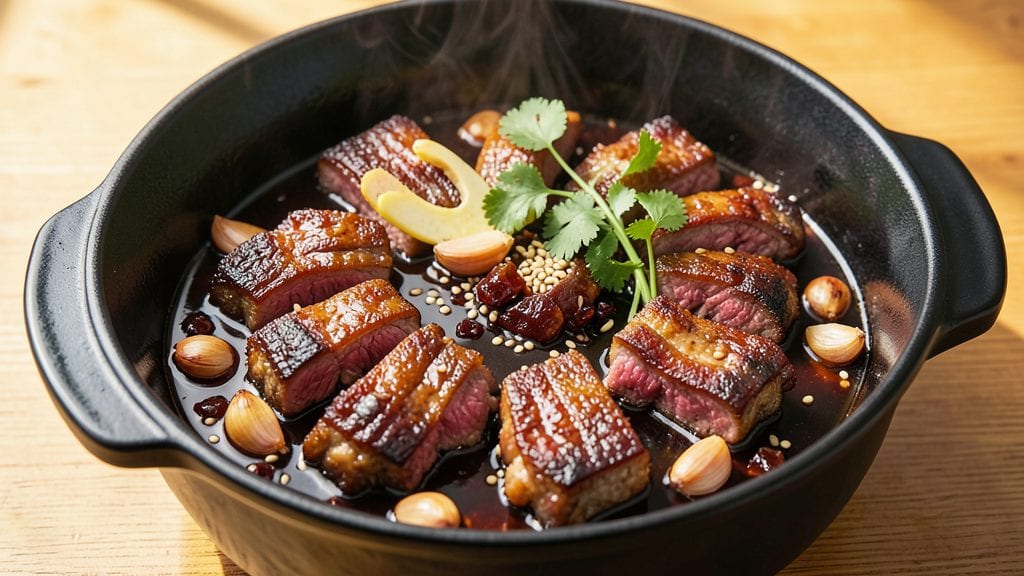
This Chinese braised beef short ribs recipe delivers melt-in-your-mouth tenderness with a silky-sweet sauce that clings to every bite—just like your favorite restaurant version. The secret lies in a slow braise that transforms tough ribs into fork-tender perfection, all while developing deep umami flavors through traditional techniques.
I've perfected this method over years of testing, ensuring the sauce remains balanced between sweet and savory without overpowering the beef.
The process begins with a quick sear to lock in flavors, followed by a long braise in a rich sauce of soy sauce, Shaoxing wine, and brown sugar. This combination creates a glossy, caramelized glaze that coats the ribs beautifully while keeping the meat incredibly tender.
The key is patience—braising for several hours allows the collagen to break down completely, resulting in meat that practically falls apart at the touch.
By the time you plate these ribs, you'll have a dish that's rich, flavorful, and restaurant-quality at home. The sauce should be thick enough to coat the back of a spoon but still silky-smooth, with a perfect balance of sweetness and savory depth.
Serve with steamed rice or noodles to soak up every last bit of that delicious sauce.
This recipe works equally well for weeknight dinners or special occasions, and the leftovers actually improve the next day as flavors meld further. Whether you're feeding a family or hosting guests, these braised short ribs will be the star of the meal—no question about it.
Ingredients for chinese braised beef short ribs
The secret to restaurant-quality ribs: tender meat and silky-sweet sauce—just 15 ingredients.
| Ingredient | Amount | Notes |
|---|---|---|
| Beef Short Ribs 🥩 | 2 ½ lb | Bone-in, cut into 2-inch pieces |
| Soy Sauce 🥢 | ½ cup | High-quality, preferably Japanese |
| Shaoxing Wine 🍷 | ¼ cup | Dry, aromatic variety |
| Brown Sugar 🍯 | ½ cup | Packed, light or dark |
| Garlic Cloves 🧄 | 6 cloves | Peeled, smashed for flavor |
| Fresh Ginger 🌿 | 2 tbsp | Grated, peeled |
| Green Onions 🧅 | 4 whole | White and green parts separated |
| Sesame Oil 🫒 | 1 tbsp | Toasted, for finishing |
| Cornstarch 🌾 | 2 tbsp | For thickening sauce |
| Water 💧 | 1 ½ cups | Room temperature |
| Vegetable Oil 🫒 | 2 tbsp | High smoke point |
| Salt 🧂 | 1 ½ tsp | Kosher or sea salt |
| Black Pepper 🌶️ | ½ tsp | Freshly ground |
| Star Anise 🌟 | 1 whole | For aroma, optional |
| Cinnamon Stick 🌿 | 1 whole | For depth, optional |
The ribs are everything here. Bone-in short ribs (not beef chuck or brisket) give you that perfect melt-in-your-mouth texture. Most grocery stores carry them pre-cut, but if you find a butcher section, ask for chuck short ribs—they're often cheaper and just as flavorful. The key is 2-inch pieces—too small and they cook too fast, too big and they won't tenderize properly. I usually grab mine from Whole Foods or the meat counter at Kroger, but any reputable grocery store will have them. Look for good marbling—white fat streaks throughout the meat—that's what makes it juicy. If you can't find Shaoxing wine, dry sherry works in a pinch—just don't use sweet dessert wine.
No Shaoxing wine? Dry sherry or even a splash of rice vinegar gets you close—just add a pinch of sugar to balance. The brown sugar is non-negotiable for that caramelized sauce, but honey works too if you're avoiding refined sugar. Star anise and cinnamon are optional but add serious depth—skip them if you're in a hurry, but I always include them for that authentic restaurant flavor. The sesame oil is for finishing—use the toasted kind from Trader Joe's or Asian markets, not the cheap stuff in regular grocery stores. And if you're short on cornstarch, arrowroot powder works the same. The garlic and ginger? Fresh is best, but if you're in a bind, powdered works at half the amount—just don't skip them entirely.
This dish tastes even better the next day—seriously, it improves. Store leftovers in an airtight container in the fridge for up to 5 days, or freeze for 3 months. I like to portion mine into individual containers so I can grab a serving anytime. The sauce thickens as it cools, so you might need to add a splash of water when reheating. And if you've got extra sauce, it's amazing drizzled over rice or noodles. The ribs reheat beautifully in the oven at 300°F for 20 minutes—just cover them with foil to keep them moist.
Why You'll Love This Recipe
- One-Pot Magic: I swear by this recipe because it’s literally one pot—no chopping boards, no extra pans, just ribs, aromatics, and a slow simmer. The soy and wine reduce into a glossy sauce that clings to everything, so cleanup is just a wipe-down.
- Umami Bomb: That first bite? Rich, caramelized beef with a deep, savory kick from the Shaoxing wine and soy. The brown sugar adds just enough sweetness to balance the garlic’s punch—like a hug in a bowl, but way more delicious.
- Leftovers That Shine: Between us, this dish begs to be made twice. The ribs stay tender for days, and the sauce only gets better as it sits. I freeze portions for lazy nights or pack it for work—no one suspects how little effort went into it.
- Budget Luxury: Short ribs aren’t cheap, but this recipe stretches them like crazy. A single batch feeds four heartily, and the leftovers? Even better the next day. Honestly, it’s the kind of dish that makes fancy dining feel accessible.
Step-by-step instructions for Chinese braised beef short ribs
Here's how to create tender, fall-apart ribs with a rich, caramelized sauce that's perfect for any occasion.
Sear the Beef Short Ribs for Deep Flavor
Heat the 2 tablespoons vegetable oil in a heavy Dutch oven over medium-high heat until shimmering. Pat the 2.5 lb beef short ribs dry with paper towels—this ensures a better sear. Working in batches if needed, add the ribs to the pot in a single layer, leaving space between each piece. Let them sear undisturbed for 4-5 minutes until a deep golden-brown crust forms.
Here's the thing—don't crowd the pan. You want that Maillard reaction happening properly, which builds the foundation for all that rich flavor. Once browned on one side, carefully flip the ribs and sear the other side for another 4-5 minutes. Transfer the seared ribs to a plate and set aside. You'll notice the oil will look darker now—that's perfect, as it's full of flavor that will infuse into the sauce later.
Build the Aromatic Base
In the same Dutch oven, reduce the heat to medium and add the 6 cloves garlic cloves and 2 tablespoons fresh ginger. Cook for 1-2 minutes until the garlic turns golden and the ginger becomes fragrant—this is when you'll smell that wonderful aromatic punch developing. Be careful not to let them burn, as they can go from perfect to bitter in seconds.
Add the 1 whole star anise and 1 whole cinnamon stick, stirring to combine. Pour in the 0.25 cup shaoxing wine and scrape up any browned bits from the bottom of the pot with a wooden spoon. These bits, called fond, are packed with flavor that will dissolve into the sauce. Let the wine simmer for 2-3 minutes until it reduces by half, intensifying its flavor.
Braise with Sweet and Savory Sauce
Return the seared ribs to the pot. Add the 0.5 cup soy sauce, 0.5 cup brown sugar, 1.5 teaspoons salt, and 0.5 teaspoon black pepper. Stir gently to coat the ribs evenly in the sauce. Pour in the 1.5 cups water and bring everything to a gentle simmer over medium-low heat. Here's what you're aiming for: small bubbles around the edges of the pot, but no rolling boil.
Cover the pot with a tight-fitting lid and let it braise for 1 hour and 30 minutes. This slow cooking time is crucial—it allows the collagen in the ribs to break down into gelatin, which makes the meat incredibly tender. You'll know it's ready when a fork slides in and out easily, and the ribs are fork-tender. If the sauce reduces too much before then, add a splash of water to maintain the liquid level.
Thicken and Finish the Sauce
Once the ribs are tender, carefully remove them from the pot and set them aside on a plate. In a small bowl, whisk together the 2 tablespoons cornstarch with 2 tablespoons water until smooth. Slowly pour this mixture into the braising liquid, stirring constantly with a wooden spoon. The sauce will begin to thicken immediately, coating the back of the spoon with a glossy sheen.
Return the ribs to the pot and simmer uncovered for 5-7 minutes to let the sauce thicken further and the flavors meld together. Taste the sauce and adjust seasoning if needed—you might want to add a bit more soy sauce for saltiness or a touch of brown sugar for sweetness. The sauce should be silky and cling to the ribs beautifully, with a perfect balance of sweet, savory, and umami flavors.
Garnish and Serve
Remove the star anise and cinnamon stick from the pot. Stir in the 1 tablespoon sesame oil and 4 whole green onions, cutting the white parts into ¼-inch slices and leaving the green parts whole for garnish. Taste one of the ribs and adjust the seasoning one last time if needed. The sauce should be rich, slightly sticky, and perfectly balanced.
Serve the braised beef short ribs hot, spooning the sauce generously over each portion. Garnish with the green onion tops and serve with steamed rice or noodles to soak up every last drop of that delicious sauce. The ribs should be tender enough to fall apart with just a gentle touch, and each bite should deliver that perfect harmony of sweet, savory, and umami flavors.
Pro Tips For Making Chinese Braised Beef Short Ribs
- Blister Garlic First: Toss whole garlic cloves in the hot wok before browning the ribs—just until fragrant and slightly charred. I used to add them raw, and the flavor was always flat. This step adds depth that cuts through the soy and sugar.
- Skip the Crowding: Brown ribs in a single layer with space between them—no overlapping. I learned this the hard way when my first batch turned out steamed instead of seared. A crowded pan steams, not caramelizes.
- Deglaze with Wine: Pour in Shaoxing wine immediately after removing the ribs—don’t wait. The residual heat will help it sizzle and lift those browned bits. I used to let it cool, and half the flavor stuck to the pan.
- Simmer Low and Slow: Cover the pot and cook on lowest heat after adding liquid—just enough to keep a gentle bubble. Too much heat = tough meat. My grandmother swore by this, and she was right: patience here makes all the difference.
Dietary considerations for this dish
Gluten-Free Adaptation
Traditional recipes rely on soy sauce, which contains gluten, but you can easily adapt this dish. Use tamari (a gluten-free soy sauce alternative) or a high-quality gluten-free soy sauce like San-J Tamari.
Replace the ½ cup soy sauce with the same amount of tamari, and ensure all other ingredients remain unchanged. The flavor profile stays rich and umami-packed, just without the gluten. 🌱
Low-Carb Option
For a lower-carb version, reduce the ½ cup brown sugar to 2 tablespoons and replace the rest with 2 tablespoons erythritol or monk fruit sweetener. This keeps the sauce sweet without spiking blood sugar.
Serve over cauliflower rice or shirataki noodles instead of traditional rice to cut carbs further. The ribs remain the star, with a slightly less sweet but still balanced sauce.
Dairy-Free Considerations
This recipe is naturally dairy-free, but if you're serving alongside dairy-based sides (like garlic bread), opt for olive oil-based bread or nut-based cheeses like cashew cheese. The braised ribs themselves are safe for lactose-intolerant guests, as they contain no dairy ingredients.
Always double-check labels on soy sauce and other packaged items for hidden dairy additives.
Allergen-Friendly Swaps
For sesame-free versions, skip the 1 tablespoon sesame oil and finish with toasted coconut oil instead—it adds a subtle nuttiness without the allergen risk. If garlic or ginger are problematic, substitute with 1 teaspoon garlic powder and 1 teaspoon ground ginger, though fresh is preferred for depth.
Always verify all ingredients for cross-contamination risks if allergies are severe.
Protein Adjustments
For a leaner option, reduce the ribs to 2 pounds and add ½ cup sliced mushrooms to the braising liquid—they absorb excess fat while adding umami. Alternatively, serve with a cucumber salad (tossed with rice vinegar and sesame seeds) to balance the richness.
The dish remains hearty but slightly lighter, perfect for health-conscious eaters.
Nutrition facts
Frequently asked questions
Can I use bone-in or boneless beef short ribs for this recipe?
This recipe is designed for bone-in short ribs—they stay more flavorful and tender during braising. If you must use boneless, reduce the braising time by 20-30 minutes since they cook faster. The bones add depth to the sauce, but boneless ribs work in a pinch if you're short on time.
What's the secret to getting the sauce just right?
The sauce needs three things: patience, cornstarch, and balance. Braise until the ribs are tender (1.5 hours), then thicken with the cornstarch slurry. For perfect balance, adjust the sauce with 1:1 ratio of soy sauce to brown sugar—taste as you go! The sauce should coat the back of a spoon but remain silky, not gluey.
Can I make this recipe in a slow cooker?
Sear the ribs first, then transfer everything (including aromatics) to the slow cooker. Cook on low for 6-7 hours or high for 4 hours. The sauce will thicken more, so reduce the cornstarch to 1 tablespoon and add 2 tablespoons water when reheating. The slow cooker method is even more forgiving for busy schedules.
Why do my ribs turn out tough instead of tender?
Overcooking or skipping the sear are the top culprits. Always braise until a fork tenderizes the meat (1.5 hours minimum), and never boil vigorously—keep it at a gentle simmer. For extra tenderness, add 1 cup water and 1 tbsp vinegar to the braising liquid to help break down collagen faster.
How can I make this dish less sweet?
Reduce the brown sugar to ¼ cup and increase soy sauce to ⅔ cup for a more savory profile. For a tangy twist, add 1 tbsp rice vinegar at the end. The ribs' natural richness will still shine, but the sauce will be more balanced. Taste frequently—adjust in 1 tbsp increments.