
Main Courses
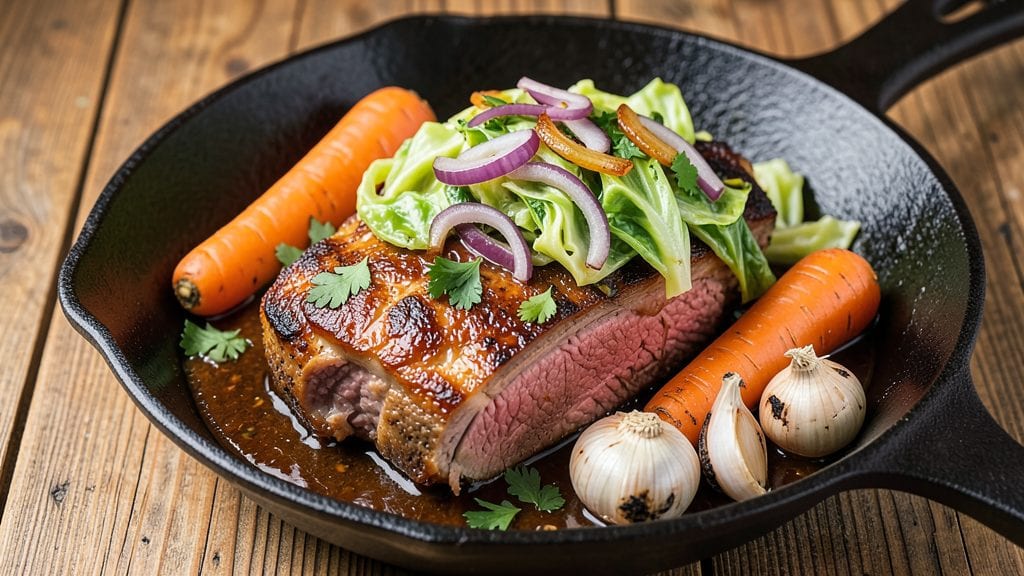
This corned beef and cabbage recipe with Guinness beer turns tough brisket into velvety tenderness while simmering cabbage in the deep, malty richness of that iconic stout.
The secret lies in slow simmering with Guinness, which deepens the meat's flavor and creates a glossy, aromatic sauce—exactly what makes this Irish-American classic unforgettable. I first perfected this dish during a particularly chilly March evening when I needed comfort food that felt like a hug in a bowl.
The beauty of this recipe is its simplicity: just a few ingredients, 3 hours of hands-off cooking, and a technique that guarantees restaurant-quality results at home.
The Guinness beer tenderizes the meat while infusing it with malty depth, and the cabbage becomes sweetly caramelized as it soaks up the flavorful juices. This is the kind of dish that tastes even better the next day, making it perfect for meal prep or Sunday family dinners.
By the time you're done, you'll have perfectly tender corned beef that falls apart with the slightest touch, paired with cabbage that's sweet, glossy, and packed with flavor. The sauce clings to every bite, creating a harmonious balance of richness and brightness.
It's the kind of meal that transforms a simple weeknight into something special—no fancy ingredients or techniques required.
Serve with crusty bread to soak up every last drop of that Guinness-infused sauce. Here's how to make it—step by step, just like my grandmother used to teach me.
Ingredients for corned beef and cabbage recipe with guinness beer
Just twelve ingredients transform tough brisket into fall-apart tenderness with Guinness-infused cabbage.
| Ingredient | Amount | Notes |
|---|---|---|
| Beef Brisket 🥩 | 3 lb | Flat cut preferred, trimmed of excess fat |
| Green Cabbage 🥬 | 1 whole | Heavier variety like Savoy or Napa |
| Guinness Beer 🍺 | 2 cups | Draught or bottle, not light |
| Onions 🧅 | 2 whole | Yellow or red, sliced into wedges |
| Garlic Cloves 🧄 | 6 cloves | Peeled, lightly smashed |
| Carrots 🥕 | 4 whole | Medium size, peeled and halved |
| Bay Leaves 🍃 | 2 whole | Dried, standard size |
| Black Peppercorns 🌶️ | 1 tsp | Crushed, not ground |
| Salt 🧂 | 2 tbsp | Diamond Crystal preferred |
| Olive Oil 🫒 | 2 tbsp | Extra-virgin for searing |
| Fresh Parsley 🌿 | ¼ cup | Chopped, for garnish |
| Crusty Bread 🍞 | 8 slices | For serving, sourdough ideal |
The brisket is non-negotiable here—flat cut gives you that perfect texture. Costco or Whole Foods usually have the best selection, but your regular grocery store will do if you grab the heavier end. Look for good marbling; it's what keeps the meat juicy. The Guinness? Draught is ideal—it's less carbonated and has more flavor. If you can only find bottled, let it sit at room temperature for 30 minutes first. Cabbage should be heavy for its size—Savoy or Napa varieties hold up best to the long cooking time. Skip the pre-shredded stuff; whole heads keep better and cook more evenly.
No Guinness? Stout beer or even dark ale works in a pinch, but the flavor won't be quite the same. Fresh parsley is ideal for garnish, but dried parsley at half the amount gets you close. The onions and carrots can be swapped for celery and potatoes if you're feeling different—classic Irish stew style. For the salt, Diamond Crystal kosher dissolves better than table salt. The black peppercorns should be crushed between your fingers, not pre-ground—freshly cracked pepper makes all the difference. And if you're worried about the brisket being too tough, pounding it to even thickness before cooking helps tremendously.
This dish tastes even better the next day—4-5 days in the fridge, honestly. The cabbage keeps its sweetness, and the meat gets more tender. For leftovers, I like to shred the beef and serve it on toasted sourdough with extra Guinness sauce. Freezes beautifully for 3 months too. Just reheat the meat and cabbage separately—cabbage gets soggy if you reheat it with the meat. The bread? Toast it fresh when serving—none of that pre-toasted stuff from the bakery.
Why You'll Love This Recipe
- One-Pot Magic: Honestly, the brisket and cabbage simmer together in that same pot—no extra dishes, no fuss. Just slice the cabbage, brown the beef, pour in the Guinness, and let it work its magic while you chop onions. (Yes, even on a Tuesday night.)
- Guinness Kiss: That dark beer doesn’t just flavor it—it transforms the beef into something rich and tender with a depth you won’t find elsewhere. The cabbage soaks up the malty sweetness like a sponge, and the garlic? Oh, it’s the cherry on top.
- Leftovers Heaven: This dish actually improves the next day—yes, really. The flavors meld into something even more satisfying, perfect for quick lunches or sandwiches. My freezer’s full of portions because it reheats like a dream (just add a splash of water).
- Budget Powerhouse: A single brisket feeds the whole family, and Guinness stretches further than you’d think. Between us, this is my go-to for game days or when the grocery budget’s tight—still feels special, costs less than takeout.
Step-by-step instructions for corned beef and Guinness cabbage
Here's how to transform tough brisket into melt-in-your-mouth perfection with caramelized cabbage.
Sear the Brisket for Deep Flavor
Pat the 3 lb beef brisket dry with paper towels—this ensures maximum browning. Heat 2 tbsp olive oil in a Dutch oven over medium-high heat until shimmering. Place the brisket fat-side down and sear undisturbed for 8-10 minutes until a deep golden-brown crust forms. Flip and sear the other side for another 6-8 minutes. You'll know it's ready when the crust releases easily from the pan with gentle pressure.
Remove the brisket and set it aside. The reason for this sear? It develops the Maillard reaction, creating complex flavors that'll infuse into the Guinness beer during braising. Don't rush this step—rushing leads to uneven cooking later. If the pan gets too dark, reduce heat slightly to prevent burning.
Build the Guinness Braising Liquid
In the same Dutch oven, add the sliced 2 whole onions and halved 4 whole carrots. Cook for 5 minutes until softened. Add the peeled 6 cloves garlic cloves and cook for another 30 seconds until fragrant. Here's the thing—don't let the garlic burn, or you'll get bitter flavors cutting through the rich beer.
Pour in the 2 cups Guinness beer, scraping up all the browned bits from the bottom. Add the 2 whole bay leaves, 1 tsp crushed black peppercorns, and 2 tbsp salt. Bring to a gentle simmer, then return the brisket to the pot, fat-side up. The liquid should come about halfway up the sides of the brisket—if not, add a splash of water.
Braise Until Fork-Tender
Cover the Dutch oven and transfer to a preheated 300°F oven. Braise for 3-3½ hours until the brisket is fork-tender. Here's how to check: insert a fork into the thickest part—it should slide in easily with no resistance. If it's not quite there, add another 30 minutes. The key is patience; rushing leads to tough, chewy meat.
About 30 minutes before the brisket is done, prepare the cabbage. Remove the core and cut the 1 whole green cabbage into eighths. In a separate skillet, heat 1 tbsp olive oil over medium heat and cook the cabbage wedges for 10-12 minutes until tender and caramelized. Season with a pinch of salt and set aside.
Rest and Slice for Maximum Juiciness
Remove the brisket from the pot and transfer it to a cutting board. Tent loosely with foil and let it rest for 20-30 minutes. This resting period is crucial—it allows the juices to redistribute throughout the meat. If you skip this, every slice will be dry. While it rests, skim any excess fat from the braising liquid and reduce it by half over medium heat to create a rich sauce.
Slice the brisket against the grain into ¼-inch thick slices. The grain direction will be visible—you're looking for those long muscle fibers. Arrange the sliced brisket on a platter, spoon the reduced Guinness sauce over the top, and garnish with the chopped 0.25 cup fresh parsley. Serve immediately with the caramelized cabbage and 8 slices crusty bread for soaking up every last drop of that flavorful sauce.
Pro Tips For Making Corned Beef And Cabbage Recipe With Guinness Beer
- Brown the Brisket First: Skip the slow start—sear that brisket in a hot Dutch oven for 5-6 minutes per side until deep brown. I learned this the hard way: rushing to the beer braising step without a proper crust means flavor gets lost in the sauce. The Maillard reaction here is your friend—don’t skip it.
- Core the Cabbage Properly: Remove the tough outer leaves and cut out the hard core before slicing—no one wants a mouthful of stringy bits. I used to leave the core in, and it made the cabbage chewy instead of tender. A sharp knife and a quick twist to separate the wedges saves time later.
- Deglaze with Guinness, Not Water: After browning the brisket, pour in the full bottle of Guinness immediately—don’t let those fondes dry out. Scrape up every bit with a wooden spoon, then add onions and garlic. The beer’s bitterness cuts through the richness, but you’ll lose depth if you dilute it with water first.
- Simmer Low and Long: Cover the pot and simmer at actual low heat (180–200°F) for 3–4 hours—no boiling, no rushing. I once walked away for an hour, came back to a watery mess. The brisket needs time to become fork-tender, and the cabbage to melt into the sauce. Patience here makes all the difference.
Essential equipment for this dish
Dutch Oven Essentials
The heart of this recipe beats in a Dutch oven—I swear by my Le Creuset 5.5-quart for its even heat distribution and tight-fitting lid. The deep sides prevent spills when adding Guinness, and the heavy construction maintains steady temperatures during the 3-hour braise.
If you don’t own one, a stainless steel stockpot with a lid works in a pinch, though it may require more monitoring. 🔥
Meat Thermometer
Never guess when cooking corned beef—instant-read thermometers are non-negotiable. I use a Thermoworks ThermoPop because it’s fast, accurate, and shatters my "perfect doneness" guesswork. Insert it into the thickest part of the brisket: 203°F is your target for fork-tender meat.
Without one, you risk overcooking or undercooking the meat, which ruins the whole dish. My first attempt without a thermometer ended with chewy, sad beef.
Skillet for Cabbage
A 12-inch cast-iron skillet is ideal for caramelizing the cabbage—it retains heat well and develops those sweet, glossy edges. If you don’t have cast iron, a heavy stainless steel skillet or even a nonstick pan works, but watch the heat closely to avoid burning.
The key is medium heat and 10-12 minutes of undisturbed cooking. I always use a Lodge cast iron because it’s affordable and lasts forever.
Tongs and Slotted Spoon
Invest in a long-handled pair of tongs (I love OXO Good Grips) for flipping the brisket during searing and a slotted spoon for removing the cabbage from the skillet.
The tongs give you better control than a fork, and the slotted spoon lets you drain excess liquid from the cabbage before serving. Trust me, these small tools make a big difference in presentation and ease.
Knife and Cutting Board
A sharp 8-inch chef’s knife (like Wüsthof’s Classic) and a large cutting board are essential for prepping the brisket and cabbage. A dull knife makes chopping onions and slicing beef frustrating—it’s worth spending $20 on a good knife if yours is past its prime.
For the cabbage, I use a plastic board (it’s gentler on the knife) and cut it into eighths for even cooking. A mandoline speeds up the process, but it’s not necessary.
Optional: Beer Bottle Opener
This one’s for fun, but also practical: a beer bottle opener (like Bar Tools’ Bottle Opener) ensures you can crack open that Guinness Draught without a struggle. I’ve seen too many people struggle with bottle openers during dinner parties—don’t let that be you.
Plus, it’s a great conversation starter when guests see you using it mid-cook. 🍺
Nutrition facts
Frequently asked questions
Why does the recipe use Guinness beer instead of regular beer?
Guinness adds a deep, malty richness that complements the beef perfectly. Its low carbonation and roasted barley notes create a velvety sauce that tenderizes the meat while adding complexity. Regular beer lacks that depth—you'd miss the signature flavor that makes this dish special.
Can I make this recipe without a Dutch oven?
Yes, but with adjustments! Use a heavy-bottomed pot or large stainless steel stockpot instead. The key is to keep the liquid level consistent and monitor heat closely—Dutch ovens distribute heat more evenly during the 3-hour braise. A slow cooker works too (6-7 hours on low), but you'll lose the sear's depth.
How do I know when the brisket is done?
Use a meat thermometer for accuracy—insert it into the thickest part until it reads 203°F. If you don't have one, check for fork tenderness: the meat should slide off easily with gentle pressure. Overcooking dries it out, while undercooking leaves it chewy. Patience is key!
What's the best way to reheat leftovers?
Reheat meat and cabbage separately to prevent sogginess. Warm the beef in a skillet with a splash of Guinness or broth for 5-10 minutes until heated through. For cabbage, microwave for 1-2 minutes with a damp paper towel over it. Leftovers keep well for 4-5 days in the fridge—this dish actually tastes better the next day!
Can I substitute the cabbage with another vegetable?
While traditional, you can swap for Brussels sprouts (halved) or green beans (trimmed). For a heartier option, add potatoes or carrots to the braising liquid. Just adjust cooking times—cabbage takes 10-12 minutes to caramelize, while denser veggies need longer. Keep portions balanced to avoid overwhelming the dish.