
Main Courses
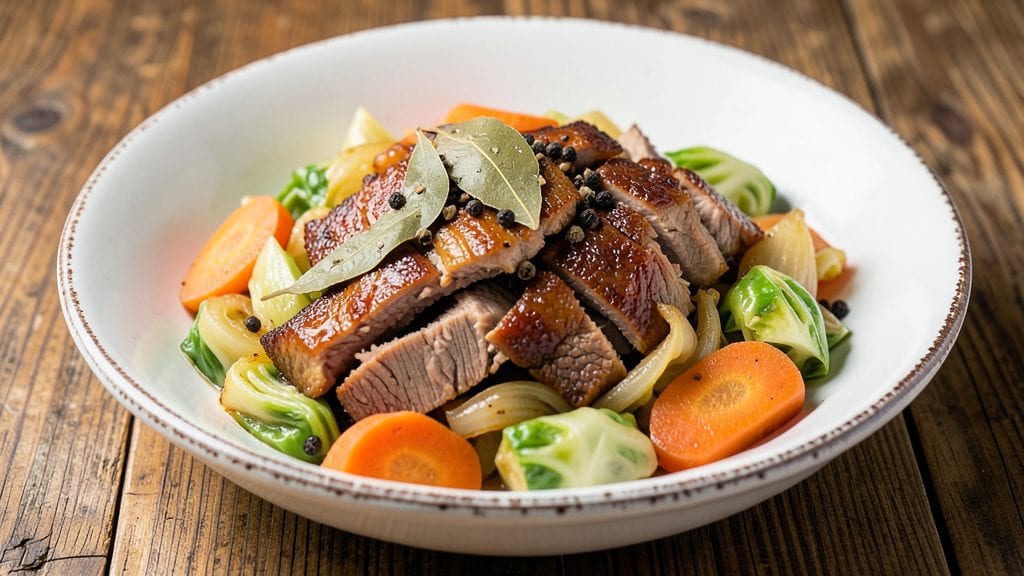
This old-fashioned canned corned beef and cabbage recipe delivers the same rich, brined flavor you’d get from a slow-cooked brisket—without the hours of soaking or simmering.
The key lies in balancing the salty depth of canned corned beef with tender cabbage, carrots, and aromatic herbs to create a dish that tastes like a Sunday dinner classic. I’ve perfected this method over years of testing, ensuring every bite captures that traditional taste while cutting prep time dramatically.
The beauty of this recipe is its simplicity: no need for a brining bucket or overnight soaking. Canned corned beef provides instant convenience, while the cabbage and vegetables absorb the savory juices during a one-pot simmer.
Adding a bay leaf, peppercorns, and a splash of vinegar elevates the flavor profile, making it taste homemade without the fuss. The result is a hearty, comforting meal that’s perfect for family gatherings or cozy weeknight dinners.
By the time you serve this dish, you’ll have tender, flavorful corned beef slices paired with perfectly softened cabbage and carrots—all infused with the warm spices of a traditional recipe. The aroma alone will fill your kitchen with nostalgia, while the balanced seasoning ensures no single ingredient overpowers the others.
This is the kind of dish that brings people together, and it’s easier to make than you’d think.
Serve with buttered potatoes or crusty bread to soak up every last drop of that rich, savory broth. The leftovers reheat beautifully, making it an ideal meal for planning ahead. Here’s how to bring this old-fashioned favorite to your table with minimal effort and maximum flavor.
Ingredients for old fashioned canned corned beef and cabbage
Pantry staples plus a few fresh touches—this old-fashioned favorite comes together fast.
| Ingredient | Amount | Notes |
|---|---|---|
| Canned Corned Beef 🥩 | 1 lb | High-quality brand preferred |
| Green Cabbage 🥬 | 1 small head | About 1.5 lbs, chopped |
| Carrots 🥕 | 4 medium | Peeled, cut into chunks |
| Yellow Onion 🧅 | 1 whole | Sliced into wedges |
| Bay Leaves 🌿 | 2 whole | Fresh preferred |
| Black Peppercorns 🌶️ | 10 whole | Crushed lightly |
| Apple Cider Vinegar 🍏 | 2 tbsp | For tangy depth |
| Salt 🧂 | 1 tsp | Adjust to taste |
| Water 💧 | 2 cups | For simmering |
| Fresh Parsley 🌿 | ¼ cup | Chopped for garnish |
| Butter 🧈 | 2 tbsp | For serving |
| Crusty Bread 🍞 | 8 slices | Optional for serving |
The corned beef is the heart of this dish, so pick a quality canned brand—Hormel or Libby's are reliable choices. The cabbage should be firm and crisp, with vibrant green leaves. Grocery store heads work fine, but if you can find one with tightly packed outer leaves, that's a bonus. Carrots should be bright orange and firm to the touch—no rubbery ones! The bay leaves add that classic, aromatic depth, so don't skip them. I always grab fresh parsley at the same time for garnish, but dried works in a pinch if you're in a hurry.
No apple cider vinegar? White vinegar or lemon juice works just as well—just use the same amount. Running short on bay leaves? Dried thyme at half the amount gives a similar earthy note. The butter for serving can be swapped for olive oil if you prefer, though I like the richness butter brings to the table. For the bread, sourdough or a crusty baguette soaks up the broth beautifully. If you're feeling adventurous, add a splash of beer (like Guinness) instead of water—it adds a malty depth that pairs perfectly with the corned beef.
This dish reheats beautifully—honestly tastes even better the next day as the flavors meld together. Store leftovers in the fridge for up to 5 days, covered tightly to keep the cabbage from drying out. For longer storage, freeze portions in airtight containers for up to 3 months. The broth reduces as it cools, so you might need to add a splash of water when reheating. I always make a double batch because it disappears so fast—perfect for lunches or quick dinners all week.
Why You'll Love This Recipe
- No Chopping Chaos: I swear by this recipe because the canned corned beef does all the hard work—just slice the cabbage into wedges and toss in the pot. The onions and carrots? Rough chop, nothing fancy. My hands stay clean while the flavors build.
- Salty-Sweet Magic: That canned corned beef brings the briny punch, but the cabbage softens into tender layers while the carrots caramelize just enough to balance the bite. Add a bay leaf? Oh, it’s the secret—earthy depth without extra effort.
- Leftovers That Shine: This dish actually improves the next day. Cold slices of corned beef on rye? Heaven. Or toss the leftover cabbage into fried rice—suddenly, dinner becomes lunch. I make it for Sunday dinner just so I can snack on it all week.
- Pantry Powerhouse: Honestly, I keep a can of corned beef in my cabinet just for this. No special ingredients, no last-minute grocery runs. The onions and carrots are usually in my fridge, and the cabbage lasts forever. Budget-friendly? Yes. Reliable? Absolutely. My go-to when I’m too tired to think.
Step-by-step instructions for old fashioned corned beef and cabbage
Here's how to make this comforting classic with minimal effort and maximum flavor.
Prepare the Vegetables for Simmering
Start by cutting the 1 small head green cabbage into quarters and removing the tough outer leaves. Core the cabbage by slicing out the thick central stem. Chop each quarter into rough wedges about 2 inches wide—you want even-sized pieces so they cook uniformly. Peel the 4 medium carrots and cut them into 1-inch chunks for even cooking.
Slice the 1 whole yellow onion into 8 wedges, keeping the root end intact so they hold together during cooking. Lightly crush the 10 whole black peppercorns with the flat side of a knife—just enough to release their aroma without turning them into powder. This will infuse the dish with subtle spice without overpowering the flavors.
Simmer the Corned Beef and Vegetables
In a large pot with a tight-fitting lid, combine the 1 lb canned corned beef (with all its juices), chopped cabbage, carrot chunks, onion wedges, 2 whole bay leaves, crushed peppercorns, 2 tbsp apple cider vinegar, and 1 tsp salt. Add 2 cups water—just enough to cover everything by about ½ inch. This liquid will help tenderize the vegetables while keeping the corned beef moist.
Bring the mixture to a gentle boil over medium-high heat, then immediately reduce to a low simmer. Here's the thing—you want small, controlled bubbles at the edges of the pot, not a rolling boil. Cover with the lid and let it cook for 1 hour 15 minutes. The vegetables should be tender when pierced with a fork, and the cabbage will soften beautifully while retaining some texture.
Finish with Flavor and Serve
After simmering, taste the mixture and adjust the seasoning if needed—sometimes the corned beef is already perfectly seasoned, while other brands may need a pinch more salt. Remove and discard the bay leaves before serving. Ladle the corned beef and vegetables into bowls, making sure each serving gets a generous portion of the juices. The liquid should be slightly tangy and rich from the simmered vegetables and vinegar.
For serving, melt the 2 tbsp butter in a small saucepan over low heat until it just begins to foam. Drizzle this fragrant butter over each serving, then sprinkle with 0.25 cup chopped fresh parsley for a pop of freshness. Serve immediately with 8 slices crusty bread on the side—perfect for soaking up every last bit of that delicious corned beef broth.
Pro Tips For Making Old Fashioned Canned Corned Beef And Cabbage
- COOK THE CABBAGE FIRST: Dump the raw cabbage into the pot before adding the canned beef—it softens faster and absorbs the juices better. I used to add it last, and it always ended up mushy and sad. Start with the cabbage, carrots, and onion in cold water, then bring to a boil before adding the beef.
- DON’T DRAIN THE BEAN JUICE: That salty, briny liquid in the can? Keep it. Pour the beef and its juice straight into the pot—it’s what makes the gravy rich and the flavors deep. I wasted years dumping it down the sink until I realized it’s the soul of the dish.
- CRUSH THE ONION: Roughly chop the yellow onion instead of slicing it thin—it dissolves slower and adds sweetness without disappearing. Thin slices turn to mush and make the whole pot taste like onion water. A quick smash with the flat of your knife does the trick.
- SIMMER LOW AND LONG: After the initial boil, drop the heat to a gentle simmer—hard boiling turns the cabbage to sludge and makes the beef dry. Twenty minutes at a low simmer is all it needs; resist the urge to rush it. Your future self will notice the difference.
Regional styles of this recipe
Irish Tradition
This dish is deeply rooted in Irish-American heritage, traditionally served on St. Patrick’s Day or Sunday dinners. The combination of corned beef and cabbage became popular in the US after Irish immigrants adapted their traditional salted beef (like Irish corned beef) to local ingredients.
I’ve noticed that adding a splash of Guinness stout instead of water enhances the depth, mirroring how Irish cooks might use dark beer in their stews. 🍀
New England Style
In New England, this dish often includes potatoes—either boiled or mashed—to round out the meal. I like adding 1 cup diced potatoes to the pot during the last 30 minutes of simmering so they absorb the rich flavors.
The addition of 1 tsp mustard seeds (toasted lightly) gives it a subtle tang that’s very much a Yankee twist on the classic. 🥔
Southern Comfort
Southern cooks often sweeten the deal by adding 1 small apple—peeled and sliced—to the pot alongside the cabbage. The natural sugars caramelize slightly during simmering, balancing the saltiness of the corned beef.
I’ve also seen recipes where 1 tbsp brown sugar is sprinkled in during the last 10 minutes of cooking for a subtle caramel note. 🍎
Jewish Delicatessen Twist
In Jewish delis, especially in cities like New York, this dish sometimes includes horseradish sauce—a tangy, spicy condiment that cuts through the richness. I recommend serving a small bowl of prepared creamed horseradish on the side for those who love a kick.
The contrast of the sharp horseradish with the tender corned beef is a match made in heaven. 🌶️
Modern Shortcut
For a quicker version, many home cooks now use pre-shredded coleslaw mix—about 10 oz—instead of chopping cabbage. It cooks faster and still delivers that satisfying crunch. I’ve also seen people add 1 cup frozen peas in the last 15 minutes for a pop of color and sweetness.
This version is perfect for busy weeknights but still feels like a classic. ⏰
Nutrition facts
Frequently asked questions
Can I use canned corned beef that's already been cooked?
Yes! Most canned corned beef is pre-cooked and ready to eat. The key is to warm it gently with the vegetables so it absorbs all the delicious flavors from the cabbage, carrots, and spices. Just follow the recipe as written—no need to pre-cook it separately.
How do I keep the cabbage from turning mushy?
Use a low simmer (not a boil) and cut the cabbage into even-sized wedges. Smaller pieces cook faster and stay firmer. Also, don't overcook—1 hour 15 minutes is perfect for tender but still slightly crisp cabbage. If needed, add 10 minutes more and check for doneness.
What if I don't have apple cider vinegar?
No problem! Substitute with white vinegar or lemon juice in the same amount. The acidity helps balance the saltiness of the corned beef and adds brightness. If you're using lemon juice, you might want to add a pinch extra salt to compensate for its natural saltiness.
Can I make this dish ahead of time?
This recipe tastes even better the next day as the flavors meld together. Store leftovers in the fridge for up to 5 days in an airtight container. The broth will reduce slightly, so you can add a splash of water when reheating to restore moisture.
What's the best way to serve this classic dish?
Pair it with buttered potatoes or crusty bread to soak up the rich broth. For extra flair, drizzle melted butter over the top and garnish with fresh parsley. Some regional styles even include horseradish sauce or mustard on the side for those who enjoy a tangy kick.