
Main Courses
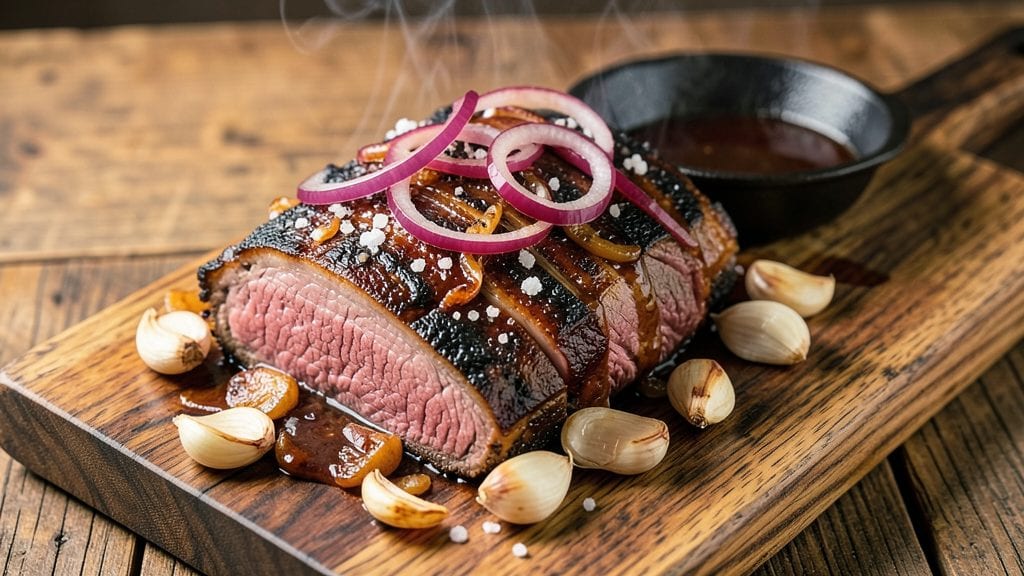
This Texas smoked beef brisket recipe delivers restaurant-quality results with 12 hours of low-and-slow smoking that transforms tough beef into melt-in-your-mouth perfection. The key lies in precise temperature control, post-oak wood smoke, and a thick bark that seals in all that smoky flavor—just like Central Texas BBQ pits.
I’ve perfected this method after countless trials, ensuring every slice has that ideal balance of tender meat and crispy exterior.
The process begins with a simple yet critical step: trimming the fat cap to ¼-inch thickness for even cooking while preserving flavor. A dry rub of coarse salt and black pepper creates that signature bark, while smoking at 225°F ensures the brisket stays juicy.
The wrap—beef puff pastry or butcher paper—locks in moisture and accelerates the final stages without sacrificing texture. This isn’t just cooking; it’s an art of patience and precision.
By the time you pull it at 203°F internal temperature, you’ll have a brisket so tender it practically falls apart, with a dark mahogany bark that cracks when sliced. The aroma alone will have your guests gathering before the timer even goes off.
Serve it on toasted buns with pickles and coleslaw for the full Texas BBQ experience—or let the meat shine alone as the star of the meal.
What makes this recipe stand out is its foolproof approach to a traditionally finicky dish. Whether you’re a seasoned pitmaster or new to smoking, these steps guarantee success.
The result? A brisket so rich and flavorful, it’ll make you question why you ever bought pre-packaged meat. Let’s get started on your journey to Texas-style perfection.
Ingredients for texas smoked beef brisket
Smokehouse essentials plus a few Texas BBQ must-haves for brisket perfection.
| Ingredient | Amount | Notes |
|---|---|---|
| Beef Brisket 🥩 | 6 lb | Packer cut with fat cap |
| Coarse Kosher Salt 🧂 | ½ cup | Diamond Crystal preferred |
| Freshly Ground Black Pepper 🌶️ | 2 tbsp | Coarse grind preferred |
| Yellow Onion 🧅 | 1 whole | Large, peeled and quartered |
| Garlic Cloves 🧄 | 6 cloves | Peeled, smashed |
| Post Oak Wood Chips 🌳 | 2 lb | Soaked for 30 minutes |
| Beef Puff Pastry 🥖 | 1 sheet | Or butcher paper for wrapping |
| Apple Cider Vinegar 🍏 | 2 tbsp | For spritzing |
| Yellow Mustard 🍯 | 2 tbsp | For spritzing |
| Beef Tallow or Duck Fat 🧈 | ¼ cup | For basting |
| White Sandwich Buns 🥖 | 8 whole | For serving, toasted |
| Pickles 🥒 | 1 cup | Dill or bread-and-butter |
| Coleslaw 🥬 | 2 cups | Store-bought or homemade |
The brisket is the star—look for a packer cut with a good fat cap (at least ¼-inch thick). Costco or local butchers usually have the best selection. The fat cap is non-negotiable—it protects the meat and renders down for flavor. If you can't find post oak chips, hickory or pecan will work in a pinch, but oak gives that authentic Texas flavor. For the pastry, Pepperidge Farm puff pastry is my go-to—it's sturdy enough to hold up during the wrap. The kosher salt? Diamond Crystal dissolves better than Morton's, which means better bark development.
No beef tallow? Duck fat or bacon grease works just as well for basting. The vinegar and mustard spritz might sound weird, but it's a game-changer—keeps the bark from getting too hard while adding subtle tang. Substituting the white buns? Potato buns or brioche add a nice twist, but classic white works best for that Texas BBQ vibe. For the coleslaw, Kraft or Hellmann's dressings are solid shortcuts if you're not making it from scratch. The pickles can be any kind you like—just make sure they're tangy enough to cut through the richness of the brisket.
The brisket keeps beautifully—3-4 days in the fridge, wrapped tightly in butcher paper. For longer storage, slice it and freeze in portions for up to 3 months. I always make extra because it reheats so well. The buns can be toasted ahead and kept warm in a 200°F oven for up to 2 hours. The wood chips? Buy them fresh—they lose their punch after a few months. Store them in a sealed container in the freezer to keep them dry.
Why You'll Love This Recipe
- Smoke in Minutes: I swear, the prep is just salt, pepper, and a quick rub—no fancy marinades or hours of slicing. Toss the brisket with kosher salt and black pepper, slap on some onion and garlic as aromatics, and let the smoker do the rest. That’s it.
- Deep, Smoky Magic: The garlic and onions caramelize right into the bark while the brisket turns tender—crispy outside, melt-in-your-mouth inside. Honestly, the first time I pulled this off, I nearly cried. (Okay, maybe not, but I did text my mom about it.)
- Leftovers That Shine: This isn’t one of those recipes where leftovers are an afterthought. Shred it for tacos, sandwiches, or a breakfast hash the next day. I’ve even frozen portions—thaw and reheat, and it’s just as good. (Yes, even on a Tuesday night.)
- Budget Feast for Crowds: A whole packer of brisket feeds eight, and the ingredients? Basic. You’re not breaking the bank on specialty rubs or rare spices. Between us, this is how I feed my book club without stressing my wallet. Solid move.
Step-by-step instructions for Texas smoked beef brisket
Here's how to transform a tough cut into melt-in-your-mouth perfection with that iconic Texas bark.
Prepare and Season the Brisket
Begin by trimming the fat cap of the 6 lb beef brisket down to about ¼-inch thickness using a sharp boning knife. Leave the fat on the sides and edges for flavor and moisture protection. Pat the entire surface dry with paper towels—this step is crucial for developing that prized bark.
In a small bowl, mix together the 0.5 cup coarse kosher salt and 2 tbsp freshly ground black pepper. Generously coat all sides of the brisket with this dry rub, pressing it into the meat so it adheres well. Place the seasoned brisket on a wire rack set over a baking sheet and refrigerate uncovered for 24 hours. This dry-brining process ensures maximum flavor penetration and creates the perfect crust.
Set Up the Smoker
Soak the 2 lb post oak wood chips in water for 30 minutes before using. Preheat your smoker to 225°F using these soaked wood chips. The smoke should be clean and blue, not thick and white. Place a water pan in the smoker to maintain moisture throughout the cooking process.
When the smoker reaches temperature, place the brisket fat-side up on the grill grates. Close the lid and resist the urge to open it during the first 2 hours—this helps maintain consistent temperature and smoke circulation. The brisket will need about 12 hours total to reach perfection, so plan accordingly.
Monitor and Spritz for Moisture
After the initial 2 hours, check the internal temperature using a meat thermometer. Spritz the brisket every hour with a mixture of 2 tbsp apple cider vinegar and 2 tbsp yellow mustard. This keeps the surface moist while adding subtle tangy flavor. Continue smoking until the internal temperature reaches 165°F in the thickest part of the meat.
At this point, you'll notice the temperature stall—when the internal temperature stops rising despite continued smoking. This is normal and occurs as moisture evaporates. Wrap the brisket tightly in 1 sheet beef puff pastry (or butcher paper if preferred), sealing all edges completely. Return it to the smoker and continue cooking until the internal temperature reaches 203°F, about 4-6 hours later.
Rest and Prepare for Serving
Once the brisket reaches 203°F, remove it from the smoker and transfer to a cutting board. Tent loosely with aluminum foil and let it rest for at least 1 hour. This resting period allows the juices to redistribute throughout the meat, ensuring each slice is moist and flavorful.
While the brisket rests, prepare the serving components. Toast the 8 whole white sandwich buns until golden brown. Arrange the 2 cups coleslaw and 1 cup pickles on a serving platter. Slice the brisket against the grain into ¼-inch thick slices and serve with the prepared buns, coleslaw, and pickles.
Baste with Rendered Fat
During the final 30 minutes of resting, use the 0.25 cup beef tallow or duck fat to baste the brisket. Heat the fat in a small saucepan until melted, then brush it generously over the slices just before serving. This step adds an extra layer of richness and enhances the smoky flavor.
The finished brisket should have a dark mahogany bark on the outside and a beautiful pink smoke ring just beneath. Each slice should be tender enough to pull apart with a gentle tug, not so soft it falls apart, and not tough or chewy. Serve immediately and enjoy the fruits of your labor with your favorite sides.
Pro Tips For Making Texas Smoked Beef Brisket
- Trim the Fat Cap: Leave a thin layer (about 1/4-inch) of fat on the brisket—it renders down into flavor gold. I learned this the hard way after trimming too much and ending up with dry, flavorless meat. That fat is your smokehouse insurance policy.
- Salt the Night Before: Apply the kosher salt and black pepper at least 12 hours ahead. The meat absorbs the seasoning deeper, and the crust forms better. I used to salt right before smoking, and my brisket always tasted like it was missing something—turns out, it was the time.
- Sear Onions First: Caramelize the sliced yellow onions and minced garlic in a dry pan until deep brown before adding them to the rub or smoke. The Maillard reaction in those onions adds a sweet, smoky depth that store-bought onion powder can’t touch. Yes, it takes 10 extra minutes, but it’s worth it.
- Wrap at 165°F: Don’t rush the wrap—wait until the internal temp hits 165°F before wrapping in butcher paper or foil. I used to wrap too early, and the meat would steam instead of breaking down. At this temp, the collagen starts converting to gelatin, and the meat stays tender without turning mushy.
Creative variations of this dish
Texas-Style Bark Variations
For a deeper, darker bark, add 1 tbsp brown sugar to your dry rub—this caramelizes during smoking, creating a glossy, almost sticky crust. I’ve found that Texas-style bark benefits from a 24-hour dry brine with a mix of coarse salt and smoked paprika (1 tsp) for an extra smoky depth.
The sugar should be added after the 24-hour dry brine, just before placing the brisket in the smoker. 🔥
Spicy Carolina Twist
Inspired by Eastern NC pitmasters, swap the mustard spritz for a mix of 2 tbsp apple cider vinegar and 1 tbsp hot sauce (like Crystal or Texas Pete). Add 1 tsp cayenne pepper to the dry rub for a slow-building heat.
This variation keeps the Texas tenderness but adds a Carolina kick—perfect for guests who love a little fire with their brisket.
Beer-Braised Finish
After the brisket hits 165°F, wrap it in butcher paper as usual, but add ½ cup dark beer (like Guinness or Negra Modelo) and 2 tbsp beef broth to the wrap before sealing.
The beer infuses the meat with malty depth while keeping it moist. This method is a favorite at Austin BBQ joints and adds a sophisticated twist to the classic Texas approach. 🍺
Hickory-Smoked Sweet Potato Glaze
For a sweet-and-smoky side, roast 2 cups cubed sweet potatoes with 2 tbsp brown sugar, 1 tbsp hickory smoke powder, and 1 tsp cinnamon at 400°F for 30 minutes.
Blend into a glaze with ¼ cup apple cider and brush over sliced brisket before serving. The natural sweetness complements the smoky beef beautifully.
Cheesy Queso Dip Topping
For a modern Texas fusion, top sliced brisket with a warm queso dip made from 16 oz Velveeta, ½ cup sour cream, 1 tsp cumin, and ½ tsp chili powder.
Microwave until melted, then drizzle over the brisket. This adds a creamy, cheesy contrast that’s become a staple at Austin food trucks. 🧀
Smoked Coffee Rub
For a bold, aromatic variation, add 1 tbsp finely ground coffee and ½ tsp cinnamon to your dry rub. The coffee grounds add a deep, earthy note that pairs surprisingly well with the smoky beef.
This rub is a secret weapon at high-end Texas BBQ spots like Franklin Barbecue in Austin.
Nutrition facts
Frequently asked questions
Why does Texas brisket need a 24-hour dry brine?
The dry brine creates a thick, flavorful bark while ensuring the meat stays juicy. The coarse salt penetrates deep into the fibers, enhancing tenderness, while the pepper forms that signature crust. Skipping this step often results in a thinner bark and less flavorful meat.
What’s the deal with the temperature stall at 165°F?
This is normal! When the brisket hits 165°F, moisture evaporates rapidly, causing the internal temperature to stall. Wrapping it at this point traps steam, which breaks down collagen and tenderizes the meat. Patience here is key—don’t rush the wrap!
Can I use butcher paper instead of puff pastry for wrapping?
Butcher paper is the traditional choice—it’s breathable, allows steam to circulate, and won’t stick to the meat. Puff pastry works too, but it can make the bark softer. For a compromise, use foil under the paper to catch drippings.
How do I know when the brisket is done?
Use a meat thermometer to check the thickest part—it should hit 203°F. The probe should slide in like butter, and the bark should be dark mahogany with a crack when sliced. If it’s still firm, give it another 30-60 minutes.
What’s the best way to slice brisket for maximum tenderness?
Always slice against the grain (perpendicular to the muscle fibers) into ¼-inch slices. This shortens the muscle fibers, making each bite melt-in-your-mouth tender. Use a sharp knife and let the meat rest 1 hour before slicing.