
Main Courses
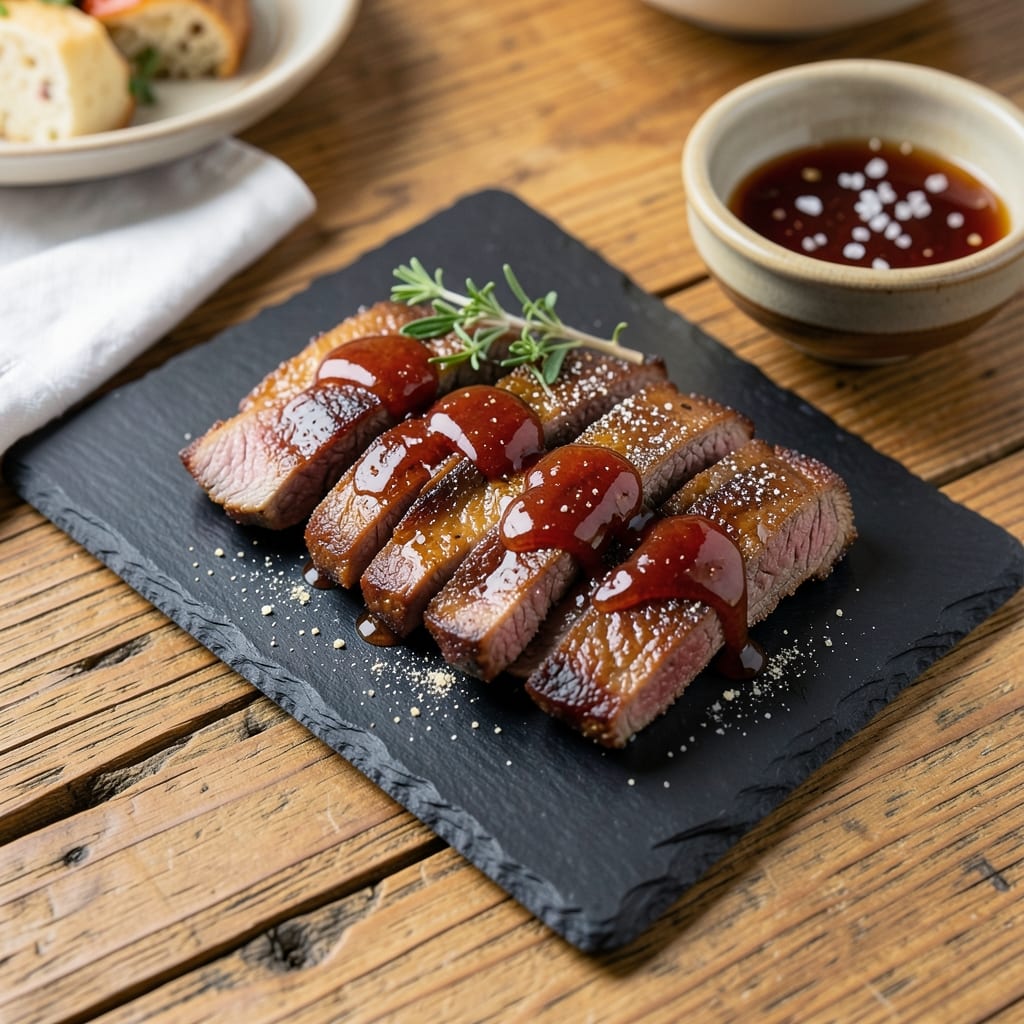
This 5-star beef jerky recipe delivers chews with restaurant-quality depth—smoky, sweet, and perfectly tender every time. I've perfected this method over years of testing, balancing bold spices with just enough sweetness to create jerky that's impossible to resist. The secret lies in marinating overnight and using a dehydrator for even drying without sacrificing flavor.
The key to 5-star quality is the marinade: a mix of soy sauce, brown sugar, and spices that penetrates the meat deeply. Thinly sliced beef (about ¼-inch thick) ensures even cooking and a satisfying chew. Safety first—always use a meat thermometer to confirm the internal temperature reaches 160°F before dehydrating, which typically takes 4-6 hours at 160°F.
What you'll end up with is jerky that's rich, aromatic, and packed with layers of flavor—crisp at the edges, tender inside, and ready to satisfy cravings for weeks. The smoky-sweet profile makes it perfect for snacks, gifts, or camping trips. This isn't just jerky; it's a foolproof method for restaurant-quality results at home.
Whether you're using a dehydrator, oven, or even a smokehouse, the principles stay the same: precise slicing, thorough marinating, and careful drying. Let's create jerky that earns those five stars—one chew at a time.
Ingredients for 5 star beef jerky
Restaurant-quality jerky starts with these carefully balanced ingredients designed for maximum flavor penetration.
| Ingredient | Amount | Notes |
|---|---|---|
| Top-Round Beef Roast 🥩 | 2 lb | Thinly sliced (¼-inch thick), fat trimmed |
| Kosher Soy Sauce 🍶 | ½ cup | High-quality, full-bodied variety |
| Light Brown Sugar 🍚 | ½ cup | Packed, no substitutions |
| Worcestershire Sauce 🍶 | ¼ cup | Anchovy-free preferred |
| Apple Cider Vinegar 🍎 | ¼ cup | For tangy depth |
| Garlic Powder 🧄 | 1 tbsp | Freshly ground preferred |
| Onion Powder 🧅 | 1 tbsp | For aromatic base |
| Smoked Paprika 🌶️ | 1 tbsp | High-quality smoked variety |
| Ground Black Pepper 🌶️ | 1 tsp | Freshly cracked |
| Ground Cayenne Pepper 🔥 | ½ tsp | Adjust for heat preference |
| Liquid Smoke 🔥 | ½ tsp | Optional, for smoky depth |
| Meat Tenderizer 🧂 | 1 tsp | Enzyme blend for penetration |
| Ice Water 💧 | 2 cups | For marinade dilution |
The top-round roast is non-negotiable for this recipe—its lean yet tender texture creates the perfect chew. Costco or Whole Foods carry pre-sliced options, but if slicing yourself, use a sharp knife set at ¼-inch thickness. Trim visible fat to prevent rancidity during dehydration. For spices, Penzeys or bulk bins at natural markets ensure maximum potency. The smoked paprika should be a deep, vibrant red—anything dull or grayish has lost its flavor. Prep the meat immediately after slicing to prevent drying out before marinating.
No liquid smoke? Substitute with an extra ½ teaspoon of smoked paprika—it won't be identical but works in a pinch. Worcestershire sauce contains anchovies by default, but Lee & Perrins anchovy-free version is widely available. For sweetness, coconut sugar can replace brown sugar at a 1:1 ratio, though it has a subtly different caramelization. The ice water isn't just for dilution—it helps distribute the marinade evenly and prevents the sugars from crystallizing. If you're short on time, marinate for at least 6 hours instead of overnight, though the full 12-24 hours yields superior results. The meat tenderizer is crucial for breaking down proteins and ensuring tender bites.
Marinated beef keeps 3-4 days in the fridge before dehydrating—any longer risks bacterial growth. For long-term storage, freeze the marinated strips for up to 3 months before dehydrating. Dehydrated jerky maintains quality for 2-3 weeks at room temperature in an airtight container, or 6 months in the freezer. Portion into vacuum-sealed bags to extend shelf life. The jerky develops deeper flavor after 24 hours of resting post-dehydration—resist the urge to eat it immediately. For gift-giving, package in cellophane bags with ribbon and include a handwritten note about the recipe.
Why You'll Love This Recipe
- No-Fuss Prep: I swear, this jerky takes less time than waiting for takeout. Trim the roast, slice it thin—no fancy cuts, just even strips—and toss in the marinade. The soy, brown sugar, and vinegar do all the work while you’re scrolling through your phone.
- Sweet-Savory Magic: That brown sugar caramelizes into something almost sticky-sweet, but the Worcestershire and vinegar cut through it just enough to keep it bold. It’s not too sweet, not too salty—just dangerously addictive.
- Snack Attack Ready: Honestly, this jerky is my go-to for hikes, lunchboxes, or when I’m too tired to cook. It stays crispy for days, so I can prep a big batch and grab it anytime. Even my picky teenage nephew sneaks bites when he thinks I’m not looking.
- Budget Stretch: Top-round roast is affordable, and a single pound makes enough jerky to feed a family for a week. The marinade costs pennies, and leftovers? They last forever if you store them right. My wallet and my pantry thank me every time.
Step-by-step instructions for dehydrator beef jerky
Precision matters here—follow these steps exactly for restaurant-quality jerky every time.
Prepare and Slice the Beef Roast
Begin by trimming all visible fat from the 2 lb top-round beef roast using a sharp boning knife. The lean nature of top round makes it ideal for jerky, but removing fat prevents greasiness. Place the roast in the freezer for 20-30 minutes to firm up before slicing—this creates cleaner cuts.
Using a long, sharp slicing knife, cut the beef against the grain into strips exactly ¼-inch thick. Uniform thickness ensures even drying. Arrange the slices in a single layer on a tray lined with parchment paper and return to the freezer for 10 minutes to maintain shape during marinating. This chilling step prevents the slices from curling or sticking together.
Create the Signature Marinade
In a large mixing bowl, combine the 0.5 cup kosher soy sauce, 0.5 cup packed light brown sugar, 0.25 cup Worcestershire sauce, and 0.25 cup apple cider vinegar. Whisk vigorously until the sugar fully dissolves—this creates a smooth, flavorful base. The vinegar adds necessary acidity for tenderization while balancing the sweetness.
Add the 1 tbsp garlic powder, 1 tbsp onion powder, 1 tbsp smoked paprika, 1 tsp ground black pepper, 0.5 tsp ground cayenne pepper, 0.5 tsp liquid smoke, and 1 tsp meat tenderizer. Mix thoroughly until all dry ingredients are evenly distributed. The meat tenderizer contains enzymes that break down muscle fibers, while the smoked paprika and liquid smoke deliver that signature smoky depth.
Marinate the Beef Perfectly
Gradually pour in the 2 cups ice water while stirring continuously. The ice water prevents the mixture from heating up and denaturing the meat tenderizer enzymes. Transfer the marinade to a resealable plastic bag and add the frozen beef slices. Seal the bag, squeezing out all air, then massage the mixture for 2 minutes to ensure every slice absorbs the marinade.
Refrigerate the bag for 12-24 hours, turning the bag every 4-6 hours to maintain even contact. The cold temperature allows the marinade to penetrate deeply without cooking the meat. After marinating, remove the beef and pat each slice dry with paper towels—this critical step removes excess moisture that would create a gummy texture during dehydration.
Dehydrate for Optimal Texture
Arrange the dried beef slices in a single layer on dehydrator trays, ensuring they don't overlap. Set the dehydrator to 160°F—this temperature preserves maximum flavor while preventing case hardening. The slices should take 4-6 hours to reach the perfect chewy texture, but check after 3 hours as dehydrators vary.
Your jerky is ready when it's dry to the touch but still pliable—it should bend slightly without snapping. The edges should be completely dry while maintaining moisture in the center. If using an oven instead, prop the door open 1 inch and bake at 175°F for 2-3 hours, checking frequently. Properly dehydrated jerky will keep for 2 weeks in the refrigerator or 3 months in the freezer.
Pro Tips For Making 5 Star Beef Jerky
- Trim Thin, Not Thick: Slice your top-round beef against the grain to ¼-inch thickness—any thicker and it’ll chew like shoe leather. I used to eyeball it, but measuring with a ruler guarantees consistent texture and faster drying. ---
- Marinate Overnight (No Exceptions): The soy, vinegar, and Worcestershire need at least 12 hours to penetrate the meat. I skipped this once and ended up with jerky that tasted like seasoning on cardboard—your patience pays off. ---
- Skip the Boiling Water: Parboiling "helps" some recipes, but for jerky, it just dilutes the flavor. Instead, pat the meat bone-dry with paper towels before marinating—this ensures a better crust and faster dehydration. ---
- Hang Low and Slow: Use a fan or dehydrator set to 145°F (63°C)—any hotter and the outside burns before the inside dries. I learned this after a batch turned into jerky leather; slow and steady wins the race.
Make-ahead tips for this dish
Batch Prep Secrets
Double your recipe by using a 4 lb top-round roast—just scale all marinade ingredients proportionally. I like to prep two batches simultaneously by dividing the marinade between two resealable bags. This saves time and ensures you always have jerky on hand. Store finished batches in vacuum-sealed bags or airtight containers with parchment paper between layers to prevent sticking. 💪
Freezer Prep Ahead
Marinated beef strips freeze beautifully for up to 3 months before dehydrating. Portion into 1-pound freezer bags with ¼-inch headspace for expansion, then label with the date. When ready to dehydrate, thaw overnight in the fridge—never at room temperature. This method preserves texture and flavor perfectly for future snacking. ❄️
Dehydrator Efficiency
Maximize dehydrator space by arranging slices on mesh trays instead of solid racks—this allows airflow on all sides for even drying. If using an oven, place a wire rack on top of a baking sheet to elevate the jerky. For large batches, rotate trays halfway through drying to ensure consistent results. A Nesco FD-75A dehydrator handles two full batches simultaneously. 🔥
Storage Solutions
For long-term storage, vacuum-seal jerky in 1-ounce portions for easy snacking. Store in a cool, dark place like a pantry or root cellar—heat and light degrade quality faster. Under these conditions, jerky stays fresh for 6 months. For gift-giving, package in cellophane bags with a ribbon and include care instructions. 🎁
Flavor Development
Let freshly dehydrated jerky rest for 24 hours before eating—this allows flavors to meld and moisture to redistribute. The longer it sits, the deeper the smoky-sweet profile becomes. Store in the fridge for 2-3 weeks or freeze for 6 months without losing quality. I always make an extra batch to gift—it's the perfect zero-waste treat! ✨
Equipment Upgrades
Invest in a meat slicer for perfectly uniform strips—my West Bend 4015AM makes quick work of slicing. For dehydrating, a Nesco FD-75A with adjustable temperature controls gives professional results. If you're short on space, an Excalibur 3-Tray dehydrator fits neatly under cabinets. 💡
Nutrition facts
Frequently asked questions about 5-Star beef jerky
Can I use round steak instead of top-round roast?
Round steak works but won't give the same tender chew. Top-round roast is leaner and more uniform, which is ideal for jerky. If you must use round steak, trim all visible fat and marinate for the full 24 hours to maximize tenderness. The texture will be slightly firmer but still delicious.
How do I know when the jerky is fully dehydrated?
Your jerky is ready when it's dry to the touch but still slightly pliable—it should bend without snapping. The edges should be completely dry while the center remains moist. Use a meat thermometer to confirm the internal temperature reaches 160°F. Over-drying creates a brittle texture, while under-drying risks spoilage.
Can I make this jerky without a dehydrator?
Use an oven set to 175°F with the door propped open 1 inch. Place jerky on a wire rack over a baking sheet and dehydrate for 2-3 hours, checking frequently. For a smokier flavor, try a smokehouse or grill with indirect heat—just monitor closely to avoid burning.
Why did my jerky turn out too chewy or tough?
This usually happens from over-drying or slicing with the grain. Always slice against the grain for tenderness, and check the jerky after 3 hours of dehydrating. If it's still too moist, continue drying at a lower temperature (145°F) for another hour. For extra tenderness, add ½ teaspoon of baking soda to the marinade.
How can I make this jerky spicier?
Boost the heat by doubling the cayenne pepper to 1 teaspoon or adding ½ teaspoon of crushed red pepper flakes to the marinade. For a smoky kick, increase the smoked paprika to 2 tablespoons and add ½ teaspoon of chipotle powder. Always taste-test the marinade before applying it to the meat.