
Soups & Stews
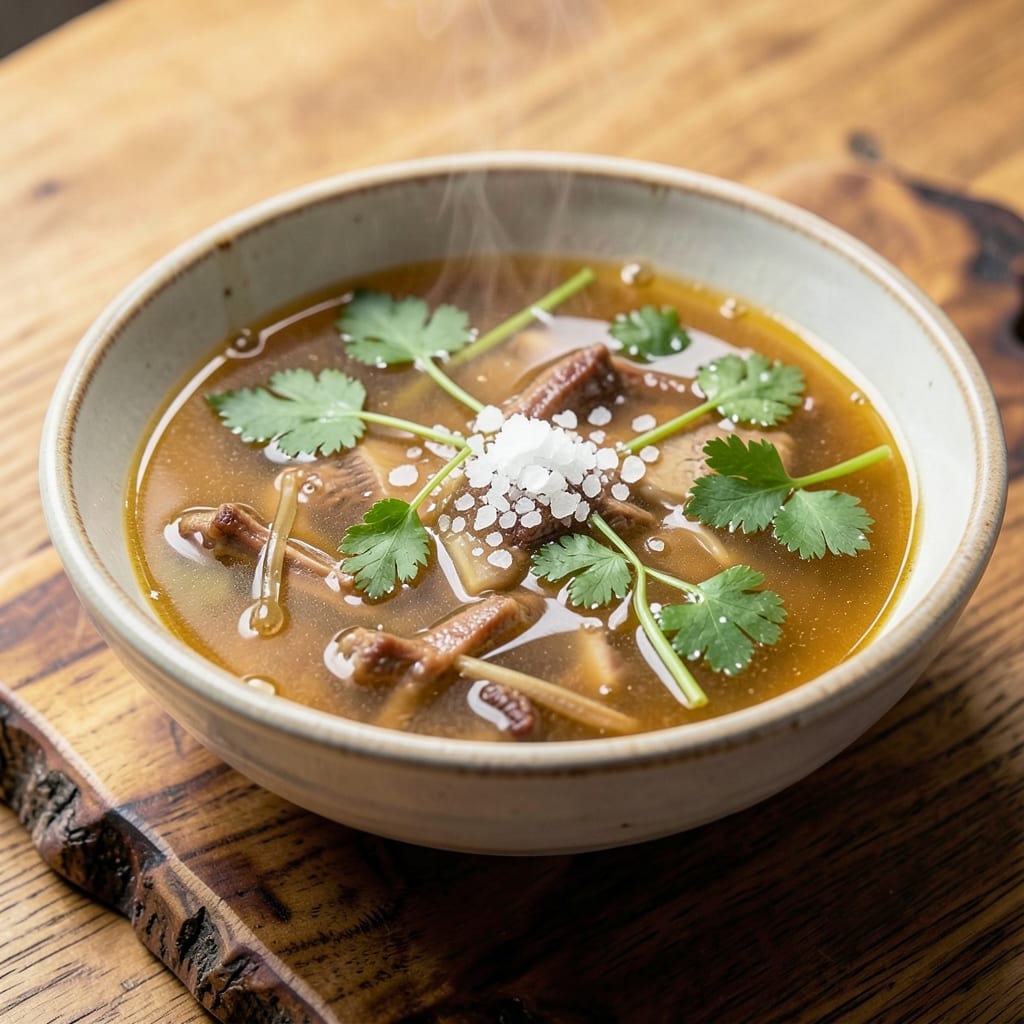
This AIP beef bone broth recipe delivers healing gelatin without the messy texture, using only AIP-compliant ingredients and a precise slow-cooking method. The key lies in proper bone selection and simmering time—transforming tough beef bones into a rich, nutrient-dense broth that supports gut health while staying strictly protocol-friendly. No nightshades, spices, or additives are needed when you focus on quality ingredients and gentle extraction techniques.
The process begins with raw beef bones (marrow, knuckle, or neck) that provide natural collagen, which breaks down into gelatin during the 24-48 hour simmer. This extended cooking time extracts minerals like calcium and magnesium while preserving the broth's clarity and depth. The result is a smooth, flavorful liquid that can be used as a healing base for soups, stews, or sipped straight—all while adhering to AIP guidelines.
What sets this recipe apart is the foolproof straining technique that removes impurities without losing gelatin, ensuring a clean, velvety texture perfect for sipping or cooking. Optional AIP-friendly additions like sea salt, apple cider vinegar, or collagen-rich vegetables can enhance flavor without violating dietary restrictions. The broth stores beautifully in the fridge for up to 5 days or freezes for months, making it a pantry staple for gut-healing meals.
Whether you're following AIP for autoimmune support or simply seeking a nutrient-dense, healing broth, this method delivers consistent results. The slow extraction process ensures maximum mineral absorption, while the straining technique guarantees a smooth, gelatinous finish—all without compromising dietary compliance. Ready to transform bones into a healing elixir?
Ingredients for aip beef bone broth
Precision ingredients transform raw bones into AIP-compliant, gut-healing gelatin broth.
| Ingredient | Amount | Notes |
|---|---|---|
| Raw Beef Bones 🦴 | 4 lb | Marrow, knuckle, or neck bones preferred |
| Filtered Water 💧 | 8 cups | Enough to cover bones by 2 inches |
| Apple Cider Vinegar 🍎 | ¼ cup | AIP-compliant acid for mineral extraction |
| Sea Salt 🧂 | 1 tsp | Unrefined, mineral-rich preferred |
| Fresh Parsley Stems 🌿 | ½ cup | AIP-compliant herb for flavor |
| Fresh Cilantro Stems 🌿 | ½ cup | AIP-compliant herb for depth |
| Onion Peels 🧅 | ¼ cup | Yellow or white, for subtle sweetness |
| Carrot Peels 🥕 | ¼ cup | Organic preferred for mineral content |
| Lemon Juice 🍋 | 2 tbsp | Freshly squeezed, optional for brightness |
| Collagen-Rich Vegetables 🥬 | 2 whole | Chopped celery, zucchini, or mushrooms (optional) |
| Cheesecloth 🧶 | 1 sheet | For straining without gelatin loss |
| Fine-Mesh Strainer 🪟 | 1 whole | For final filtration |
The bones are the foundation—marrow and knuckle bones yield the richest gelatin. Local butchers or specialty meat markets often carry these cuts, or ask for 'beef soup bones' at larger grocery stores. Avoid bones with meat residue, as it can cloud the broth. For maximum mineral extraction, pat them dry before simmering. The apple cider vinegar isn't just for flavor; its acidity helps draw out calcium and magnesium during the long cook. Bragg Organic or Annie's are reliable brands for AIP compliance.
No apple cider vinegar? Fresh lemon juice at double the amount works in a pinch, though it lacks the same mineral-boosting properties. The onion and carrot peels add subtle sweetness without violating AIP—skip the skins if you prefer. For extra collagen, add 1/2 cup chopped celery or zucchini (both AIP-friendly). The herbs? Use stems too—they're packed with flavor. If you're short on time, pre-soak the bones in cold water for 30 minutes to remove impurities before simmering.
This broth is a pantry staple—5 days refrigerated or 6 months frozen. For freezing, portion into ice cube trays for easy single-use servings. The gelatin sets beautifully in the fridge; simply reheat gently to avoid breaking it down. Store the cheesecloth and strainer in a dry, airtight container for reuse. The broth's texture improves after 24 hours as the collagen fully forms, making it ideal for overnight preparation.
Why You'll Love This Recipe
- Zero-Chop Setup: I swear by this—just toss in raw beef bones, cover with filtered water, and let the slow simmer do the work. No prepping, no fuss, just hands-off magic.
- Deep Umami Magic: That apple cider vinegar and parsley stems? They unlock flavors you won’t find in store-bought broth—rich, savory, and subtly bright without overpowering.
- Meal Prep MVP: Freeze it in ice cube trays for quick soups, grain bowls, or even a quick stir-fry base. Honestly, I keep a batch running constantly—it’s my secret weapon for busy days.
- Budget Goldmine: Beef bones are cheaper than ground beef, and this broth stretches across weeks of meals. I’ll be real: my wallet thanks me every time I make a big batch.
Step-by-step instructions for AIP beef bone broth
Transforming raw bones into nutrient-rich broth requires patience and precision—here's the method.
Prepare and Preheat the Bones
Rinse the 4 lb raw beef bones thoroughly under cold water to remove any debris or blood. This ensures a clean, flavorful broth without unwanted impurities. Pat them completely dry with paper towels—moisture on the bones creates steam during cooking, which can dilute the final product.
Transfer the bones to a large stockpot and add the 8 cups filtered water, ensuring they're covered by at least 2 inches of liquid. Place the pot over medium-high heat and bring to a rolling boil. Once boiling vigorously, reduce heat to low to maintain a gentle simmer—this prevents the bones from boiling too rapidly, which can cause the broth to become cloudy.
Add Aromatics and Acid for Mineral Extraction
Stir in the 0.25 cup apple cider vinegar and 1 tsp sea salt as the broth simmers. The vinegar lowers the pH, which helps extract minerals and collagen from the bones more efficiently. Add the 0.5 cup fresh parsley stems, 0.5 cup fresh cilantro stems, 0.25 cup onion peels, and 0.25 cup carrot peels—these ingredients infuse subtle, complementary flavors without overpowering the broth.
Include the 2 whole collagen-rich vegetables (such as chopped celery or zucchini) if using. These add body and depth to the broth while contributing to the gelatinous texture. Cover the pot and let it simmer uncovered for 30 minutes, skimming any foam or impurities that rise to the surface with a fine-mesh strainer or ladle. This step ensures a clear, clean broth.
Simmer Low and Slow for Maximum Gelatin
After the initial simmer, add the 2 tbsp lemon juice (if using) and adjust the heat to maintain a gentle simmer. The goal is to keep the temperature between 180°F and 200°F—this range is ideal for breaking down collagen into gelatin without boiling off the liquid. Simmer the broth for 24-48 hours, checking occasionally to ensure the water level hasn't dropped below the bones.
If the broth reduces too much, add hot filtered water to maintain the 2-inch coverage over the bones. The longer it simmers, the richer and more gelatinous the broth will become. You'll know it's ready when the bones are tender enough to pull apart with a spoon and the broth has a thick, jelly-like consistency when chilled.
Strain and Finish the Broth
Once the broth reaches the desired richness, remove the pot from heat and let it cool slightly. Line a fine-mesh strainer with the 1 sheet cheesecloth to create a makeshift filter. Carefully ladle the broth through the strainer into a large bowl or clean container, pressing gently on the solids to extract every last drop of liquid. This step ensures a smooth, particle-free broth.
Discard the strained solids and transfer the broth to airtight containers. Let it cool to room temperature, then refrigerate. Once chilled, the broth will develop a firm gelatinous layer on top—this is the concentrated collagen, a key indicator of a well-made bone broth. Store in the refrigerator for up to 5 days or freeze for longer storage. Reheat gently on the stove or in a microwave, stirring occasionally to distribute the gelatin evenly.
Pro Tips For Making Aip Beef Bone Broth
- Roast Bones First: I learned this the hard way—skipping the roast means a broth that tastes more like water than beef. Toss your bones in a 400°F oven for 30-45 minutes until they’re deep brown and fragrant. This caramelization unlocks way more flavor, and the vinegar will later cut through any bitterness that sneaks in. ---
- Vinegar Early, Not Late: Dump that apple cider vinegar in with the cold water, not after simmering. I used to add it later thinking it’d "brighten" the broth, but it just makes the liquid cloudy. The acid works best during the long simmer to break down collagen and prevent scum buildup—so let it do its job from the start. ---
- Skim the Scum Aggressively: The first 20 minutes are critical—use a fine-mesh skimmer or a ladle to pull off every speck of foam rising to the top. I know it’s tedious, but leaving it clings to the broth like a bitter shadow. A splash of vinegar helps, but nothing beats manual removal for a crystal-clear, clean-tasting result. ---
- Simmer Low and Long: No, 4 hours isn’t enough. Aim for 12–24 hours at a bare simmer (180–190°F)—the broth should never bubble, or you’ll end up with a thin, murky liquid. I used to rush it, and the collagen never fully dissolved. Trust the process; patience here makes the difference between "meh" and "wow."
Serving suggestions for this aip beef bone broth
Sipping Straight
Enjoy your AIP beef bone broth warm or at room temperature as a healing elixir. I like to sip it slowly from a wide-mouth mason jar or ceramic mug—the gelatin coats your throat soothingly. For extra comfort, add a pinch of unrefined sea salt—it enhances the umami depth without violating AIP. The broth's natural richness makes it satisfying on its own, perfect for gut-healing rituals or post-meal digestion support. 💛
Soup Base
Use this broth as the foundation for AIP-compliant soups like zucchini noodle soup or collard green stew. Simmer 2 cups broth with chopped collagen-rich veggies (zucchini, mushrooms, or celery) and 1 cup shredded chicken (pre-cooked AIP-style) for 15 minutes. The gelatin in the broth thickens naturally as it cools, creating a velvety texture without added thickeners. For extra protein, stir in 1 scoop collagen peptides (AIP-friendly).
Grain-Free Risotto
Transform your broth into a creamy, grain-free "risotto" using cauliflower rice or shredded cabbage. Sauté 2 cups chopped cauliflower in 1 tbsp coconut oil until tender, then add 4 cups hot broth in stages, stirring until absorbed. Finish with 2 tbsp coconut aminos and 1 tbsp fresh parsley for a flavorful, gut-friendly dish that mimics traditional risotto. The broth's gelatin gives it a luxurious mouthfeel. ✨
Braising Liquid
Use the broth to braise AIP-friendly proteins like chicken thighs or beef short ribs. Add 1 cup broth to a Dutch oven with 2 lb protein, 1 chopped onion, and 2 carrots, then simmer covered for 2-3 hours until tender. The broth's minerals and collagen infuse the meat, creating fall-off-the-bone tenderness without added fat. Reserve the braising liquid for another use—it's even more flavorful after the first cook. 🔥
Gelatinous Dessert
Chill your broth until it forms a firm gelatin layer, then use it as a base for AIP desserts. Blend 2 cups chilled broth with 1 cup coconut milk and 2 tbsp honey (if tolerated) for a creamy, protein-rich pudding. Pour into ramekins and refrigerate for 4 hours to set. Top with toasted coconut flakes for crunch. This dessert is rich in collagen and minerals, making it a guilt-free treat. 🌟
Marinade Boost
Use the broth as a marinade for grilled or roasted meats. Combine 1 cup broth with 2 tbsp apple cider vinegar and 1 tbsp sea salt, then coat beef or chicken for 4-6 hours before cooking. The gelatin and minerals tenderize the meat while adding depth. I love using it on grass-fed beef strips for a flavorful, AIP-compliant stir-fry. The broth's umami carries through beautifully. 💪
Nutrition facts
Frequently asked questions
Can I use any beef bones for this AIP broth?
Not all bones work equally well. For maximum gelatin and flavor, use marrow, knuckle, or neck bones—these contain the highest collagen content. Avoid bones with meat residue (like femur bones) as they can make the broth cloudy. If you only have beef soup bones from the grocery store, they'll work but may require 48 hours of simmering for optimal gelatin extraction.
Why does my AIP broth turn cloudy?
Cloudiness usually means impurities or fat weren't removed properly. Skim foam during the first 30 minutes of simmering, and strain through cheesecloth for a crystal-clear result. If using bones with meat, simmer longer (48 hours) to break down proteins. For extra clarity, add 1 tbsp apple cider vinegar during the initial boil to help clarify the broth.
How do I know when the broth is fully gelatinized?
Chill a small cup of broth—if it forms a wobbly, jelly-like layer on top, it's ready! For a quick test, press a spoon against the broth while hot: if it leaves a visible track that holds its shape, the collagen is fully extracted. 24-48 hours of simmering at 180-200°F ensures maximum gelatinization. The longer you cook (up to 72 hours), the richer the texture.
Can I make this broth in a slow cooker?
Yes! Use a 6-quart slow cooker with 4 lb bones and 8 cups water, simmering on low for 48-72 hours. The key difference: slow cookers can't maintain the precise 180-200°F range, so check water levels frequently and add hot water as needed. For best results, start with a boil on high for 1 hour first to remove impurities.
What if I don't have apple cider vinegar?
Use lemon juice (double the amount) or raw, unfiltered coconut aminos as substitutes. The acidity helps extract minerals, though apple cider vinegar's acetic acid is most effective. Skip the acid entirely only if you're using high-quality bones—just simmer 24-48 hours longer. For extra flavor, add 1 chopped onion or carrot peels to compensate.